Virginia’s tax code includes all major tax types. The state’s individual income tax has remained stable over the past three decades. However, this stability is not necessarily a positive factor, as many states have implemented significant income tax reforms in recent years, leaving Virginia behind. With four tax brackets that are not adjusted for inflation, the state’s progressive income tax has a top marginal rate higher than several of its neighbors, including Kentucky, North Carolina, Tennessee, and West Virginia. Additionally, Virginia requires individual income tax filing and withholding for nonresidents working even a single day in the state.
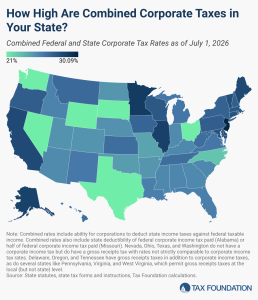
While Virginia’s flat corporate income tax rate of 6 percent is around the national average, it is lower than most of Virginia’s neighbors (except North Carolina). The state conforms to the federal treatment of net operating losses, does not have a throwback rule, and does not impose statewide gross receipts or capital stock taxes. However, Virginia allows municipalities to establish local gross receipts taxes and does not permit businesses to claim bonus depreciation, which negatively impacts the state’s tax competitiveness. Implementing permanent full expensing could improve Virginia’s business tax climate.
Virginia’s sales tax rate is relatively competitive, though the state could improve by broadening its base to include more consumer services (but not business inputs). In recent years, local and regional sales tax authority has been expanded.
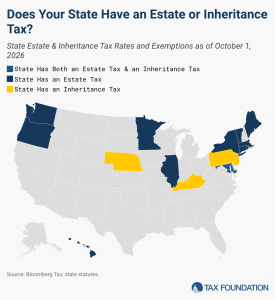
Virginia does not impose estate or inheritance taxes, making it more appealing to wealthy households and retirees. Most of Virginia’s shortcomings are at the local level, with a trio of taxes on business personal property (with no de minimis exemption), business inventory, and business gross receipts. Counties and independent cities are entitled to impose their choice of two of these three taxes.
Imposing sales taxes on rental car companies’ fleet purchases, in addition to the sales and rental car excise taxes levied when those cars are rented, yields double taxation and causes harmful tax pyramiding.
In addition to the federal estate tax, which has a top marginal rate of 40 percent, 12 states and the District of Columbia impose estate taxes, while five states levy inheritance taxes.
Corporations in the United States pay federal corporate income taxes levied at a 21 percent rate. Forty-four states and DC also levy taxes on corporate income, with top marginal rates ranging from 2.5 percent in North Carolina to 11.5 percent in New Jersey.