Vermont levies all major categories of taxation with comparatively high rates and an overall uncompetitive tax structure. As a result, the tax code makes the state both nationally and regionally uncompetitive, particularly compared to neighboring low-tax New Hampshire.
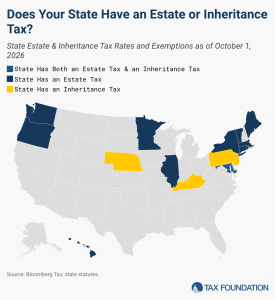
Vermont levies an individual income tax with multiple brackets, including a top marginal rate of 8.75 percent; the tax also includes a marriage penalty for joint filers. The Green Mountain State levies a tax at a flat rate of 16 percent on estates worth more than $5 million.
Property taxpayers in the state are subject to the highest effective rate of taxation as a percentage of personal income. Further, property tax collections per capita in the state are among the highest in the country ($3,178). The state’s sales tax base is unnecessarily narrow and exempts many personal goods and services while also subjecting many business inputs to the tax, which causes tax pyramiding and ultimately increases the costs borne by consumers.
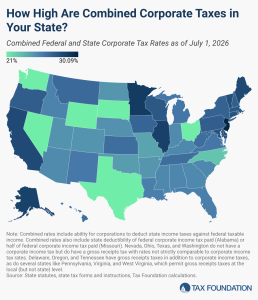
The Vermont corporate tax features three brackets with a top marginal rate of 8.5 percent. Importantly, these brackets are not indexed for inflation, meaning taxpayers will be forced into a higher tax bracket when their nominal income increases, but due to inflation, their real income does not (or even declines). Net operating loss carryforwards are limited to 10 years, with no corresponding carryback allowance, and Vermont is among the minority of states that tax net CFC-tested income (NCTI).
Imposing sales taxes on rental car companies’ fleet purchases, in addition to the sales and rental car excise taxes levied when those cars are rented, yields double taxation and causes harmful tax pyramiding.
In addition to the federal estate tax, which has a top marginal rate of 40 percent, 12 states and the District of Columbia impose estate taxes, while five states levy inheritance taxes.
Corporations in the United States pay federal corporate income taxes levied at a 21 percent rate. Forty-four states and DC also levy taxes on corporate income, with top marginal rates ranging from 2.5 percent in North Carolina to 11.5 percent in New Jersey.