Arizona’s tax code features all major tax types, but due to recently implemented sweeping tax reforms, the state ranks highly on the Index. Arizona performs well on income and property taxes and has one of the most efficient unemployment insurance tax systems in the nation. The state’s individual income tax has a flat rate of 2.5 percent, the lowest in the country, making it more competitive than any other state that imposes these taxes. Such a low rate makes the state very attractive to taxpayers who have decided to leave high-tax states, particularly California. The state could further improve its income tax competitiveness by increasing the filing threshold for nonresident workers, which would reduce compliance burdens for individuals working in the state for just a short period of time.
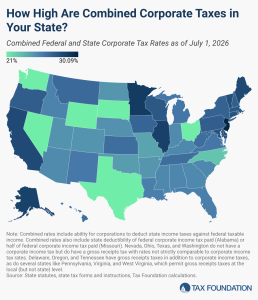
Arizona also has a flat corporate income tax rate of 4.9 percent and avoids imposing harmful gross receipts taxes and capital stock taxes. However, the state does not conform to the federal treatment of bonus depreciation and requires that businesses add back to the corporate income tax base any bonus depreciation taken at the federal level. Adopting permanent full expensing would encourage further in-state investment and make a reasonably good tax code even better.
The combined state and local sales tax rate is relatively high, and localities can modify the sales tax base, making the system more complicated than in most states. The state sales tax base is also relatively narrow, below the median national level, because many personal services and some goods are tax-exempt. Expanding the base to include most personal services while keeping business inputs out represents another potentially beneficial tax reform for the state.
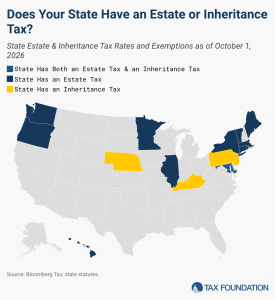
Arizona taxes tangible personal property but offers a generous de minimis exemption of $269,905 to minimize compliance costs for small and medium-sized businesses. Furthermore, the state does not impose inheritance, estate, or gift taxes, which makes it more attractive for wealthy households and retirees.
Imposing sales taxes on rental car companies’ fleet purchases, in addition to the sales and rental car excise taxes levied when those cars are rented, yields double taxation and causes harmful tax pyramiding.
In addition to the federal estate tax, which has a top marginal rate of 40 percent, 12 states and the District of Columbia impose estate taxes, while five states levy inheritance taxes.
Corporations in the United States pay federal corporate income taxes levied at a 21 percent rate. Forty-four states and DC also levy taxes on corporate income, with top marginal rates ranging from 2.5 percent in North Carolina to 11.5 percent in New Jersey.