Georgia’s tax code includes all major tax types. The state has recently transitioned to a flat individual income tax and is gradually reducing the tax rate (currently 5.19 percent, scheduled to reach 4.99 percent by 2028), two positive developments in terms of tax competitiveness. However, the state still faces strong regional competition, as both Florida and Tennessee do not impose individual income taxes, while Alabama and North Carolina have lower rates.
Since 2024, Georgia’s corporate income tax rate has been aligned with the individual income tax rate and is set to decrease from the current 5.19 percent to 4.99 percent by 2028. However, the state does not allow first-year expensing of capital investment and imposes a nuisance capital stock tax of up to $5,000 per year. Like many states, Georgia also taxes tangible personal property. The state offers a de minimis exemption, but it is quite low.
Georgia’s state sales tax rate is relatively low at 4 percent, but localities are authorized to impose local sales taxes, with an average rate of 3.44 percent, bringing the combined rate to 7.44 percent, which is above the national average. Georgia does not impose inheritance, estate, or gift taxes.
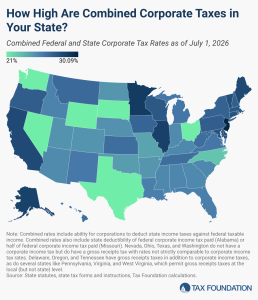
Corporations in the United States pay federal corporate income taxes levied at a 21 percent rate. Forty-four states and D.C. also levy taxes on corporate income, with top marginal rates ranging from 2.5 percent in North Carolina to 11.5 percent in New Jersey.
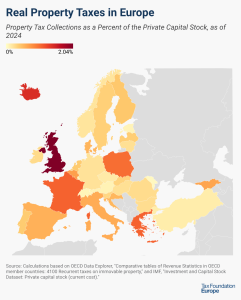
High property taxes levied not only on land but also on buildings and structures can discourage investment in infrastructure, which businesses would have to pay additional tax on.
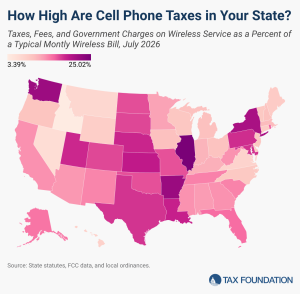
Applying the sales tax, a traditional broad-based consumption tax, is perfectly appropriate, but excessive targeted taxation of wireless services lacks the traditional justifications—a user-pays system or the internalization of social costs—for excise taxation, raising consumer costs and discouraging investment.