Michigan’s tax code includes all major tax types and has traditionally ranked well on the Index. The state’s individual income tax is flat with a relatively low rate of 4.25 percent, along with a modest personal exemption. However, Michigan faces significant regional competition, as Indiana, Ohio, and Pennsylvania all have lower state individual income tax rates, although all four states authorize localities to impose local income taxes.
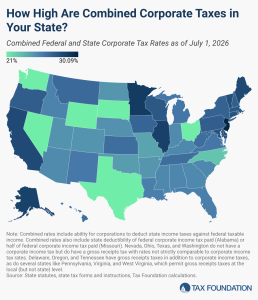
Michigan has a flat 6 percent corporate income tax, which is close to the national average. The state has no throwback rule or capital stock tax, and, unlike Ohio, it does not impose a gross receipts tax. However, the state does not offer full expensing, which could be an important element of future pro-growth reforms aimed at attracting capital-intensive businesses.
The state’s sales tax rate is 6 percent, lower than in all other Midwestern states except Wisconsin. Michigan does not authorize cities and counties to impose local option sales taxes, simplifying the consumption tax system compared to most other states.
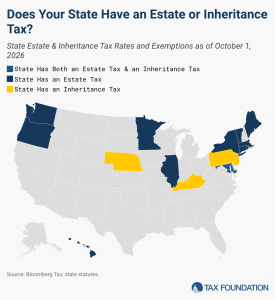
Michigan’s property tax system is reasonably competitive with an average property tax burden. The state taxes tangible personal property but offers a generous de minimis exemption of $180,000, reducing compliance costs for small businesses. Michigan also does not impose estate, inheritance, or gift taxes, making it more attractive for high-net-worth individuals.
Imposing sales taxes on rental car companies’ fleet purchases, in addition to the sales and rental car excise taxes levied when those cars are rented, yields double taxation and causes harmful tax pyramiding.
In addition to the federal estate tax, which has a top marginal rate of 40 percent, 12 states and the District of Columbia impose estate taxes, while five states levy inheritance taxes.
Corporations in the United States pay federal corporate income taxes levied at a 21 percent rate. Forty-four states and DC also levy taxes on corporate income, with top marginal rates ranging from 2.5 percent in North Carolina to 11.5 percent in New Jersey.