Tennessee forgoes an individual income tax, having phased out a narrow tax on interest and dividend income, known as the Hall Tax, in 2021. However, Tennessee is among the minority of states that still have a capital stock tax on the books, despite making structural improvements to it during the 2024 legislative session. Tennessee businesses also face an additional layer of tax on their gross receipts, and not just their net income (profits).
Tennessee excludes most, but not all, net CFC-tested income (NCTI), formerly global intangible low-taxed income (GILTI), from its tax base, and caps net operating loss carryforwards at 15 years, whereas most states have 20-year or unlimited carryforwards. The state recently conformed to the Tax Cuts and Jobs Act’s treatment of first-year expensing under Section 168(k), but did so in such a way that maintains the phasedown that was reversed under the One Big Beautiful Bill Act (OBBBA).
Tennessee has among the highest combined state and average local sales tax rates in the nation. The largest portion of the sales tax burden comes from the 7 percent state-level sales tax rate, which is second only to California’s 7.25 percent rate (and tied with the state sales tax rates in Indiana, Mississippi, and Rhode Island). Because income taxes have a greater impact on economic growth than sales taxes, however, Tennessee’s decision to rely on high sales taxes in lieu of income taxes is an economically advantageous one.
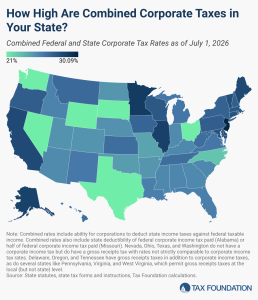
Corporations in the United States pay federal corporate income taxes levied at a 21 percent rate. Forty-four states and D.C. also levy taxes on corporate income, with top marginal rates ranging from 2.5 percent in North Carolina to 11.5 percent in New Jersey.
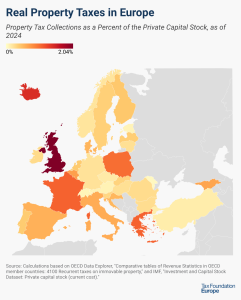
High property taxes levied not only on land but also on buildings and structures can discourage investment in infrastructure, which businesses would have to pay additional tax on.
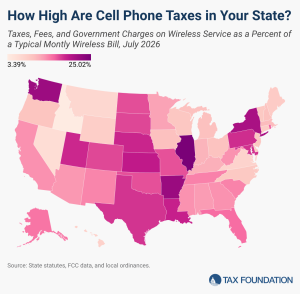
Applying the sales tax, a traditional broad-based consumption tax, is perfectly appropriate, but excessive targeted taxation of wireless services lacks the traditional justifications—a user-pays system or the internalization of social costs—for excise taxation, raising consumer costs and discouraging investment.