Nebraska has taken strides to improve its income tax competitiveness in recent years by reducing its individual and corporate income tax rates. Currently, the state’s graduated individual income tax rates range from 2.46 percent to 5.84 percent, and its corporate income tax rate is now a flat 5.2 percent. Despite these improvements, Nebraska maintains an uncompetitive “convenience of the employer rule,” which can lead to double taxation (with no offsetting credit) for remote employees working for businesses located in Nebraska—ultimately a disincentive for businesses to locate in the state if they want to be able to hire across the country. Nebraska also requires individual income tax filing and withholding for nonresidents working even a single day in the state.
Notably, Nebraska’s property taxes are on the high side regionally and nationally, and Nebraska is one of the few states that continues to impose an antiquated capital stock tax, which is assessed against the net worth of Nebraska corporations and imposed regardless of whether a firm makes a profit. The Nebraska Occupation Tax, as it is known in the state, is collected every other year, which complicates the filing process, since firms must track their net worths across two tax years. Nebraska also retains an inheritance tax, albeit on a declining share of beneficiaries, and is the only state to have adopted but then abandoned a tangible personal property tax de minimis exemption.
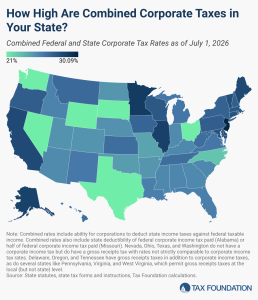
Corporations in the United States pay federal corporate income taxes levied at a 21 percent rate. Forty-four states and D.C. also levy taxes on corporate income, with top marginal rates ranging from 2.5 percent in North Carolina to 11.5 percent in New Jersey.
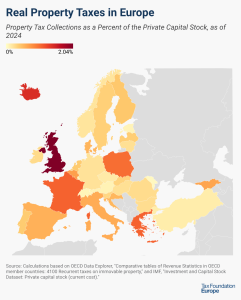
High property taxes levied not only on land but also on buildings and structures can discourage investment in infrastructure, which businesses would have to pay additional tax on.
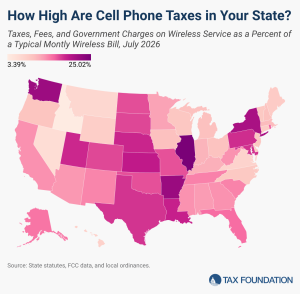
Applying the sales tax, a traditional broad-based consumption tax, is perfectly appropriate, but excessive targeted taxation of wireless services lacks the traditional justifications—a user-pays system or the internalization of social costs—for excise taxation, raising consumer costs and discouraging investment.