New Mexico has a graduated state individual income tax with a top rate of 5.9 percent. A new lower-rate bracket was created in 2025, though the top rate was left untouched. Also in 2025, New Mexico replaced its graduated-rate corporate income tax with a top rate of 5.9 percent to a single-rate tax of 5.9 percent on all income, a relatively rare case of a corporate income tax rate increase in recent years.
New Mexico also has a 4.875 percent tax on sales, with an average combined state and local rate of 7.67 percent. As a hybrid between an ordinary sales tax and a gross receipts tax, this tax does not apply to all intermediate transactions like a pure gross receipts tax but does apply to many more business inputs than are included in a typical sales tax, including manufacturing machinery and research and development (R&D) equipment. When this gross receipts-like tax applies to business-to-business transactions, it causes tax pyramiding throughout the supply chain, hampers investment, and negatively affects low-margin businesses.
The state’s corporate income tax also features a throwback rule, which exposes in-state businesses to additional tax when they sell into other states with which they do not have nexus, discouraging some businesses from locating operations in New Mexico. The state conforms to the federal treatment of capital investment under its corporate income tax.
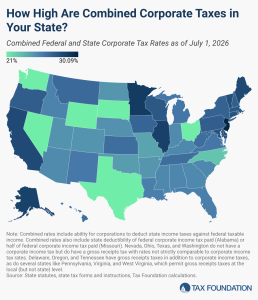
Corporations in the United States pay federal corporate income taxes levied at a 21 percent rate. Forty-four states and D.C. also levy taxes on corporate income, with top marginal rates ranging from 2.5 percent in North Carolina to 11.5 percent in New Jersey.
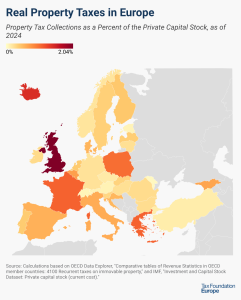
High property taxes levied not only on land but also on buildings and structures can discourage investment in infrastructure, which businesses would have to pay additional tax on.
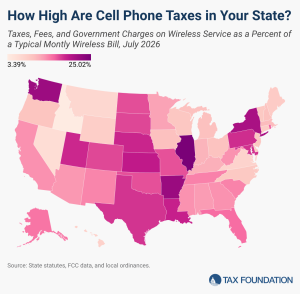
Applying the sales tax, a traditional broad-based consumption tax, is perfectly appropriate, but excessive targeted taxation of wireless services lacks the traditional justifications—a user-pays system or the internalization of social costs—for excise taxation, raising consumer costs and discouraging investment.