Real Property Taxes in Europe, 2026
High property taxes levied not only on land but also on buildings and structures can discourage investment in infrastructure, which businesses would have to pay additional tax on.
3 min read
Washington forgoes an individual income tax on wage income due to constitutional constraints, though the state recently imposed a tax on high earners’ capital gains income, a policy that raised constitutional questions but ultimately secured the assent of the state supreme court. It became a graduated rate tax in 2025, with a top rate of 9.9 percent for gains above $1 million. The constitution has been similarly interpreted as blocking a corporate income tax, but Washington instead imposes a high multiple-rate gross receipts tax, called the Business & Occupation Tax. Because it is based on gross revenues rather than net income (profits), it yields very high rates of taxation on low-margin businesses and leads to tax pyramiding, where goods and services have the tax embedded several times over, imposed on each transaction within the production process.
The state’s sales tax, imposed atop the gross receipts tax, is not just a high rate but is also imposed on a base that includes an unusual share of business inputs, particularly in the digital products space. In 2025, lawmakers adopted legislation further expanding digital products taxation and notably including digital advertising in the base, which raises legal concerns along with economic ones. Washington also levies a progressive real estate transfer tax and the nation’s highest-rate estate tax, with the top rate raised to 35 percent in 2025, rivaling the 40 percent top federal rate. High UI taxes and an uncompetitive UI tax structure also contribute to the state’s poor Index ranking despite the state forgoing an individual income tax, which might otherwise be expected to yield a much more competitive tax environment.
| Category | Rank | Rank Change | Score |
|---|---|---|---|
| Overall | 45 | 1 | 4.21 |
| Corporate Taxes | 47 | 0 | 3.73 |
| Individual Income Taxes | 31 | -2 | 5.09 |
| Sales Taxes | 49 | 1 | 3.05 |
| Property Taxes | 25 | 1 | 5.07 |
| Unemployment Insurance Taxes | 49 | -1 | 3.68 |


Get facts about taxes in your state and around the US
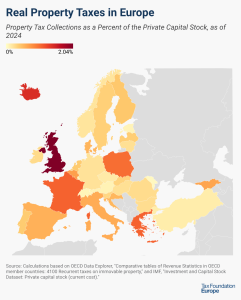
High property taxes levied not only on land but also on buildings and structures can discourage investment in infrastructure, which businesses would have to pay additional tax on.
3 min read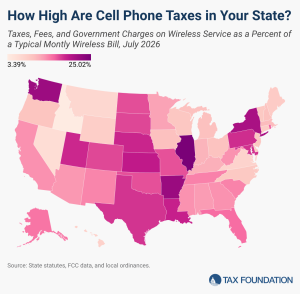
Applying the sales tax, a traditional broad-based consumption tax, is perfectly appropriate, but excessive targeted taxation of wireless services lacks the traditional justifications—a user-pays system or the internalization of social costs—for excise taxation, raising consumer costs and discouraging investment.
5 min read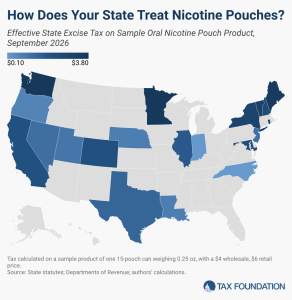
Oral nicotine pouches have rapidly become a popular option for consumers who want nicotine without the harmful combustion and chemicals of traditional cigarettes. As these alternative nicotine products (ANPs) successfully draw smokers to non-combustible nicotine consumption, many states have scrambled to incorporate these new products into their tax regimes.
6 min read