Kentucky’s tax competitiveness has improved substantially in recent years due to several rounds of reforms that broadened the sales tax base to additional categories of mostly final personal consumption while moving to a single-rate individual income tax at a substantially lower rate. However, many other areas of the Commonwealth’s tax code are riddled with antiquated and complex provisions that remain ripe for reform.
Specifically, Kentucky is one of few states that levy income-based taxes on individuals and businesses not just at the state level, but also at the county and municipal levels in the form of occupational license taxes and net profit taxes. In addition to individual and corporate income taxes, Kentucky levies a limited liability entity tax (LLET), which is a gross receipts-based alternative minimum tax on C corporations and limited liability pass-through businesses owed even when businesses do not turn a profit. Kentucky is further hindered by its lack of bonus depreciation allowance for corporate machinery and equipment investments. While Kentucky’s Section 179 small business expensing allowance is broadly available because the Commonwealth does not conform to the federal phaseout threshold, Kentucky’s expensing limit of $100,000 is much lower than the $1 million expensing limit offered in most states.
Kentucky is a notable outlier in applying its tangible personal property taxes to business inventory, a highly distortionary practice that has been abandoned in most states. Furthermore, Kentucky levies an inheritance tax that kicks in at a low level, affecting beneficiaries across the income spectrum, not just the affluent. Additionally, Kentucky’s UI tax ranking is hindered by high maximum rates and a surtax, but recent action to shorten the experience rating waiting period brought needed improvement on this component.
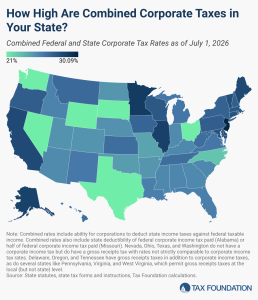
Corporations in the United States pay federal corporate income taxes levied at a 21 percent rate. Forty-four states and D.C. also levy taxes on corporate income, with top marginal rates ranging from 2.5 percent in North Carolina to 11.5 percent in New Jersey.
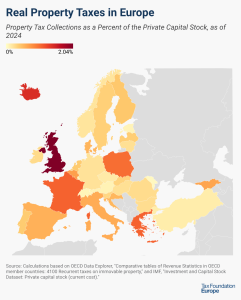
High property taxes levied not only on land but also on buildings and structures can discourage investment in infrastructure, which businesses would have to pay additional tax on.
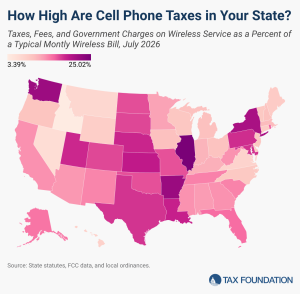
Applying the sales tax, a traditional broad-based consumption tax, is perfectly appropriate, but excessive targeted taxation of wireless services lacks the traditional justifications—a user-pays system or the internalization of social costs—for excise taxation, raising consumer costs and discouraging investment.