North Dakota‘s tax system ranks 9th overall on the 2025 State Tax Competitiveness Index. North Dakota performs above average across all tax categories, ranking in the top 10 states overall, as well as on the property tax and corporate tax components. While North Dakota’s corporate and individual income taxes have a graduated-rate structure, both rates are low, with North Dakota’s top marginal individual income tax rate tied with Arizona’s as the lowest in the country (2.5 percent).
One shortcoming in North Dakota’s tax code is its throwback rule, which increases tax liability for in-state businesses making sales of tangible personal property in states with which they lack nexus.
However, North Dakota conforms to federal expensing provisions under Section 168(k) and 179, conforms to the federal treatment of NOLs, and does not levy a capital stock tax, real estate transfer tax, or estate or inheritance tax.
Summer has arrived, and states are beginning to implement policy changes that were enacted during this year’s legislative session (or that have delayed effective dates or are being phased in over time).
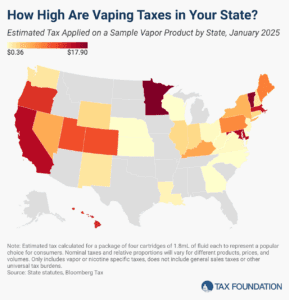
The vaping industry has grown rapidly in recent decades, becoming a well-established product category and a viable alternative to cigarettes for those trying to quit smoking. US states levy a variety of tax structures on vaping products.
The Senate’s version of the OBBB restores the benefit of avoiding the SALT deduction cap with PTETs for all pass-through businesses, while placing new limits on the extent of the workarounds.