South Carolina levies an individual income tax with two brackets, a top marginal rate of 6 percent, and a marriage penalty. By contrast, neighboring North Carolina levies a flat individual income tax and does not impose a marriage penalty, making South Carolina’s levy particularly uncompetitive. Pass-through businesses enjoy a preferential rate on business income, which helps them but creates distortions and drives up the ordinary rate.
The Palmetto State maintains a reasonably competitive corporate tax code, featuring a flat rate of 5 percent. However, the state also relies unusually heavily on tax credits rather than focusing on broad-based rate relief. The state imposes a capital stock tax without capping maximum payments. Capital stock taxes are levied against a business’s net worth (or accumulated wealth) and tend to penalize investment. Moreover, businesses are required to pay capital stock taxes regardless of profitability.
The state also applies a different formula to assess distinct property types, known as split roll taxation, and South Carolina is the only state to apply school property taxes to commercial and industrial property but not to residential property, raising costs for businesses and renters compared to homeowners.
Imposing sales taxes on rental car companies’ fleet purchases, in addition to the sales and rental car excise taxes levied when those cars are rented, yields double taxation and causes harmful tax pyramiding.
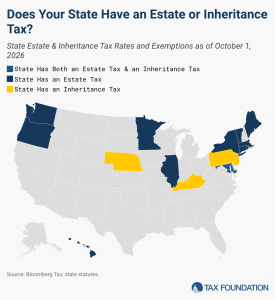
In addition to the federal estate tax, which has a top marginal rate of 40 percent, 12 states and the District of Columbia impose estate taxes, while five states levy inheritance taxes.
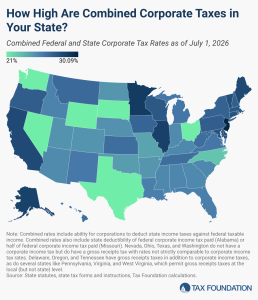
Corporations in the United States pay federal corporate income taxes levied at a 21 percent rate. Forty-four states and D.C. also levy taxes on corporate income, with top marginal rates ranging from 2.5 percent in North Carolina to 11.5 percent in New Jersey.