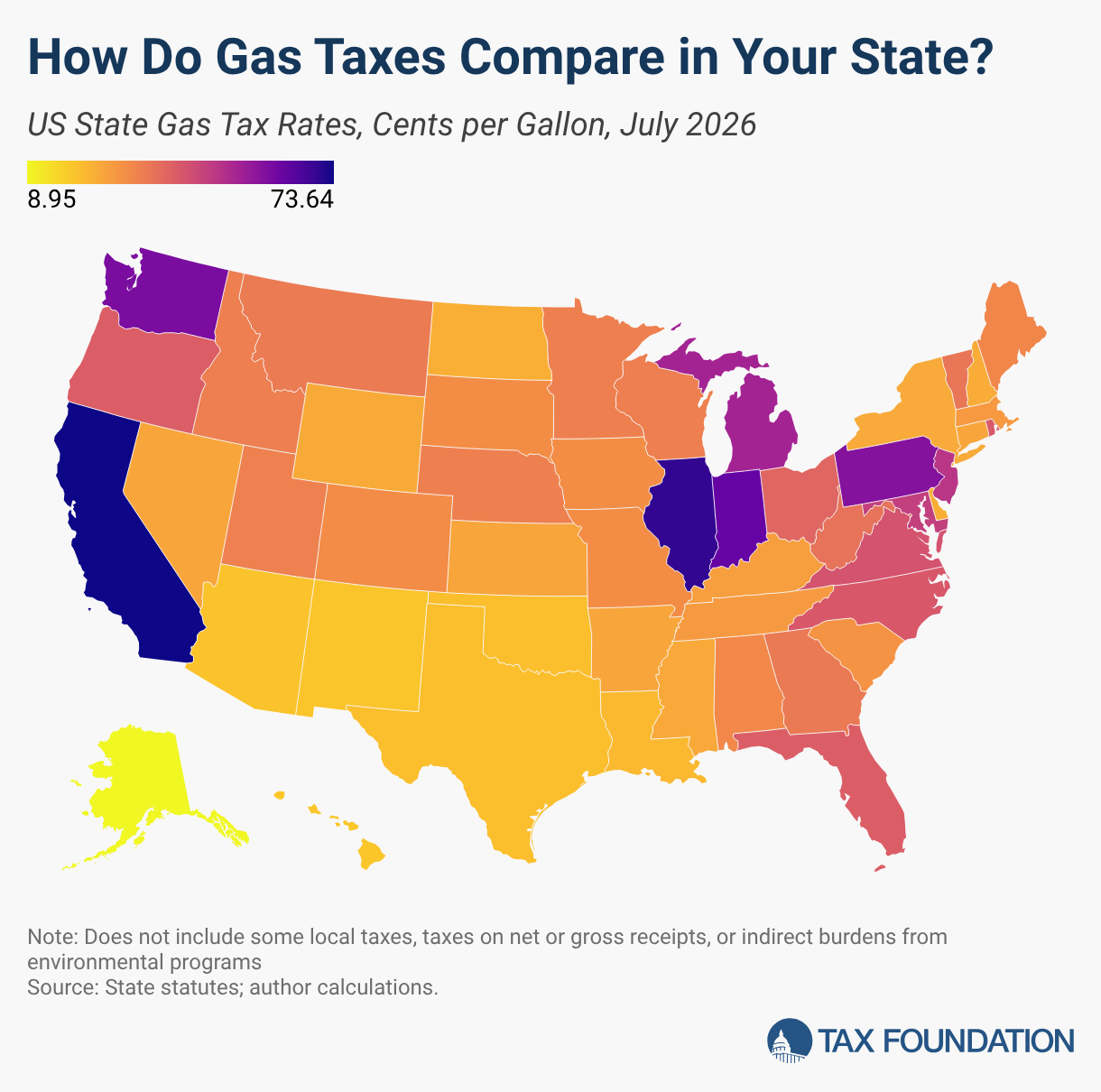




Significant Changes as of 2026
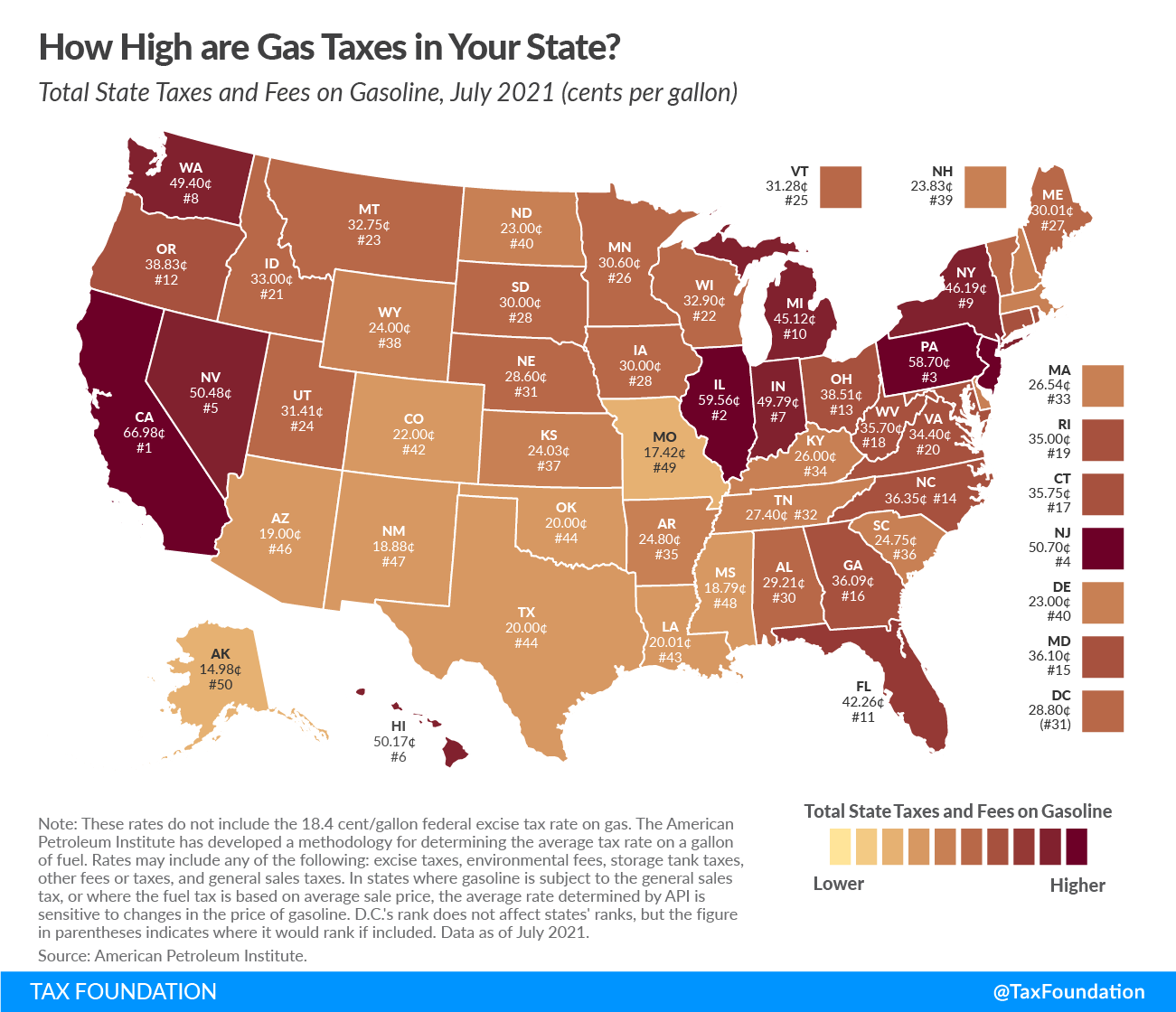
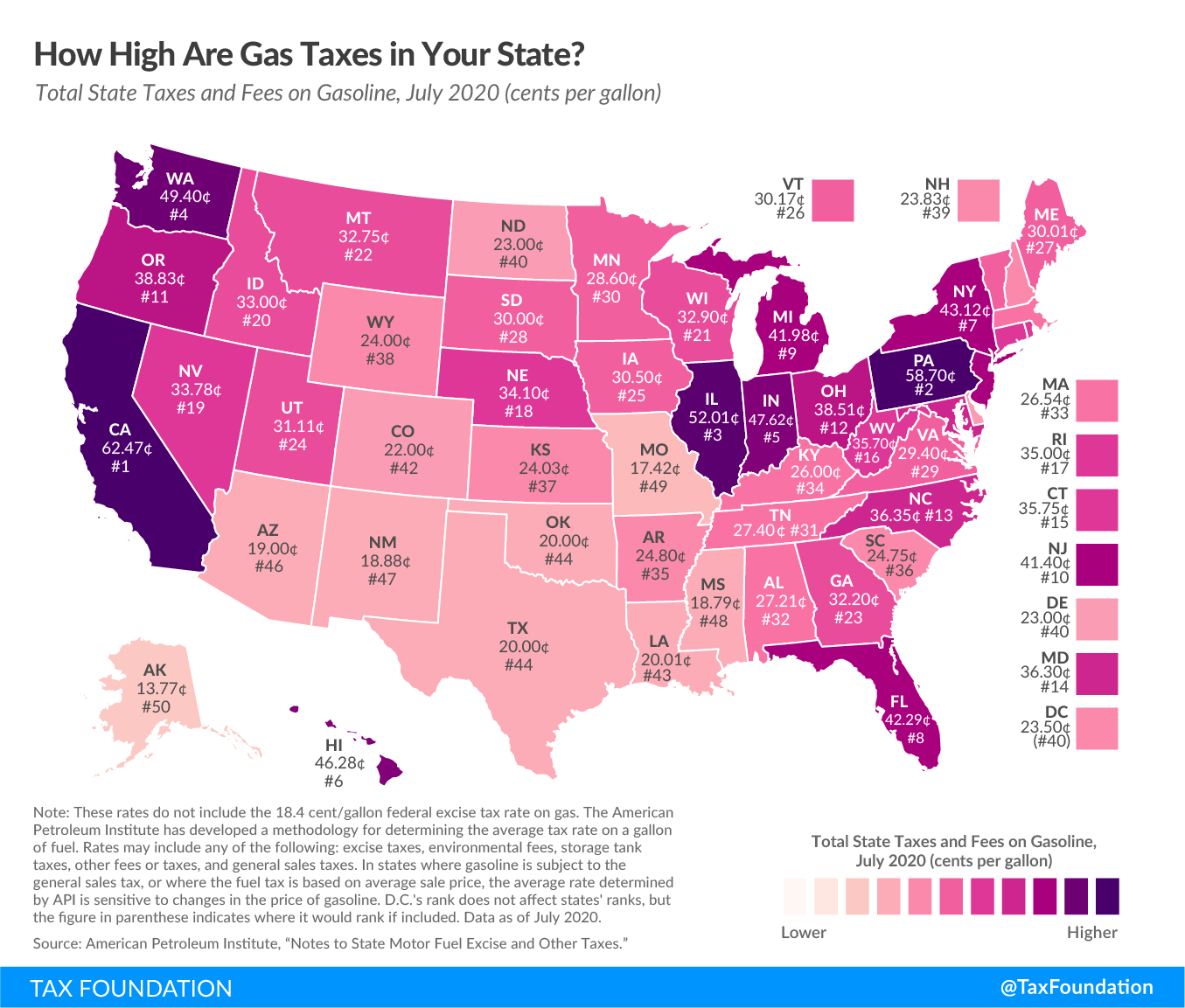
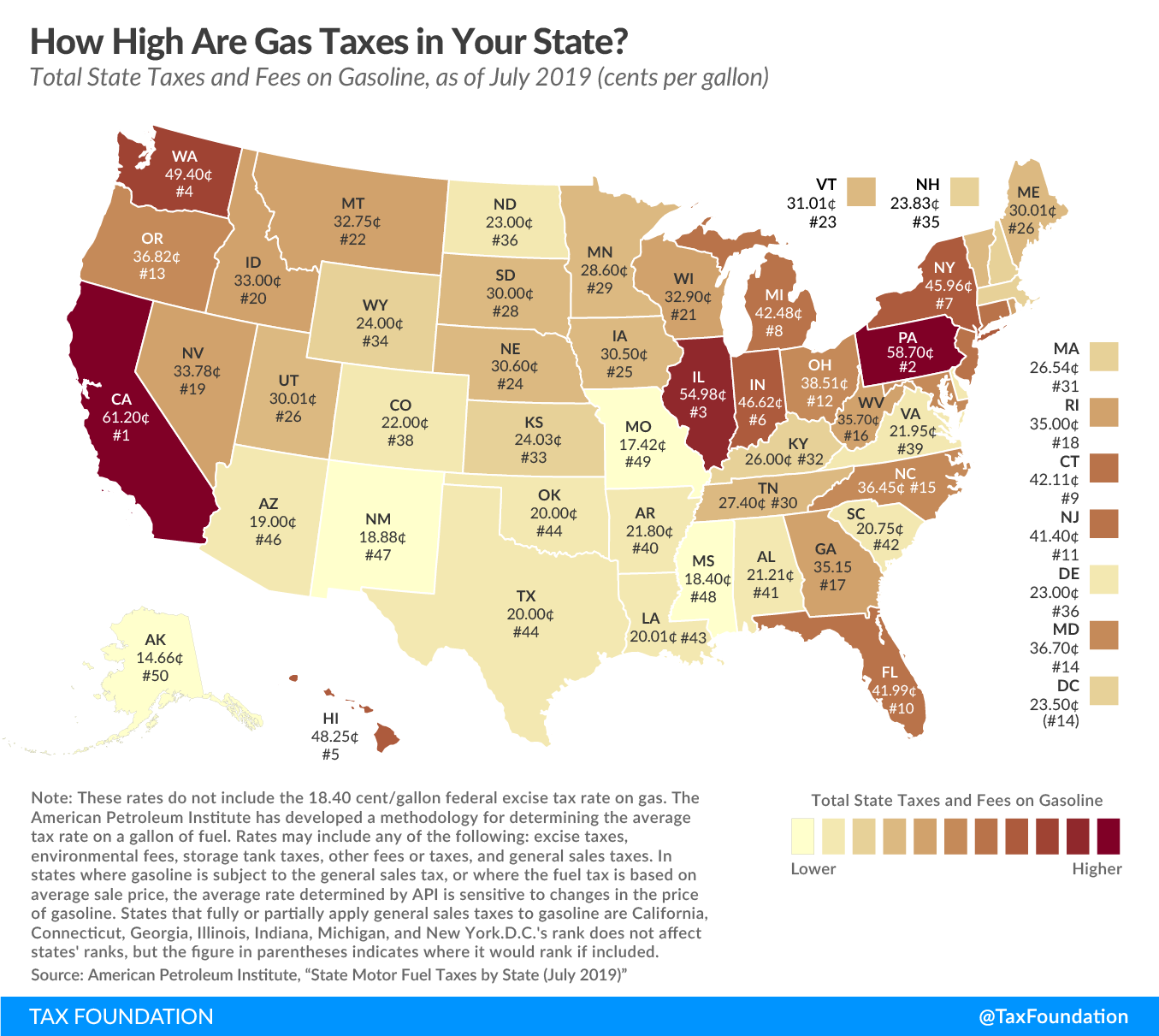
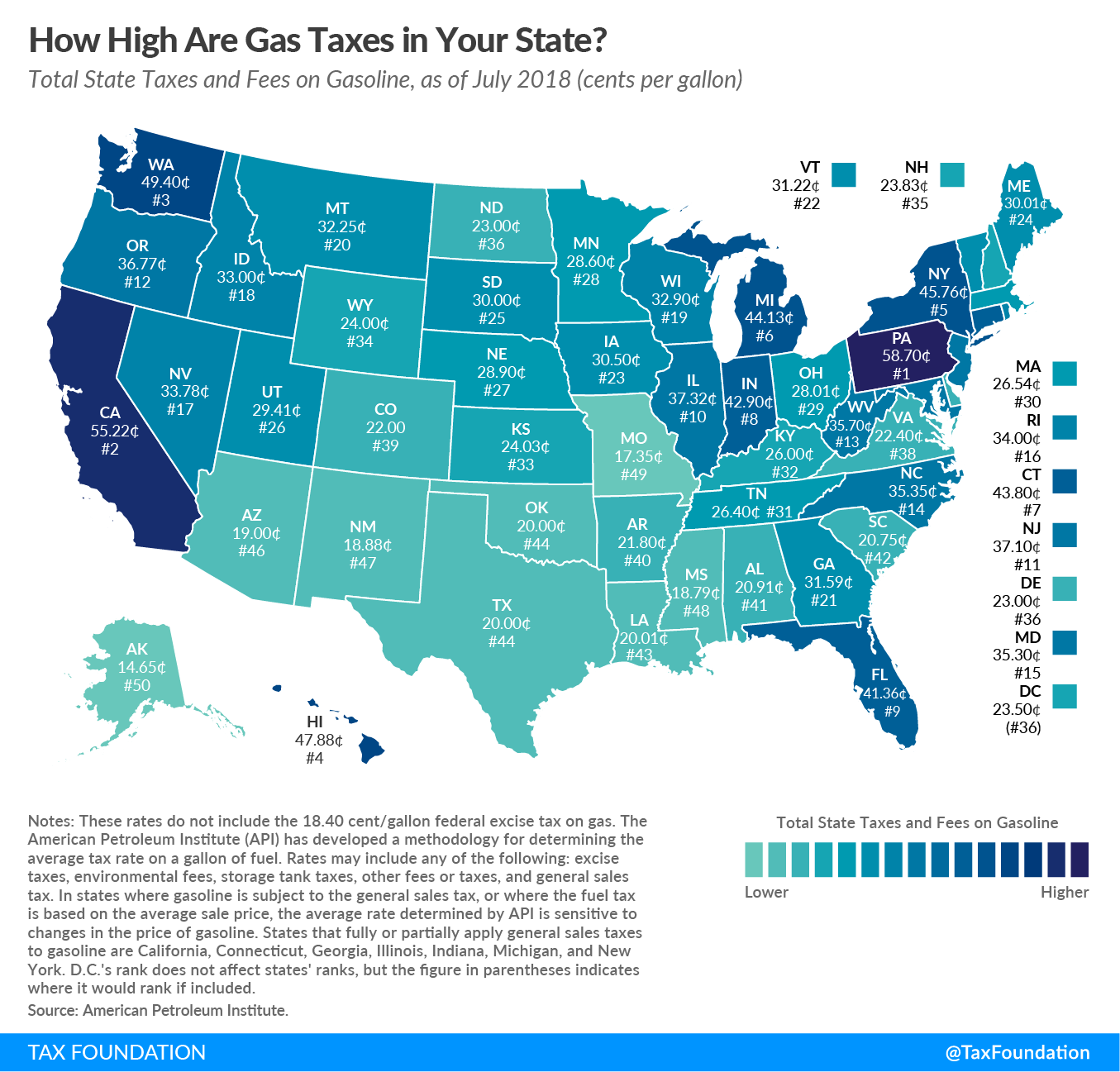
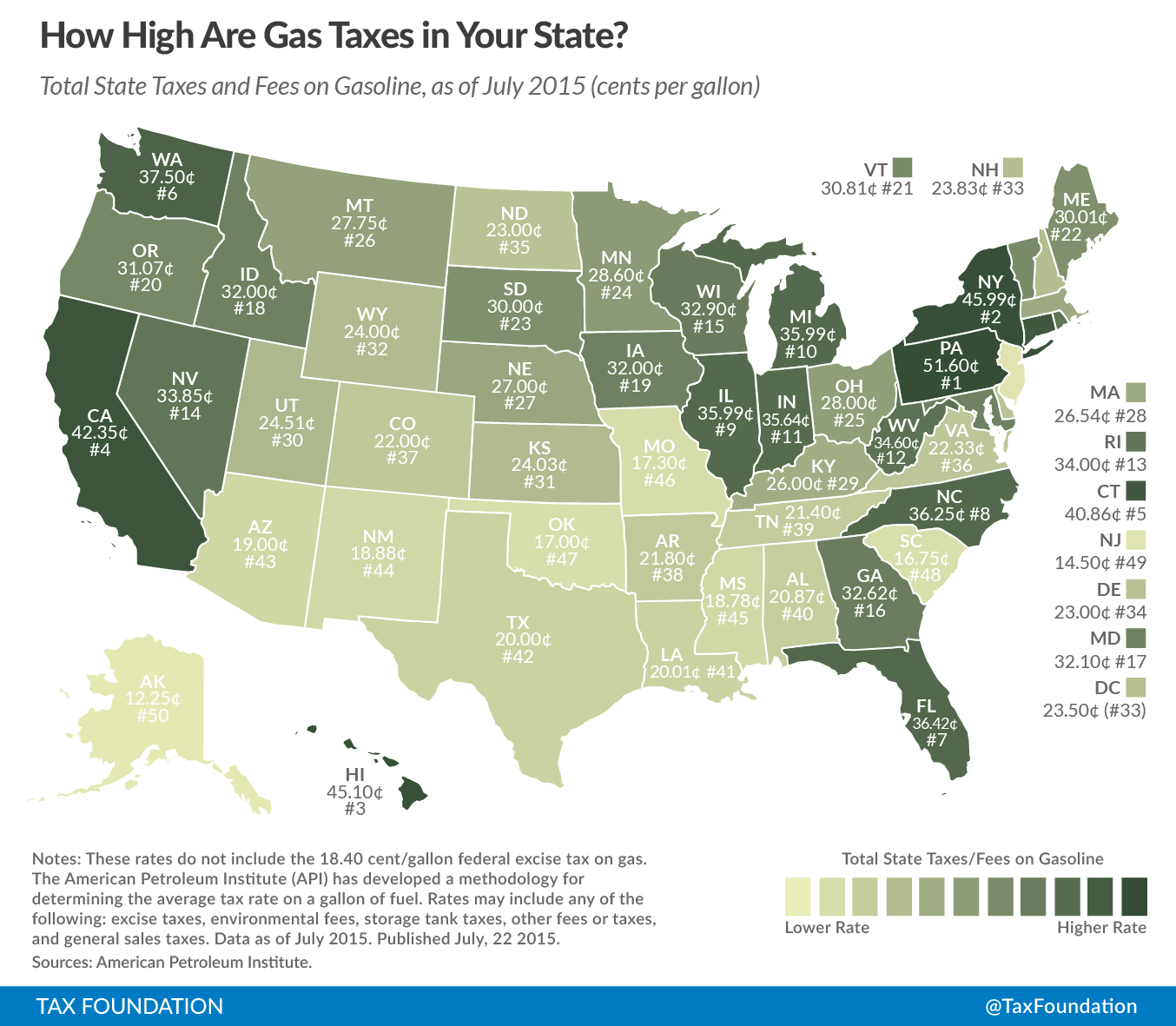
- Indiana’s gas tax increased by a total of 8.6 cpg after an increase in the per gallon license tax and the 7 percent use tax being applied to higher-priced gas. This increased the state’s rank from 5th to 3rd highest gas tax in the nation.
- Utah decreased the gas tax by 6.6 cpg, reducing the state from 14th to 23rd
- Michigan’s gas tax increased by 5.2 cpg, which was not enough to change the state’s ranking.
- New Jersey increased the gas tax by 4.2 cpg, which increased the state’s ranking by one to 7th highest in the nation.
- Illinois increased the gas tax by 4 cpg, maintaining its place as the 2nd highest gas tax state.
- Vermont’s gas tax increased by 3.5 cpg, bringing the state from 24th to 16th
- Mississippi increased the gas tax by 3 cpg, increasing the state’s rank from 43rd to 38th
- California’s gas tax increased by 2.7 cpg, maintaining the state’s place as the highest gas tax in the nation.
- Washington’s gas tax increased by 1.1 cpg, now the 4th highest in the nation after being passed by Indiana.
- Colorado increased its per gallon Road Usage Fee by 1 cpg, increasing the state’s total gas tax from 29th to 26th
- Other states changed their gas taxes by less than 1 cpg.
Many states do not allow localities to levy their own taxes on gasoline, but some states allow local taxes that impose a significant additional cost to drivers. Local taxes in Hawaii, for instance, are higher than the state’s excise taxAn excise tax is a tax imposed on a specific good or activity. Excise taxes are commonly levied on cigarettes, alcoholic beverages, soda, gasoline, insurance premiums, amusement activities, and betting, and typically make up a relatively small and volatile portion of state and local and, to a lesser extent, federal tax collections., up to an additional 24 cpg in Maui. Nevada also has significant local-level taxes and automatically increasing levies from the Regional Transportation Commission’s Fuel Revenue Indexing. These total to 39.8 cpg in Clark County and 67.8 cpg in Washoe County, where the local tax is more than the third highest state tax rate.
A few states also levy a tax as a percentage of gross receipts on the sale of fuels, which is difficult to convert into a per gallon rate. The highest of these is in Connecticut, where the Petroleum Products Gross Earnings Tax is 8.1 percent on wholesalers. The Connecticut Department of Revenue estimates the rate as applied to diesel fuel to be about 20.9 cpg but does not estimate the per gallon rate for gasoline.
Several states also impose additional burdens on gas prices via environmental programs and regulations like carbon taxes. Rather than a user fee to fund the roads, these policies are designed to shape behavior by discouraging the consumption of products or services that generate emissions like motor fuel.
Determining the marginal impact of carbon taxes and environmental programs on the per gallon price of gas is difficult. Estimates vary substantially. State environmental agencies tend to estimate the impact of their programs to be much lower than most economic analyses, for instance. Some environmental programs like cap-and-trade systems have fluctuating prices, and thus a fluctuating impact on gas prices.
Including the impact of state environmental programs on total gas tax burden widens the range of gas taxes across the country. Environmental programs have the largest effect in California, where the Legislative Analyst’s Office estimates the cap-and-trade program increases gas prices by about 23 cpg. The state’s Low Carbon Fuel Standard (LCFS) was amended effective July 1, 2025, to be more stringent. The California Air Resources Board had previously expected the fuel standard to increase gas prices by 52 cpg in 2026. More recently, the California Energy Commission estimated the LCFS to increase gas prices by 19 cpg. The burdens of these programs and the state’s direct taxes total about $1.156 per gallon.
Similarly, Washington’s Climate Commitment Act was originally expected to raise gas prices by 44 cpg at carbon prices less than the prices bid at most recent auction, but the Department of Ecology now claims the impact on prices is only 7.2 cpg from the Clean Fuel Standard and 5.16 to 15.5 cpg from the cap-and-invest program.
The Oregon Department of Environmental Quality estimates its Clean Fuels Program to have increased gas prices by about 9.35 cpg in 2025. Oregon’s Climate Protection Program began implementation recently, but the state has not estimated its potential effect on gas prices. The program’s cost of carbon is notably higher than other states’, so the burden is likely to also be higher if it survives legal challenges.
New Mexico began implementing its own Clean Transportation Fuel Program in April 2026. The program is still being developed, and its total burden on gas prices will depend on the cost of associated carbon credits. The New Mexico Environment Department notes that the program does not levy a tax or fee directly at the pump, but increased fuel costs are certain to result in an impact on gas prices as they do for any similar program.
Whether these environmental taxes are implemented as a tax on carbon emissions, fuel standard mandates, a cap-and-trade system, or other program, these policies increase the price of gasoline.
The clearest way to see the impact of state policy on fuel prices may be to examine fuel prices. Taxes and environmental policy are important factors, of course, but West Coast states have reduced refining capacity and higher transportation costs than the rest of the country. While determining the exact impact on prices is difficult, it seems clear that the states’ environmental programs impose a significant burden on the prices drivers pay at the pump.
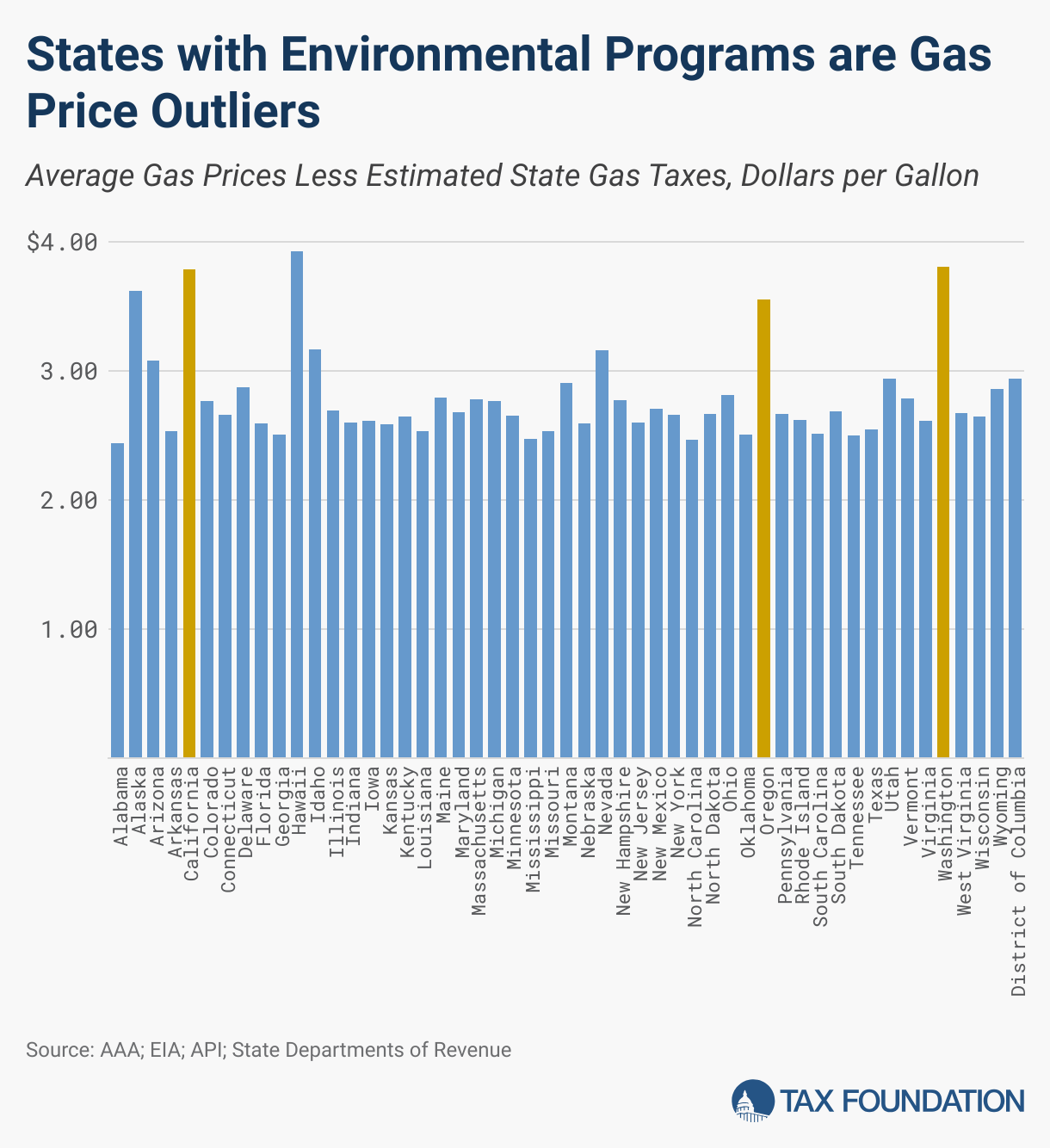
These gas prices are significantly elevated compared to last year, largely driven by supply factors related to the ongoing war with Iran. Higher prices result in higher tax burdens in states with ad valorem, or price-based, gas taxes like Indiana. High prices also increase the popularity of temporary suspensions of the taxes via gas tax holidays.
These sorts of holidays, like those for state sales taxes, are inefficient for providing relief to consumers. For gas taxes, holiday gimmicks fail to address the underlying causes of high prices and artificially subsidize fuel consumption precisely when supply is tightest. They exacerbate funding issues for roadways when road user fees already struggle to cover their costs while only minimally lowering drivers’ tax bills. The cost of the roads remains the same, and reducing the gas tax only necessitates shifting the burden of those costs to less appropriate, more general sources of revenue, like income or sales taxes.
The gas tax is meant to serve as a user fee for the roads, but the efficacy of per gallon excise taxes on fuels for this continues to deteriorate. As electric vehicles, which do not pay into the gas tax, become increasingly prominent, vehicle fuel efficiencies steadily improve, and inflationInflation is when the general price of goods and services increases across the economy, reducing the purchasing power of a currency and the value of certain assets. The same paycheck covers less goods, services, and bills. It is sometimes referred to as a “hidden tax,” as it leaves taxpayers less well-off due to higher costs and “bracket creep,” while increasing the government’s spendin continues to erode the real value of revenues from unindexed rates, the gas tax becomes a worse proxy for the price of roads.
Facing this reality, most states have begun to charge drivers of electric vehicles an additional fee to account for the revenue lost from the gas tax. With most states still unable to fully fund their transportation system with transportation taxes and fees, many are considering replacing their gas taxes entirely with vehicle miles traveled (VMT) taxes instead, charging drivers per mile driven rather than per gallon of gas consumed. If properly calibrated, this would eliminate the non-neutral treatment of vehicles with different fuel efficiencies, align roadway revenues to expenditures, and ensure that drivers are the ones paying for the roads.