Amendment 3: A Restructuring of Florida’s Local Tax Base
Florida has long maintained one of the nation’s most competitive state tax codes, but a fundamental change proposed by Amendment 3 could undermine that competitiveness.
30 min read

Florida has long maintained one of the nation’s most competitive state tax codes, but a fundamental change proposed by Amendment 3 could undermine that competitiveness.
30 min read
While there are many factors that affect a country’s economic performance, taxes play an important role. A well-structured tax code is easy for taxpayers to comply with and can promote economic development while raising sufficient revenue for a government’s priorities.
72 min read
Washington’s new income tax on high earners doesn’t take effect until 2028, but it is already generating a lot of activity. A measure on the ballot this November, Initiative 645, would reverse the legislature’s decision, preventing the new tax from taking effect.
5 min read
The 2026 Regional Tax Competitiveness Index for Spain highlights a growing divergence between regions that have embraced tax reform and those whose tax systems have remained largely unchanged.
7 min read
The federal government’s debt burden and interest on the debt are near record levels and headed higher, raising legitimate concerns about an eventual debt crisis. Given the increasingly dysfunctional budget process, the most viable option on the table to stave off such a crisis is a statutory bipartisan fiscal commission with buy-in from leaders of both parties.
6 min read
Imposing sales taxes on rental car companies’ fleet purchases, in addition to the sales and rental car excise taxes levied when those cars are rented, yields double taxation and causes harmful tax pyramiding.
9 min read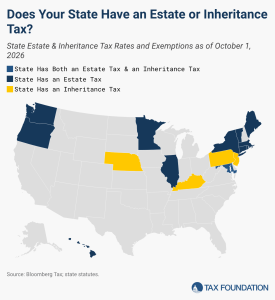
In addition to the federal estate tax, which has a top marginal rate of 40 percent, 12 states and the District of Columbia impose estate taxes, while five states levy inheritance taxes.
8 min read
What happens when voters decide tax policy directly? This November, roughly 40 tax measures are on the ballot across 17 states. Some states want higher taxes on top earners, others want to write low rates into their constitutions, and Missouri voters will decide whether to start a fund that could one day replace every state tax.
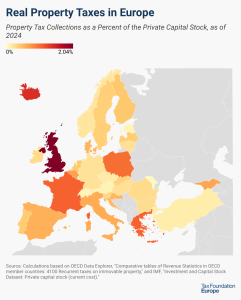
High property taxes levied not only on land but also on buildings and structures can discourage investment in infrastructure, which businesses would have to pay additional tax on.
3 min read
On Election Day, Coloradans will get to decide on two competing measures on income taxes: an initiated statute that would cap income taxes at the current 4.4 percent rate; and a constitutional amendment that would authorize a graduated-rate individual and corporate income tax, paired with an initiated statute setting new rates, with a top rate of 8.4 percent.
6 min read
Missing out on a tax rebate check is certainly disheartening, but New Jersey wallets are getting actively drained by an even bigger problem in the tax code: the state’s graduated-rate income tax thresholds don’t change with inflation, either.

The 2026 Spanish Regional Tax Competitiveness Index allows policymakers and taxpayers to evaluate and measure how their regions’ tax systems compare.
8 min read
The Rental Housing Investment Act (RHIA) would remove much of that tax penalty by allowing developers of new rental housing to immediately deduct up to $150,000 of cost per unit.
7 min read
Congress has passed some major simplifying reforms in recent years, but the tax code has still grown more complex over the past few decades. New carveouts, savings vehicles, and targeted tax increases would complicate it further.
8 min read
The proposed GROWTH Act would make the tax treatment of investment funds more consistent and improve the tax treatment of saving in the US by allowing investors to defer tax on qualifying reinvested capital gains distributions until they sell their fund shares.
6 min read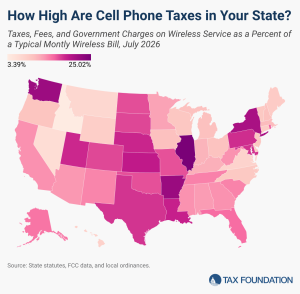
Applying the sales tax, a traditional broad-based consumption tax, is perfectly appropriate, but excessive targeted taxation of wireless services lacks the traditional justifications—a user-pays system or the internalization of social costs—for excise taxation, raising consumer costs and discouraging investment.
5 min read
California’s billionaire tax is on the ballot this November, and it raises more questions than answers. From lost government revenue to legal battles that could drag on for years, what would this first-in-the-nation wealth tax actually do?

Americans will spend 6.9 billion hours complying with IRS tax filing and reporting requirements in 2026, costing about $387 billion in lost productivity. Including an additional $157 billion in out-of-pocket costs, complying with the federal tax code will cost Americans more than $544 billion this year, over 1.7 percent of GDP.
10 min read
Many states levy taxes on liquids on a per-barrel basis. However, some states define a “barrel” differently than the standard measurement. The landscape of unharmonious units creates complexity and compliance costs for businesses that must pay these taxes in multiple states.
5 min read
The European Union’s revised Tobacco Excise Directive (TED) is the latest proposal from Brussels that raises questions about the role that the EU plays in relation to the Member States.
7 min read