Movers and Shakers in the 2026 State Tax Competitiveness Index
In the spirit of change and improvement, it’s worth looking back to see which states have truly embraced tax competitiveness since 2020, and which ones have lagged behind.
6 min read
In the spirit of change and improvement, it’s worth looking back to see which states have truly embraced tax competitiveness since 2020, and which ones have lagged behind.
6 min read
The recently enacted One Big Beautiful Bill Act (OBBBA) is certainly big, but is it “beautiful”? Many provisions in the OBBBA will have noticeable impacts on individual taxpayers, including some that are beneficial to your wallet.
4 min read
The State Tax Competitiveness Index enables policymakers, taxpayers, and business leaders to gauge how their states’ tax systems compare. While there are many ways to show how much state governments collect in taxes, the Index evaluates how well states structure their tax systems and provides a road map for improvement.
122 min read
Explore the IRS inflation-adjusted 2026 tax brackets, for which taxpayers will file tax returns in early 2027.
5 min read
How will recent federal tax changes affect you?
4 min read
While the OBBBA brings some stability by making many of the TCJA’s reforms permanent, it generally fails to reform the tax code’s accumulating complexity.
31 min read
We estimate the OBBBA will reduce federal taxes on average for individual taxpayers in every state. Across all individual tax filers throughout the US, the average tax cut per taxpayer will be over $3,700 in 2026.
4 min read
Our experts explain how this major tax legislation may affect you and how policymakers can better improve the tax code.
24 min read
Lawmakers should push against efforts to lift the SALT cap, and they should keep an eye toward bringing additional transparency to the tax system.
Fiscal pressures are likely to weigh heavily on lawmakers as they craft a tax reform package. That increased pressure could result in well-designed tax reform that prioritizes economic growth, simplicity, and stability, or it could encourage budget gimmicks and economically harmful offsets. Lawmakers should avoid the latter.
8 min read
The State Tax Competitiveness Index enables policymakers, taxpayers, and business leaders to gauge how their states’ tax systems compare. While there are many ways to show how much state governments collect in taxes, the Index evaluates how well states structure their tax systems and provides a road map for improvement.
115 min read
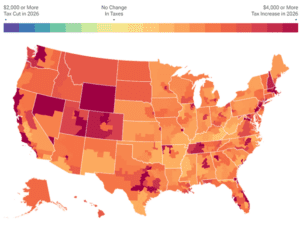
If Congress allows the Tax Cuts and Jobs Act (TCJA) to expire as scheduled, most aspects of the individual income tax would undergo substantial changes, resulting in more than 62 percent of tax filers experiencing tax increases in 2026.
3 min read
Explore the IRS inflation-adjusted 2025 tax brackets, for which taxpayers will file tax returns in early 2026.
4 min read
The stakes for next year’s expiring tax provisions are quite high. If Congress does nothing, then 62 percent of households will see their taxes go up in January of 2026.
Not every change in the Tax Cuts and Jobs Act simplified the tax code. However, the TCJA reduced compliance costs overall for individual filers, and allowing fundamental structural improvements to expire would make the tax code worse.
5 min read
Both candidates should provide clear and honest answers about their plans (or lack thereof) to address the nation’s urgent tax policy issues.
8 min read
Policymakers should have two priorities in the upcoming economic policy debates: a larger economy and fiscal responsibility. Principled, pro-growth tax policy can help accomplish both.
21 min read
At the end of 2025, the individual tax provisions in the Tax Cuts and Jobs Act (TCJA) expire all at once. Without congressional action, most taxpayers will see a notable tax increase relative to current policy in 2026.
4 min read
The TCJA improved the U.S. tax code, but the meandering voyage of its passing and the compromises made to get it into law show the challenges of the legislative process.
6 min read
Lawmakers should use the year ahead to thoroughly review and debate lasting, fundamental tax reform and prioritize policies that best boost work and investment incentives in a fiscally responsible manner.
4 min read