The History of Excess Profits Taxes Not as Effective or Harmless as Today’s Advocates Portray
Today’s advocates would do well to study the history of excess profits taxes before overselling these taxes as a solution to the COVID-19 crisis.


Today’s advocates would do well to study the history of excess profits taxes before overselling these taxes as a solution to the COVID-19 crisis.


The European Council recently agreed on a new multiannual budget and a recovery program, which sets EU budget levels for 2021-2027 totals €1 trillion (US $1.2 trillion). The lack of details on the various tax proposals and the eventual need for revenue sources to finance new EU debt mean there is a lot of work left for policymakers in Brussels to do.


As U.S. businesses struggle to recover from the economic downturn, Congress and the White House continue to debate a phase four relief package, which could include anything from incentives for domestic travel and a payroll tax cut to more fundamental reforms like enacting permanent full cost recovery.


From a revenue standpoint, Wisconsin was better off than many states going into this crisis, but the policy decisions—including tax policy decisions—state policymakers make in the months ahead will have far-reaching implications for how quickly jobs and wages are restored in Wisconsin.


Hungary is the only EU state to have actually implemented COVID-19 tax hikes.


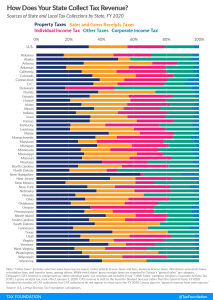
Revised state revenue forecasts show a significant decline in projected revenues for both the recently concluded FY 2020 and current FY 2021, though the picture they paint is considerably less dire than many feared a few months ago.


Property tax burdens in Connecticut continue to increase even as property values decline, whereas other states—including neighboring Massachusetts and New York—have managed to keep the growth of property tax burdens in check.


Before considering industry-specific laws and subsidies for onshoring, policymakers should make sure the U.S. tax code is not biased against domestic investment in the first place.


As concern over American competitiveness and onshoring of innovative activity increases, presidential candidates and policymakers should keep in mind the tax increases scheduled to take effect in the coming years, including the amortization of R&D and phaseout of the broader expensing provisions.


The USTR announced new tariffs in response to the French digital services tax of 25% on $1.3 billion worth of goods. The tariffs would apply to several make-up products, handbags, and assorted soaps.


Rather than limit improvements to certain sectors, lawmakers could pursue a broader policy of full expensing for all capital investment and neutral cost recovery for structures and clear the tax policy hurdles that currently stand in the way of private investment.


Cost recovery is the way the tax code permits firms to recover (or deduct) the cost of making investments. Cost recovery plays an important role in defining a business’ taxable income and can impact investment decisions.


The size and scope of the tax changes within the CARES Act created significant administrative challenges for the IRS. Lawmakers should prioritize simplicity in the next round of relief.


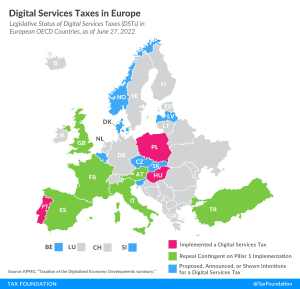
Digital services taxes effectively ring-fence the digital economy by limiting the tax to certain revenue streams of digital businesses, discriminating in favor of more traditional sectors of the economy.


Nineteen states had notable tax changes take effect on July 1, 2020. Pandemic-shortened sessions contributed to less—and different—activity on the tax front than is seen in most years, and will likely yield an unusually active summer and autumn, with many legislatures considering new measures during special sessions.


Corporate taxation has evolved significantly, with rates coming down significantly over the last several decades. Countries have redesigned their tax bases by changing the treatment of losses, interest, and capital costs. A recent OECD report highlights the general stabilization of corporate tax revenues and statutory rates alongside major changes to address profit-shifting opportunities.


While much of Germany’s EU presidency agenda is focused on policies to ensure economic stability and recovery from the COVID-19 pandemic, there’s a pair of tax proposals that the country is planning to develop and move forward at the EU level: a financial transaction tax and a minimum effective tax.


We recently hosted an exclusive webinar discussion to get up to speed on recent digital tax developments and gain insight from leading international tax experts on the OECD’s BEPS project.


Improving cost recovery for residential structures, while not a silver bullet for solving the housing crisis, would on the margin encourage more construction that would help push rents down across the board.


Iowa’s HF 2614, which passed both chambers of the legislature and now waits for the governor’s signature, makes several changes to the state’s tax code, which, although they will affect revenue, will encourage economic growth and make the state’s tax code more competitive.