Reviewing Joe Biden’s Tax Vision
Biden’s tax vision is twofold: higher taxes on high-income earners and businesses paired with more generous provisions for specific activities and households.
4 min read

Biden’s tax vision is twofold: higher taxes on high-income earners and businesses paired with more generous provisions for specific activities and households.
4 min read
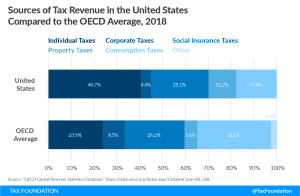
Value-added taxes (VAT) are traditionally considered regressive, meaning they place a disproportionate burden on low-income taxpayers. However, a recent OECD study used household expenditures micro-data from 27 OECD countries to reassess this conclusion.
5 min read
Tax credits like the ones approved in the Nebraska bill may help legislators buy some time to work toward a more permanent solution, but they are not, in and of themselves, an effective means of providing lasting relief or generating long-term economic growth.
7 min read
States can tax your income where you live and where you work—but a growing number of states may also seek to tax your income even if you neither live nor work there, an aggressive posture that becomes increasingly consequential as more Americans work remotely both during and potentially after the COVID-19 pandemic.
15 min read
What tax policy ideas did Harris propose along the campaign trail, and how do they differ from Biden’s plan?
4 min read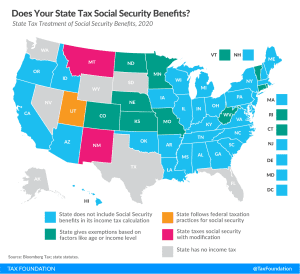
The question, “Does my state tax Social Security benefits?” may be simple enough, but the answer includes a lot of nuance. Many states have unique and specific provisions regarding the taxation of Social Security benefits, which can be broken into a few broad categories.
3 min read
Individuals respond to taxes by changing their behavior. Hence, when there are tax differences between countries, some might respond by moving to a lower-tax area. For higher-income individuals, the benefits of moving as a result of higher taxes are greater because they have more income or wealth at stake.
4 min read
On Thursday, U.S. Senators Marco Rubio (R-FL), Bill Cassidy (R-LA), Steve Daines (R-MT), and Mitt Romney (R-UT) released the Coronavirus Assistance for American Families Act (CAAF), which would provide payments of $1,000 to adults and children with Social Security numbers, subject to income limits used in the original round of rebates. Among other modifications, it would be more generous to households and families with children when compared to the original rebates distributed under the CARES Act.
5 min read
Brazil has one of the world’s most complex tax systems. Brazil has the opportunity to implement a simple consumption tax and foster tax progressivity at the same time.
5 min read
Today marked the release of second-quarter GDP data and provides a new glimpse into early changes in state and local revenues and spending. All told, second-quarter state and local tax receipts came in about 3.8 percent lower than they did in the same quarter a year ago. Income and sales taxes fell considerably while property and excise tax collections remained stable.
3 min read
A resurgence in coronavirus cases and receding economic activity in many states threaten the nascent economic recovery. To address the ongoing crisis, the Senate Republican Phase 4 proposal builds on the CARES Act provisions while modifying others, including a scaled down federal UI benefit.
8 min read