Key Takeaways
- While federal tax changes usually make most of the headlines, it is often state and local taxes that most closely impact our lives.
- The US has a federalist system of government that consists of three levels: federal, state, and local.
- Each level of government provides its own services and therefore levies its own taxes to generate revenue for these services.
- Federal taxes:
- Are paid by the most people
- Generate the most revenue
- Mainly generate revenue through income taxes
- Fund things like national defense, Social Security, Medicare, and infrastructure
- State taxes:
- Are more varied than federal taxes
- Mainly generate revenue through income and sales taxes (though some states do not have an income tax, while others do not have a sales tax)
- Vary from state to state
- Fund things like transportation, education, health care, and other services
- Local taxes:
- Are primarily property taxes, though some localities levy sales and income taxes
- Fund local schools, police and fire departments, parks, and public libraries
- While it may seem like you’re being double taxed, these different taxes levied by different levels of government fund different services provided by each government, whether federal, state, or local.
- When considering the different taxes we pay, it’s important to remember not just the different types of taxes, but also the different levels of taxing authority too.
- Understanding what taxes we may encounter (and where) can impact our financial well-being and connection as citizens to our government.
Transcript
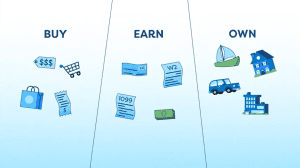
You might have learned there are three basic tax types: taxes on what you earn, buy, and own.
But did you also know that there are different LEVELS of taxation? Here’s why:
The US has a federalist system of government that divides authority across three levels—federal, state, and local.
Each level generates its own tax revenue to provide different services. Together, they form the full picture of the taxes we pay.
Most federal taxes are paid from income to fund things like national defense, Social Security, Medicare, and infrastructure.
State and local taxes are more varied. State taxes are typically funded largely by a combination of income and sales taxes, but there are some states that have no income tax, and a few that have no sales tax.
These taxes are used for transportation, education, health care, and other services specific to each state.
Property taxes are the primary form of local taxation, but some localities have income or sales taxes as well. They help fund local schools, police and fire departments, and services like parks and libraries.
When you look at your paycheck, it may seem like you’re being double taxed, but really, you’re just paying different taxes at different levels, to fund different governments and their services.
When most people think of taxes, they immediately think of the federal income tax. But it’s important to understand the taxes you pay at every level, because state and local taxes also impact your finances and fund the services you receive.