
Skip to content

Taxes In DC

2026 DC Tax Rates, Collections, and Burdens

How Do DC Taxes Compare to Other States?

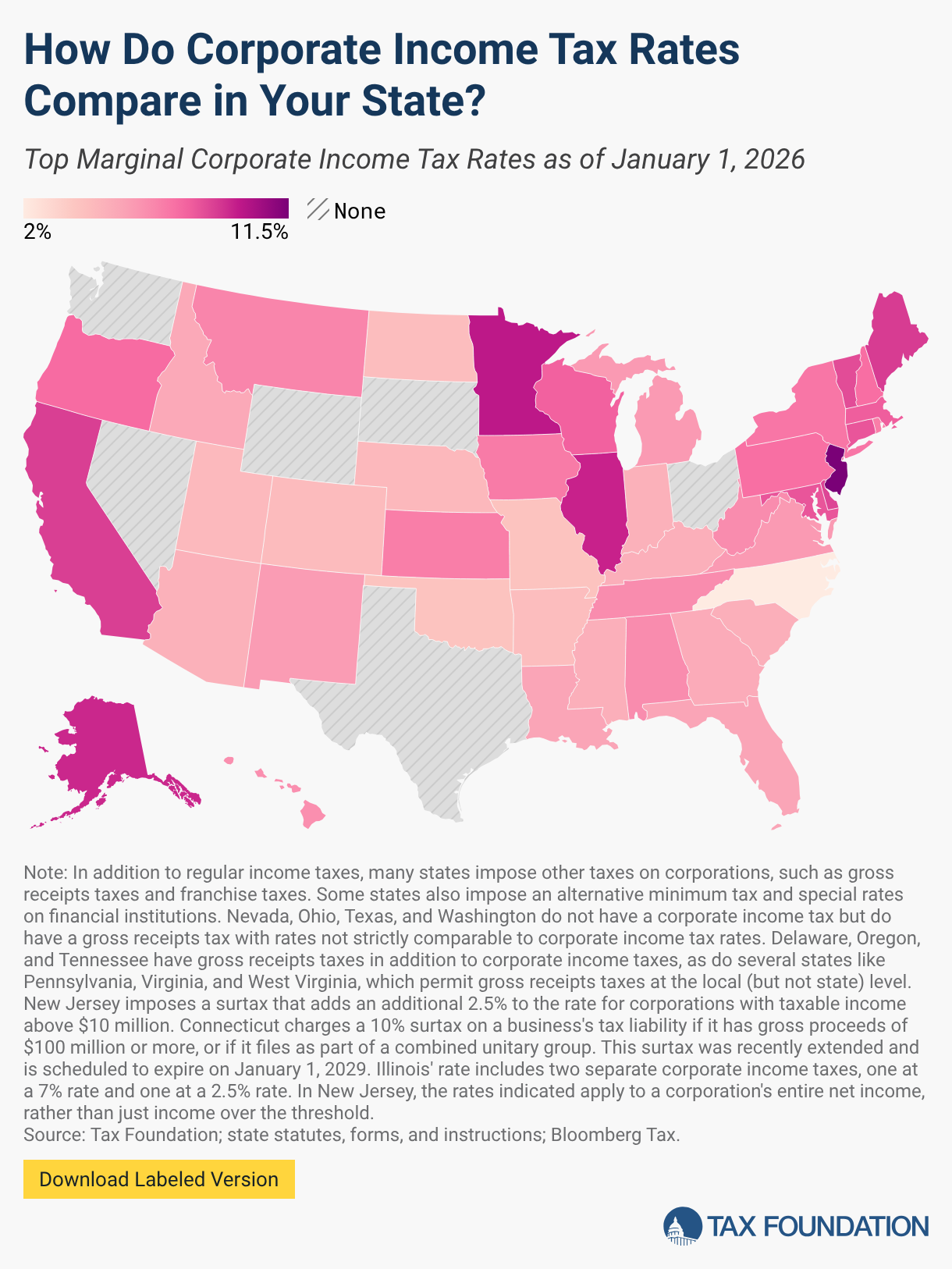
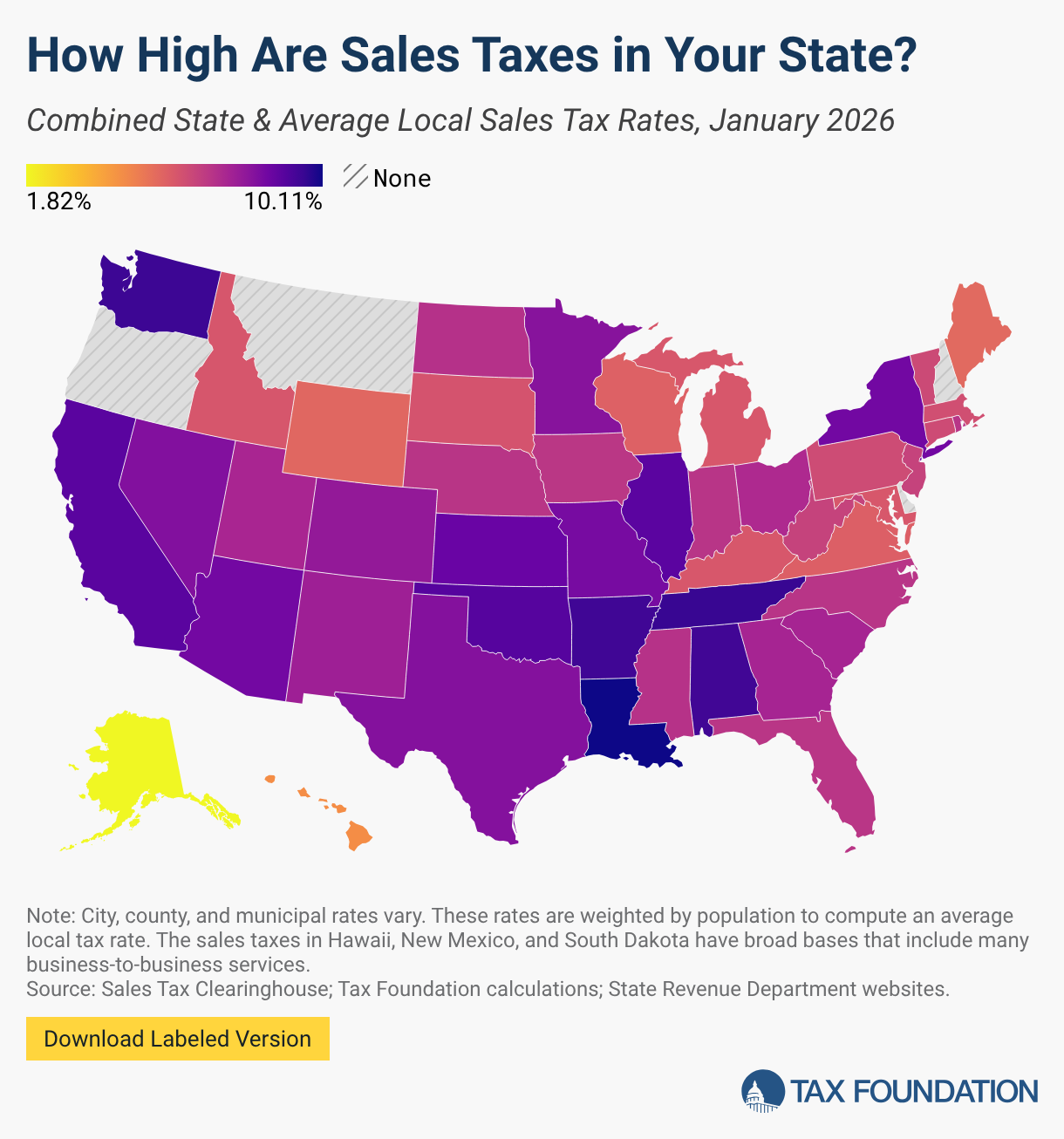
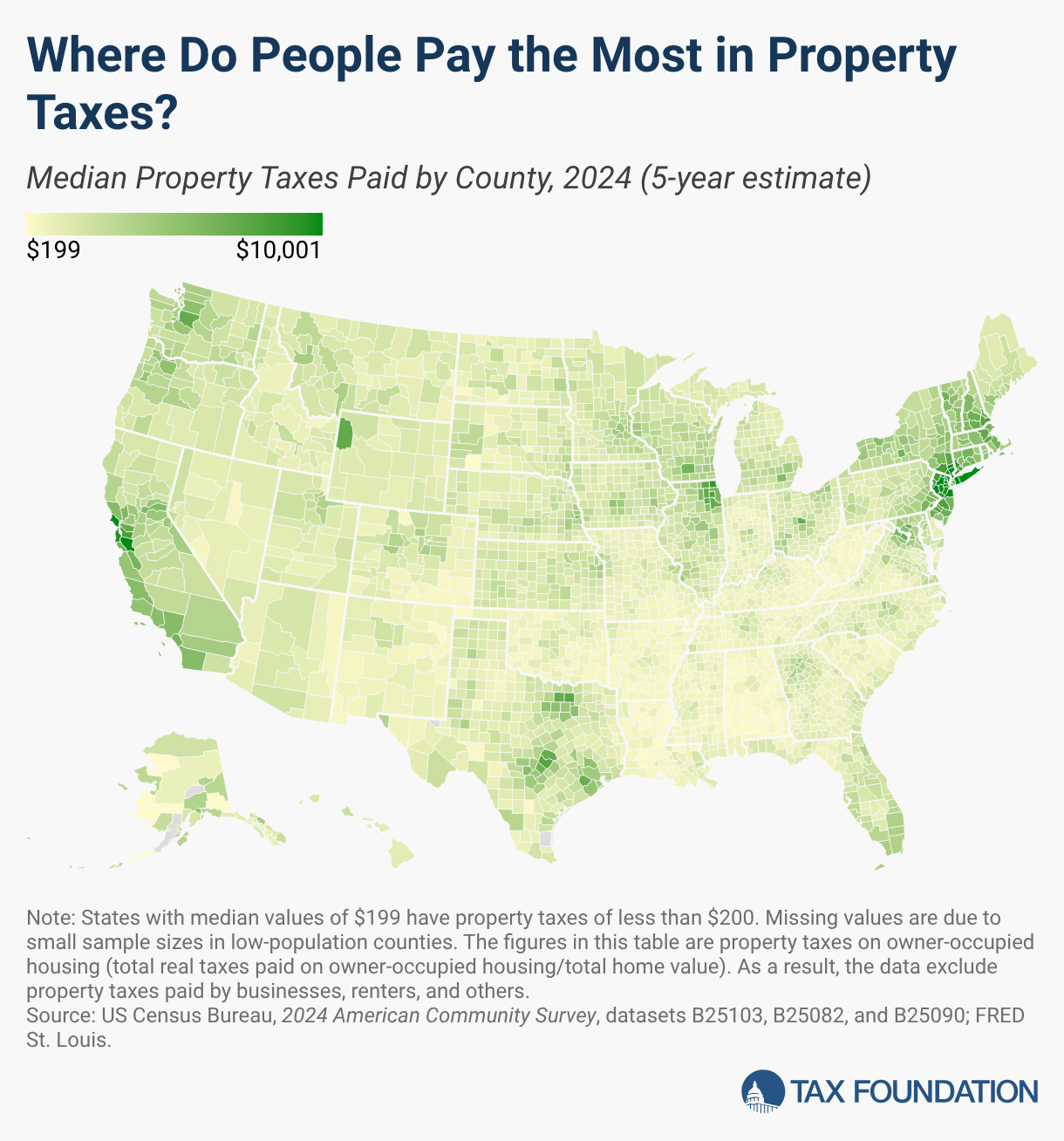
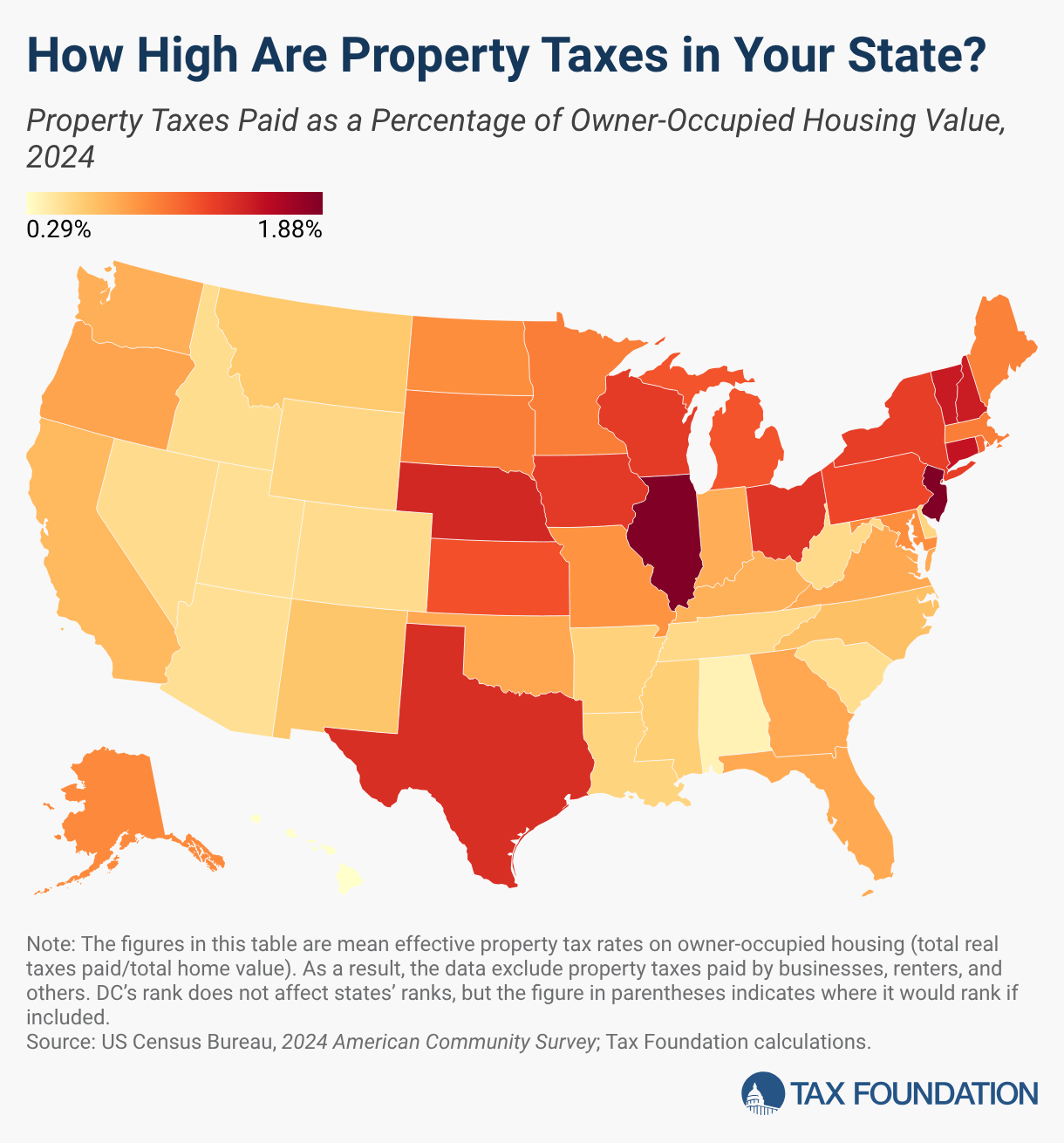
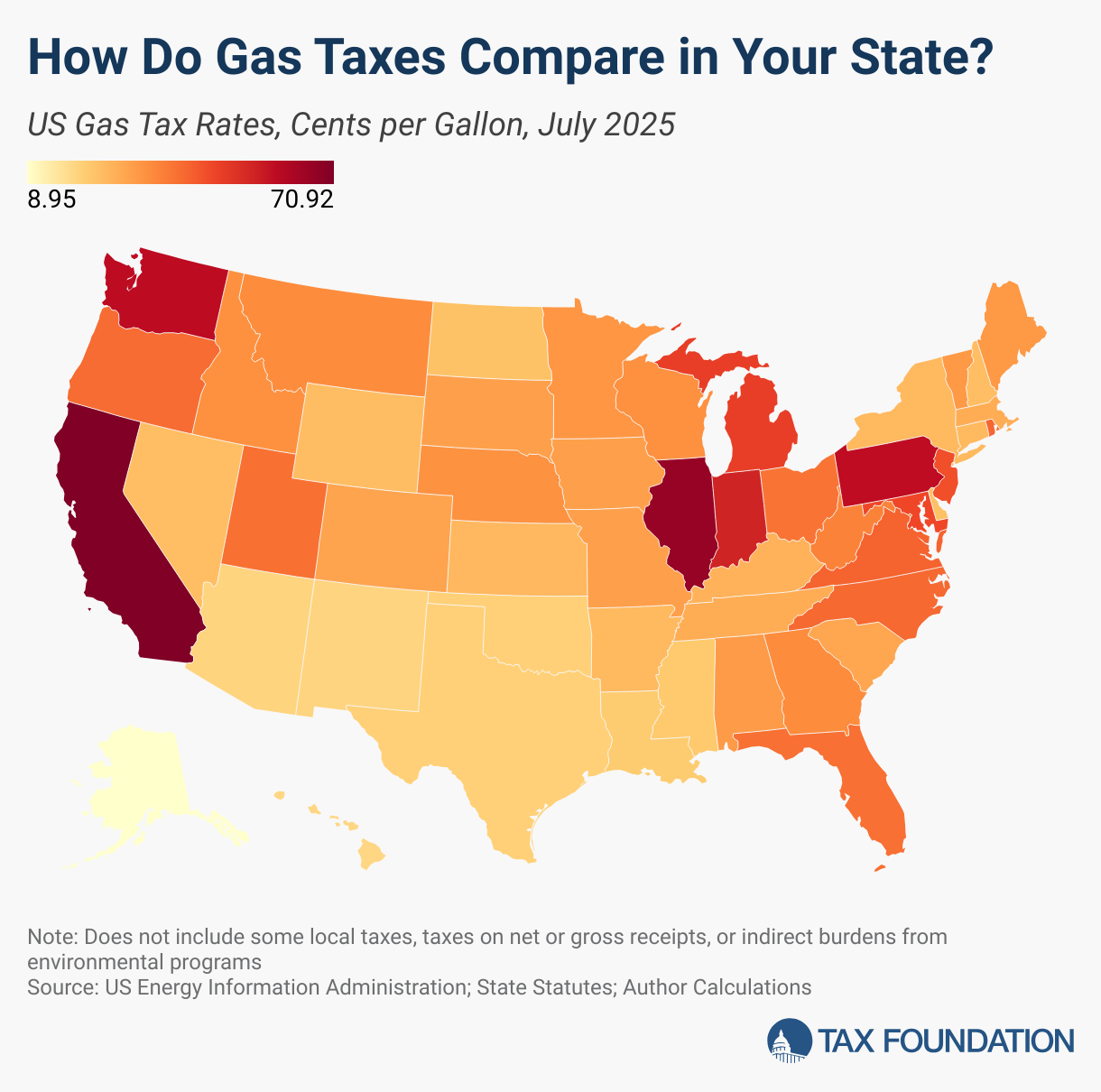
The District of Columbia (DC) has a graduated individual income tax, with rates ranging from 4.00 percent to 10.75 percent. The District of Columbia has an 8.25 percent corporate income tax rate, a 6.00 percent state sales tax rate, and an average combined state and local sales tax rate of 6.00 percent. The District of Columbia has a 0.60 percent effective property tax rate on owner-occupied housing value. The District of Columbia has an estate tax. DC’s gas tax is 35.7 cents per gallon, and its cigarette excise tax is $5.07 per pack of 20 cigarettes.

DC Tax Rankings, Debt, and Tax Revenue

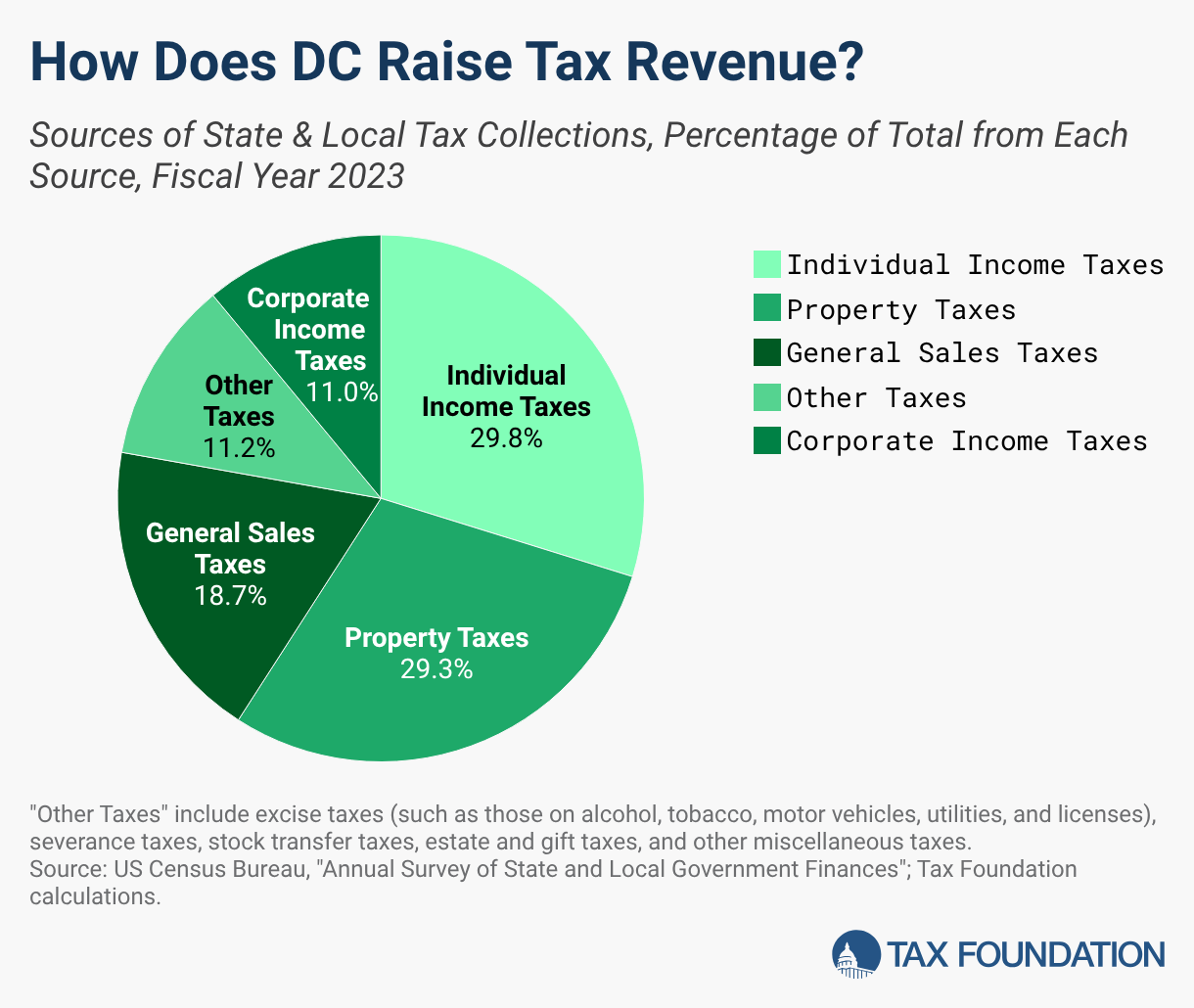
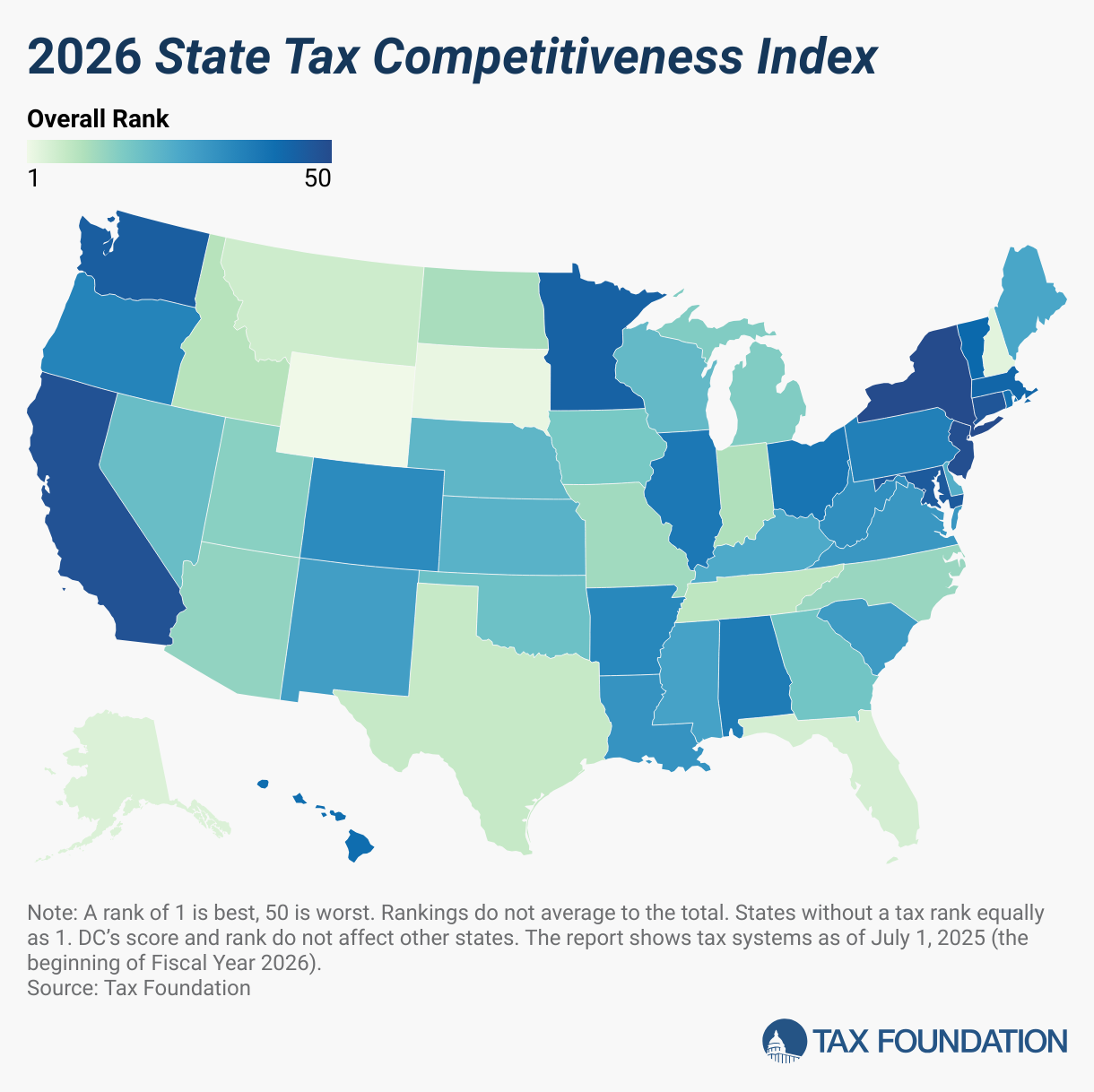
The District of Columbia raises tax revenue primarily through individual income taxes (29.8 percent of total state and local tax revenue), property taxes (29.3 percent), and general sales taxes (18.7 percent). The District of Columbia collects $15,009 in tax collections per capita, carries $32,166 in debt per capita, and has a 118 percent funded ratio of public pension plans. The District of Columbia’s tax system ranks 48th overall on the 2026 State Tax Competitiveness Index.

Understanding DC’s Tax System

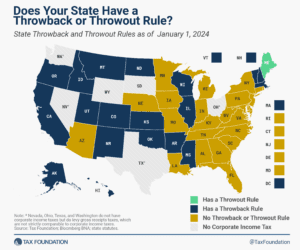
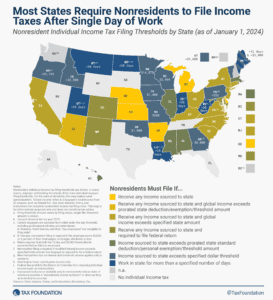
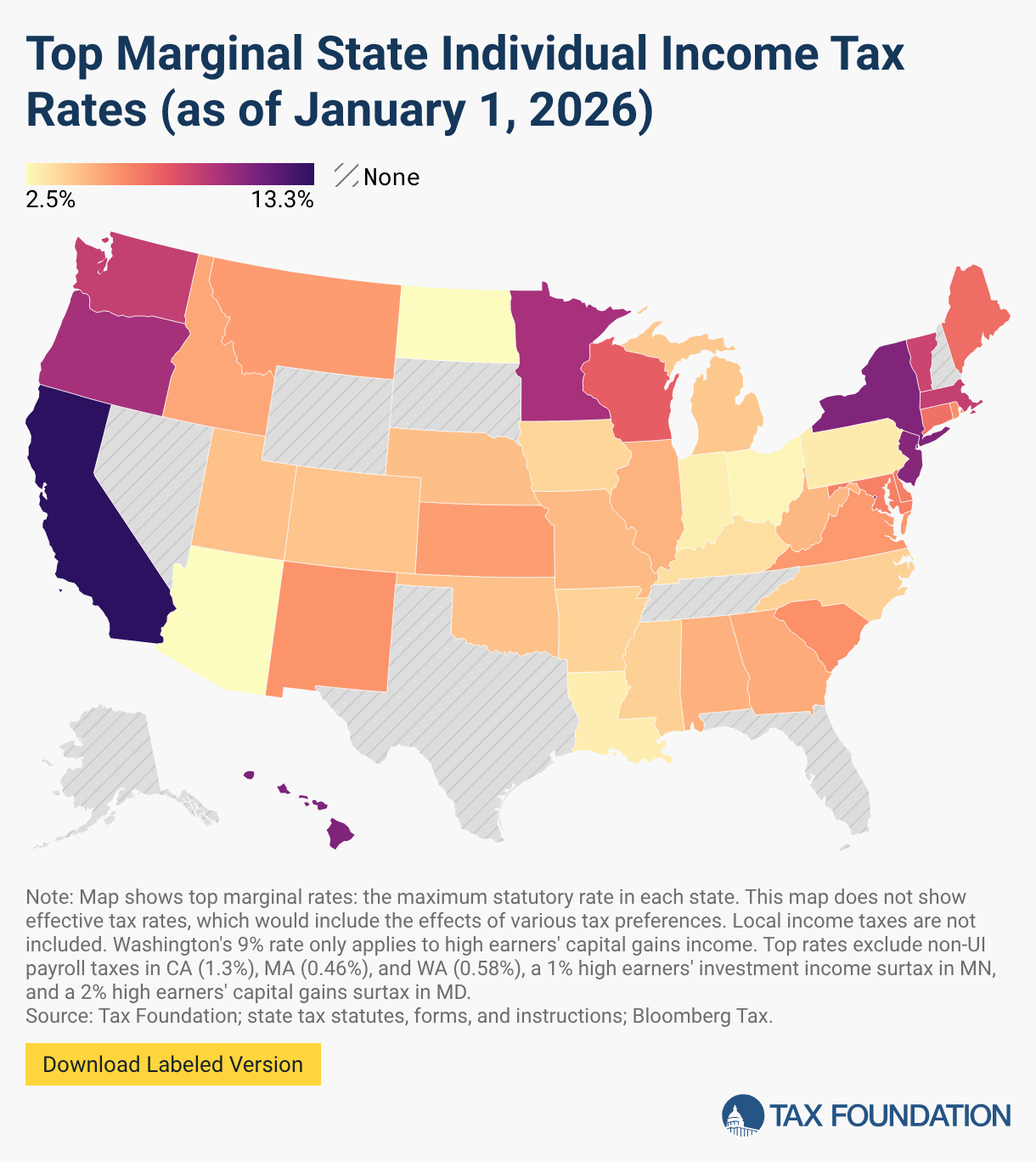
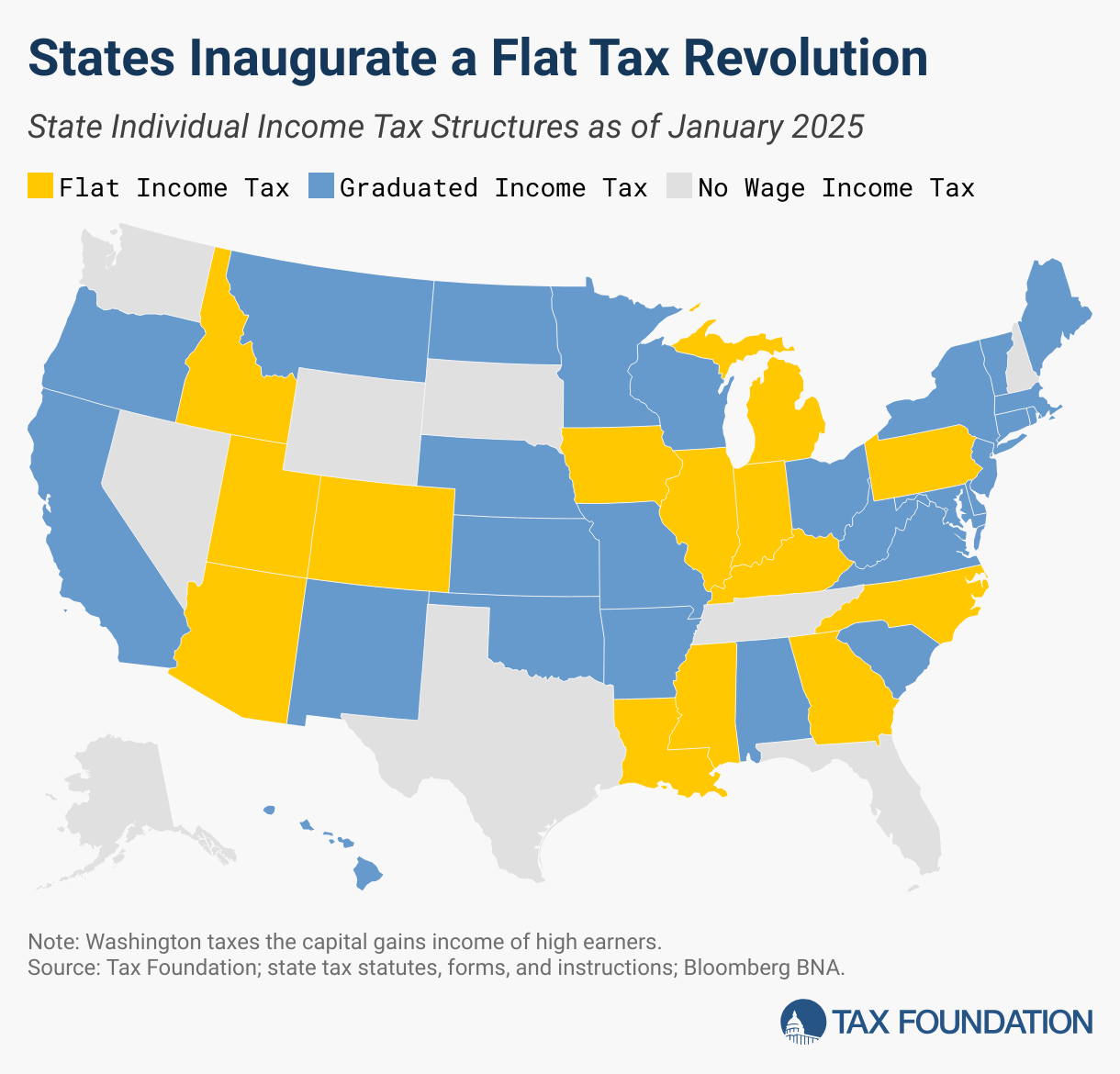
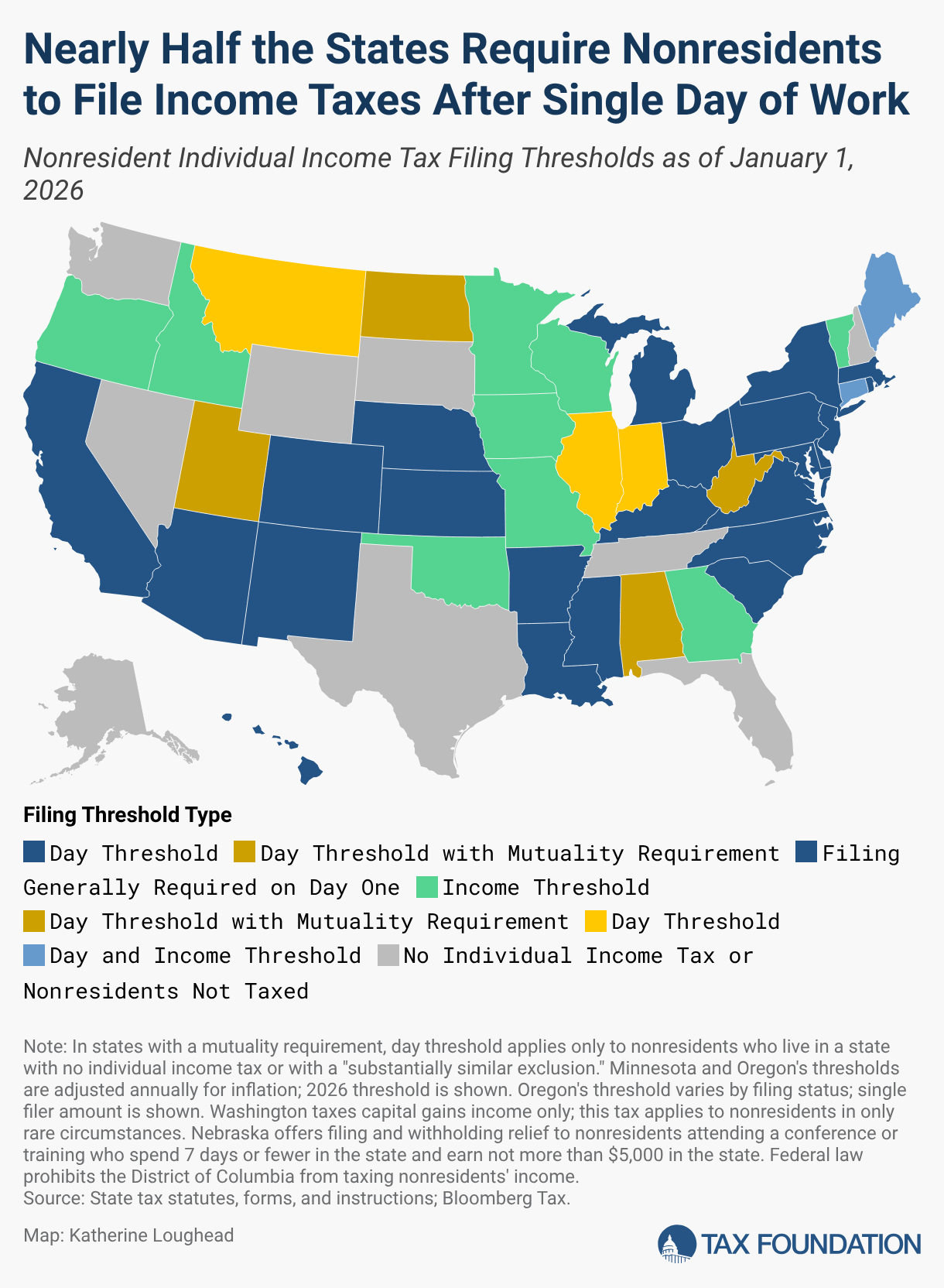
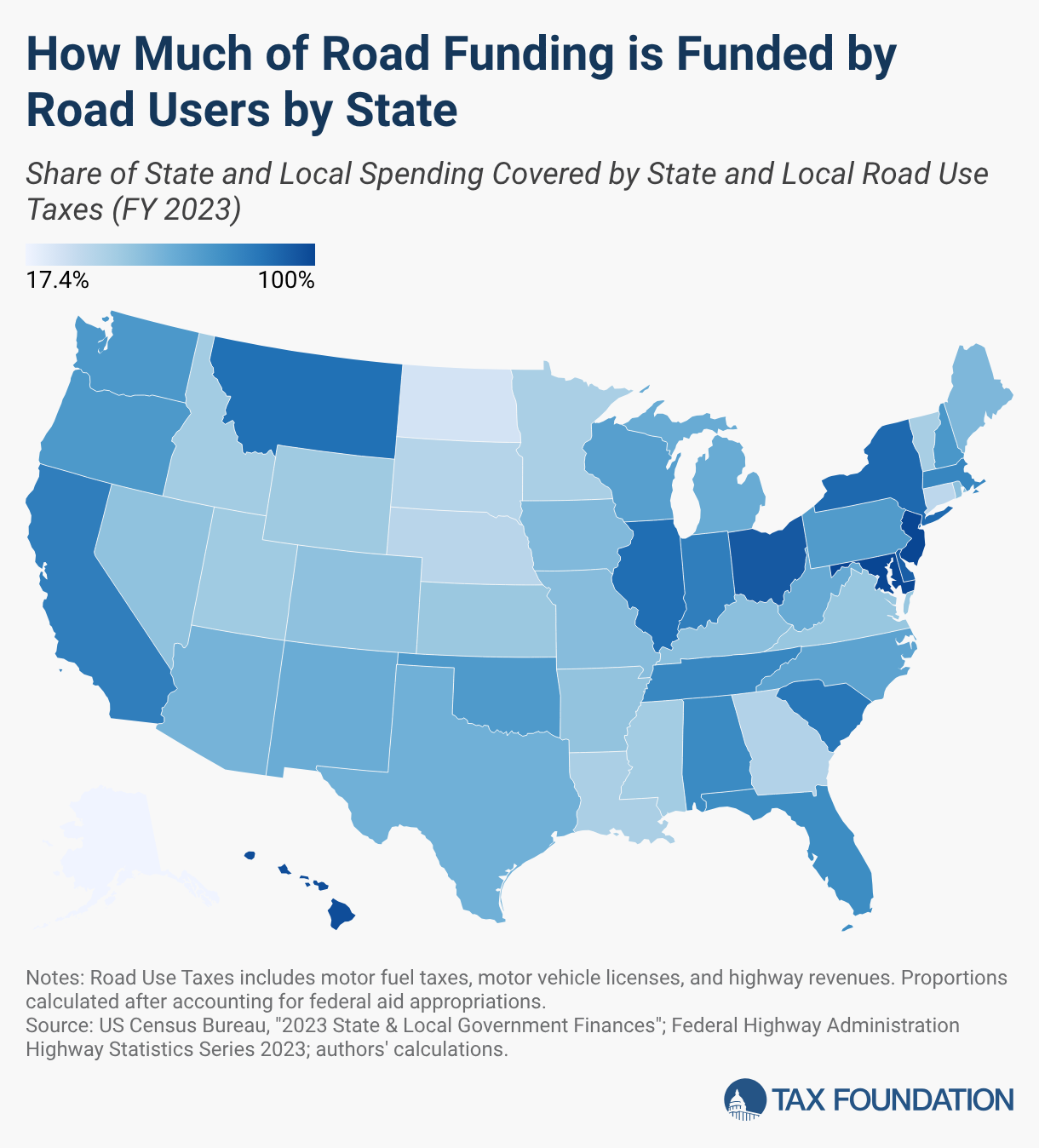
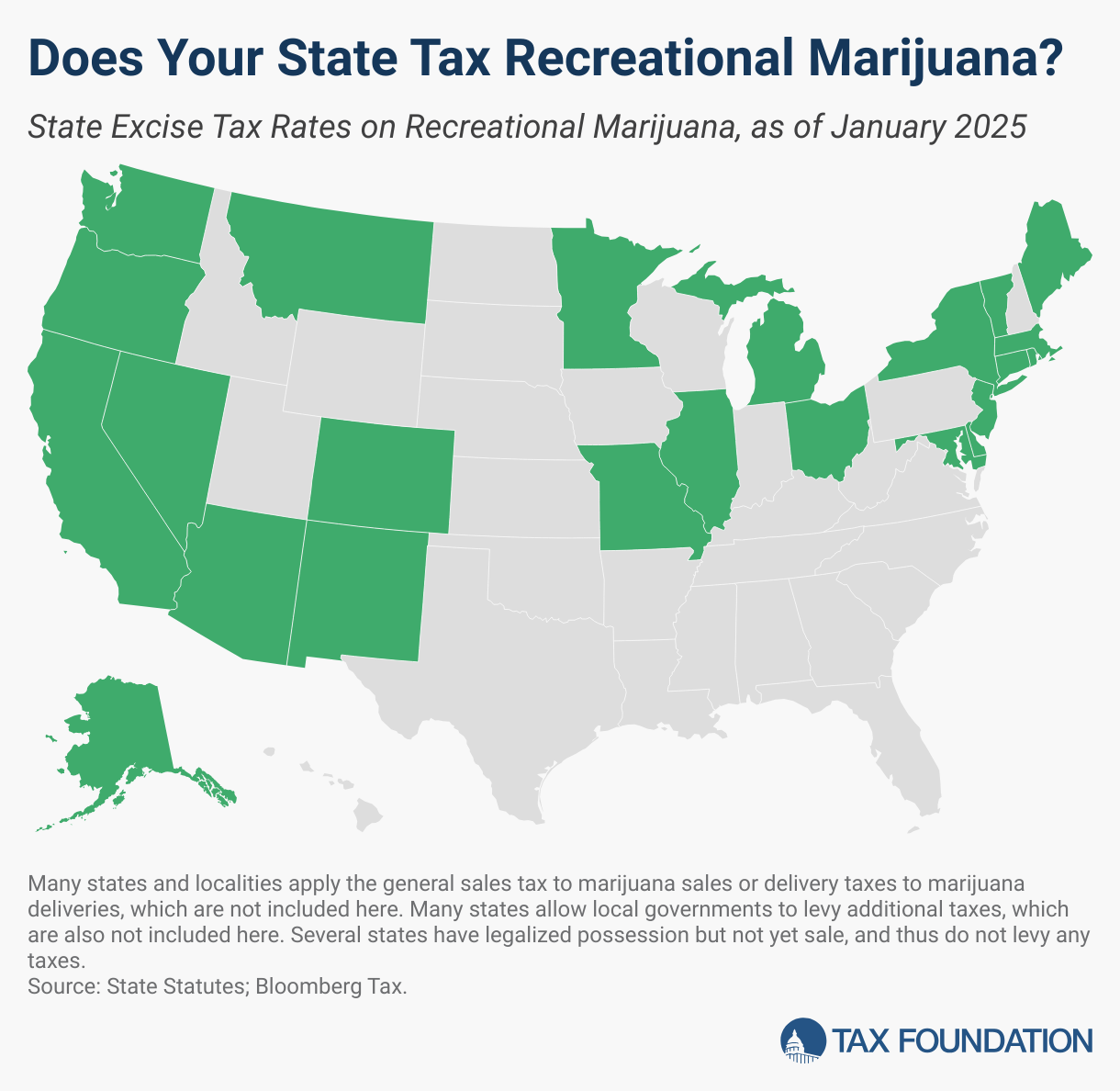
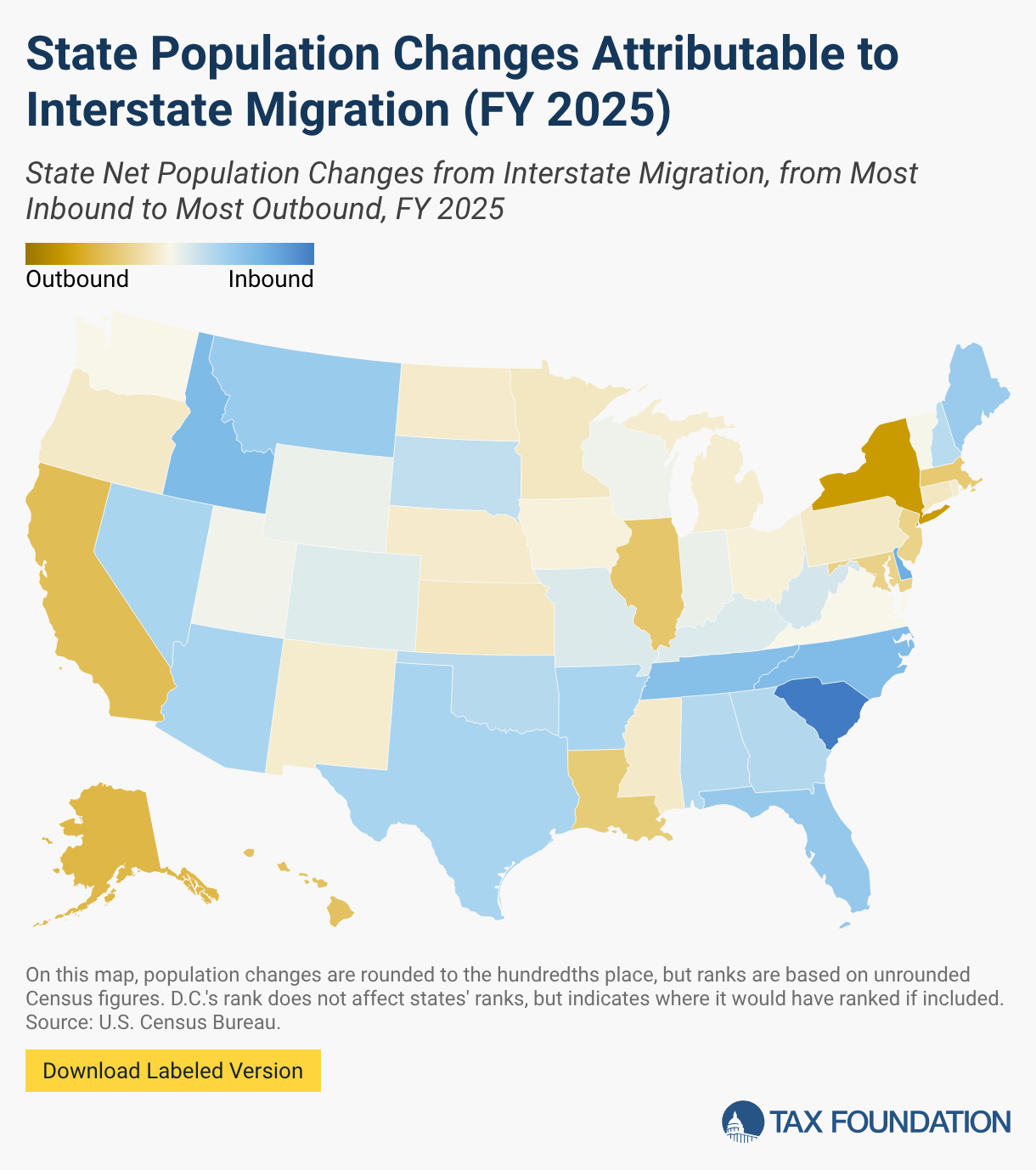
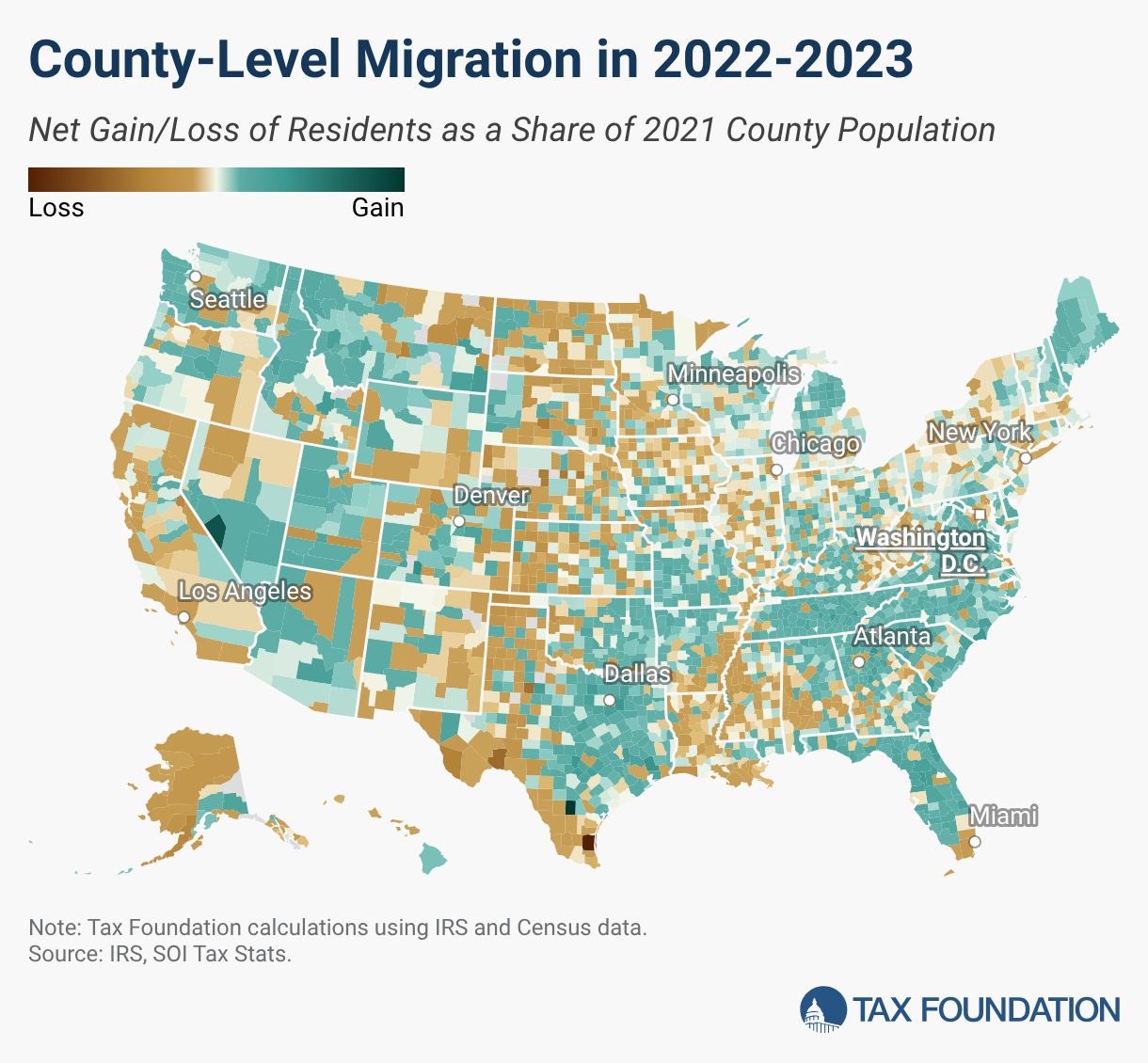
Each tax code is a multifaceted system with many moving parts, and the District of Columbia is no exception. Use the tabs below to compare DC taxes with other states and to see how the District of Columbia raises tax revenue. You can also browse our tax maps, which are compiled from our annual publication, Facts & Figures 2026: How Does Your State Compare?

See Related Articles

Tax Data by State

Get facts about taxes in your state and around the US

Explore Data

How Do Taxes in The District of Columbia Compare?

How Does The District of Columbia Collect Revenue?

How Does The District of Columbia's Tax System Rank?


All Related Articles

2024 state capital gains tax rates on long term capital gains

State Tax Rates on Long-Term Capital Gains, 2024

Savings and investment are critical activities, both for individuals’ and families’ financial security and for the health of the national economy as a whole. As such, policymakers should consider how they can help mitigate—rather than add to—tax codes’ biases against saving and investment.  

5 min read
latest state tax trends and state tax cuts revenue implications include responsible state income tax relief in 2024

Can States Afford Their Recent Tax Cuts?

With state tax revenues receding from all-time highs, there’s been a great deal of handwringing about whether states can afford the tax cuts adopted over the past few years. Given that 27 states reduced the rate of a major tax between 2021 and 2023, is there reason for concern?

4 min read
Economic Nexus Tax Treatment by State, 2024

Economic Nexus Treatment by State, 2024

Reforming economic nexus thresholds would not only be better for businesses but for states as well. It is more cost-effective for states to focus on—and simplify—compliance for a reasonable number of sellers than to impose rules that have low compliance and are costly to administer. 

4 min read
2024 sales taxes including 2024 sales tax rates 2024 state and local sales tax rates

State and Local Sales Tax Rates, 2024

Retail sales taxes are an essential part of most states’ revenue toolkits, responsible for 32 percent of state tax collections and 13 percent of local tax collections (24 percent of combined collections).

9 min read

D.C. Tax Revision Commission Recommends Major Tax Changes

While some recommendations follow the principles of sound tax policy and may improve the District’s tax climate, some proposals make the tax code more complex and less neutral, potentially disincentivizing investment and business activity.

6 min read
State population changes in 2023 low-tax states and high-tax states United Van Lines U-Haul and Census data

Americans Moved to Low-Tax States in 2023

The pandemic has accelerated changes to the way we live and work, making it far easier for people to move—and they have. As states work to maintain their competitive advantage, they should pay attention to where people are moving, and try to understand why.

5 min read