
Skip to content

Taxes In Texas

2026 Texas Tax Rates, Collections, and Burdens

How Do Texas Taxes Compare to Other States?

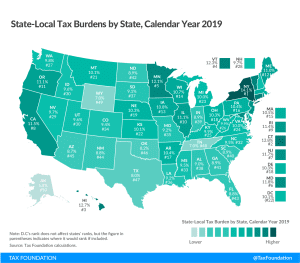
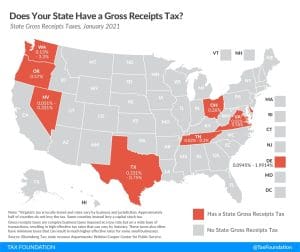
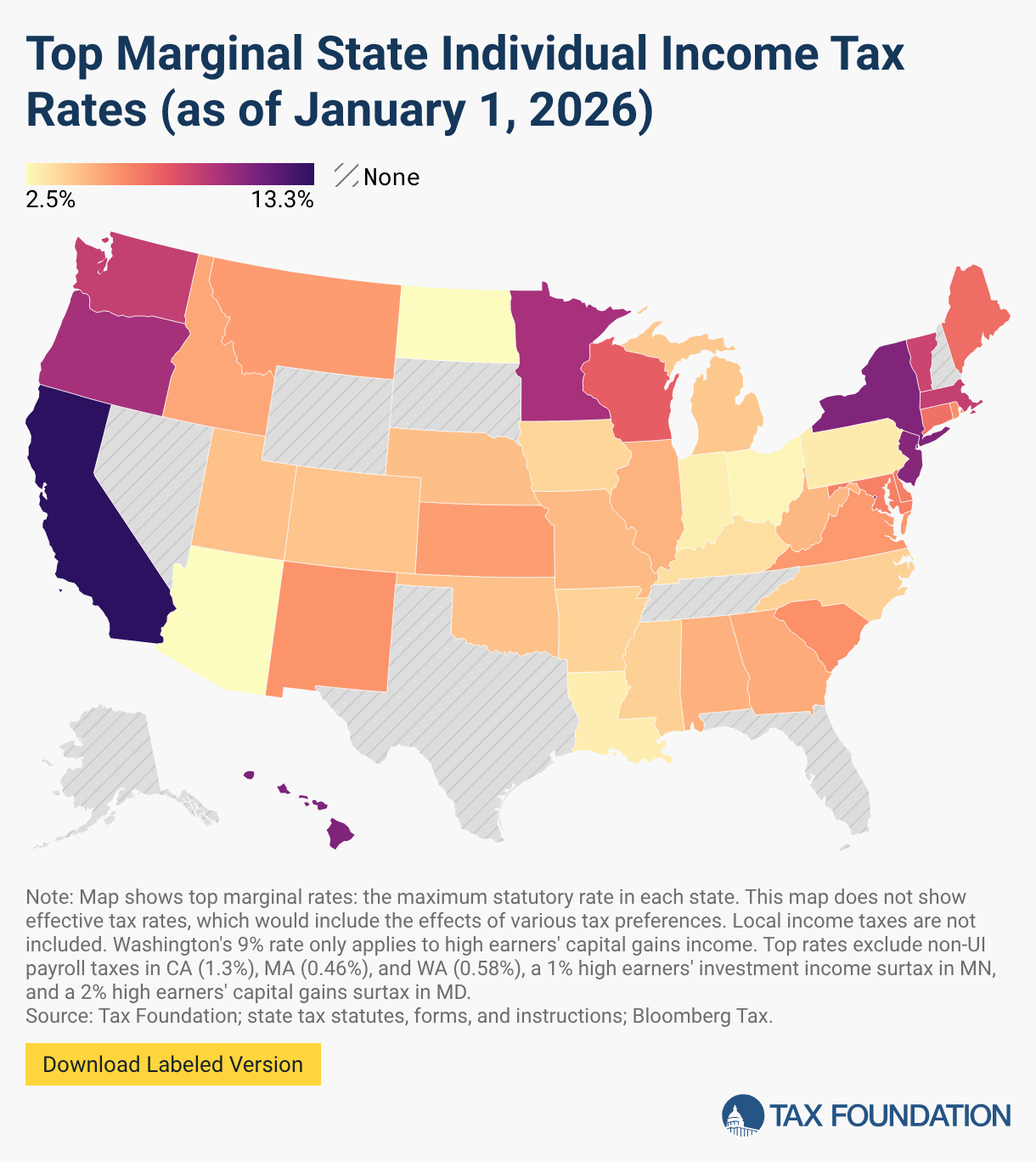
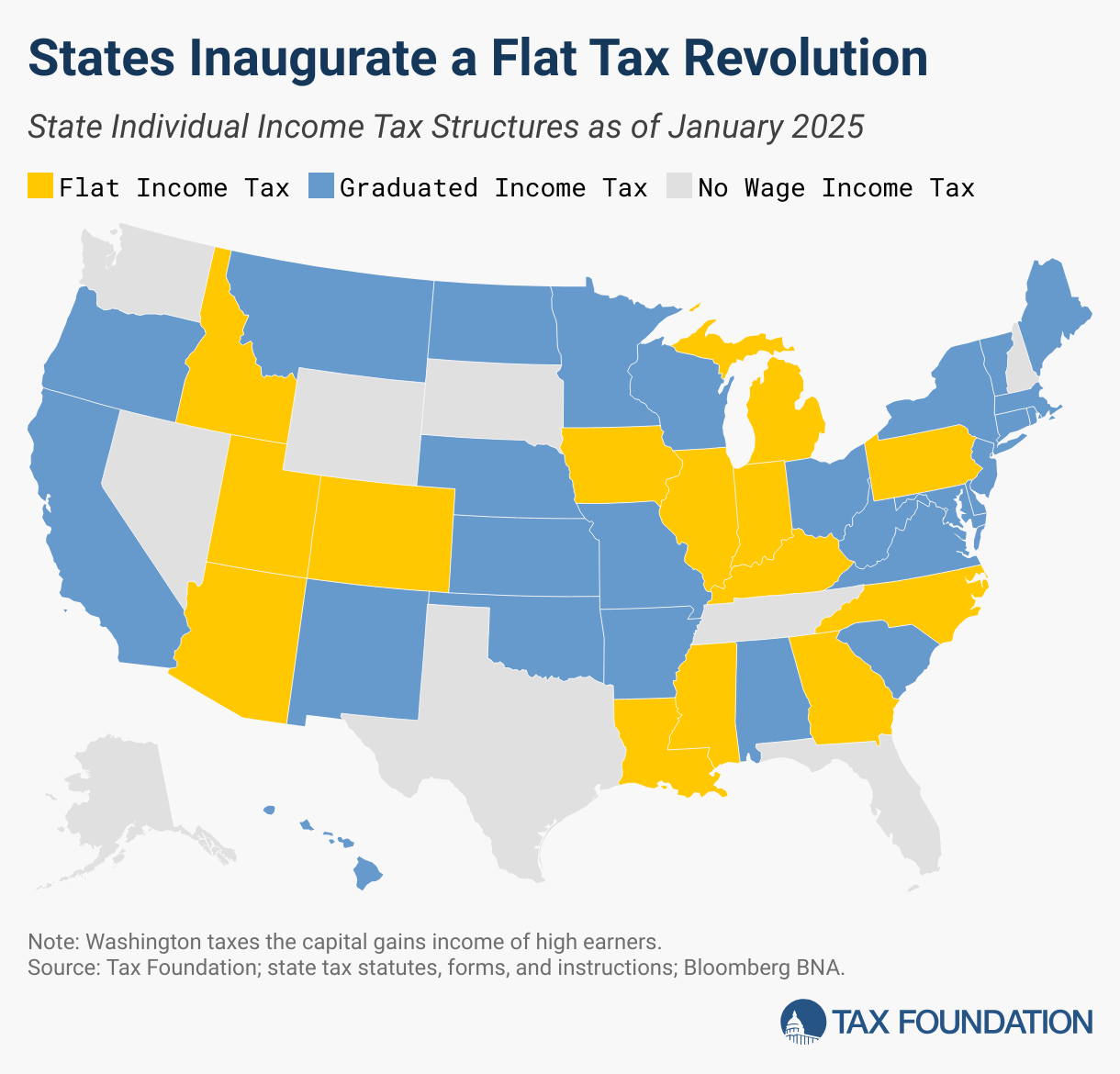
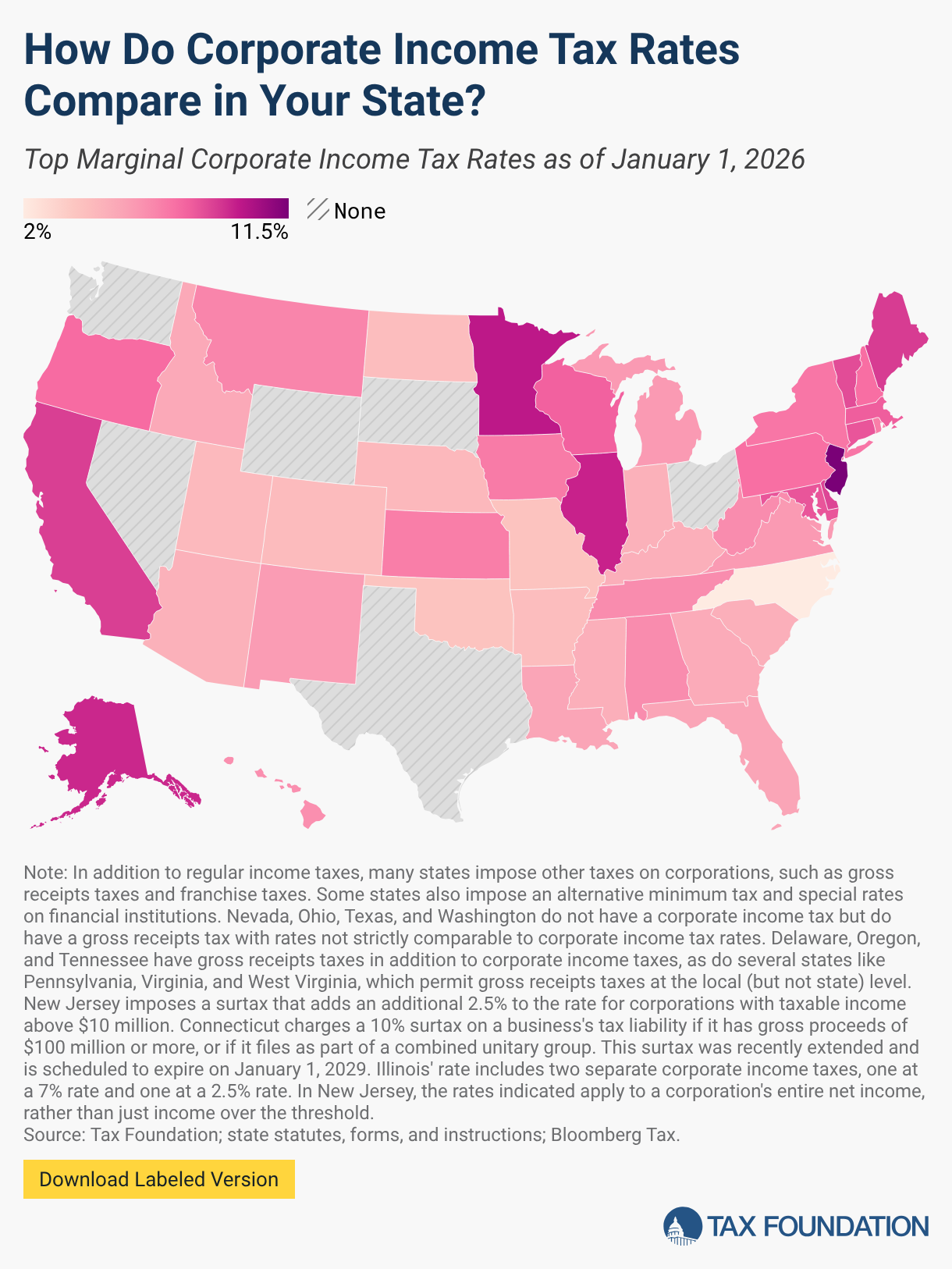
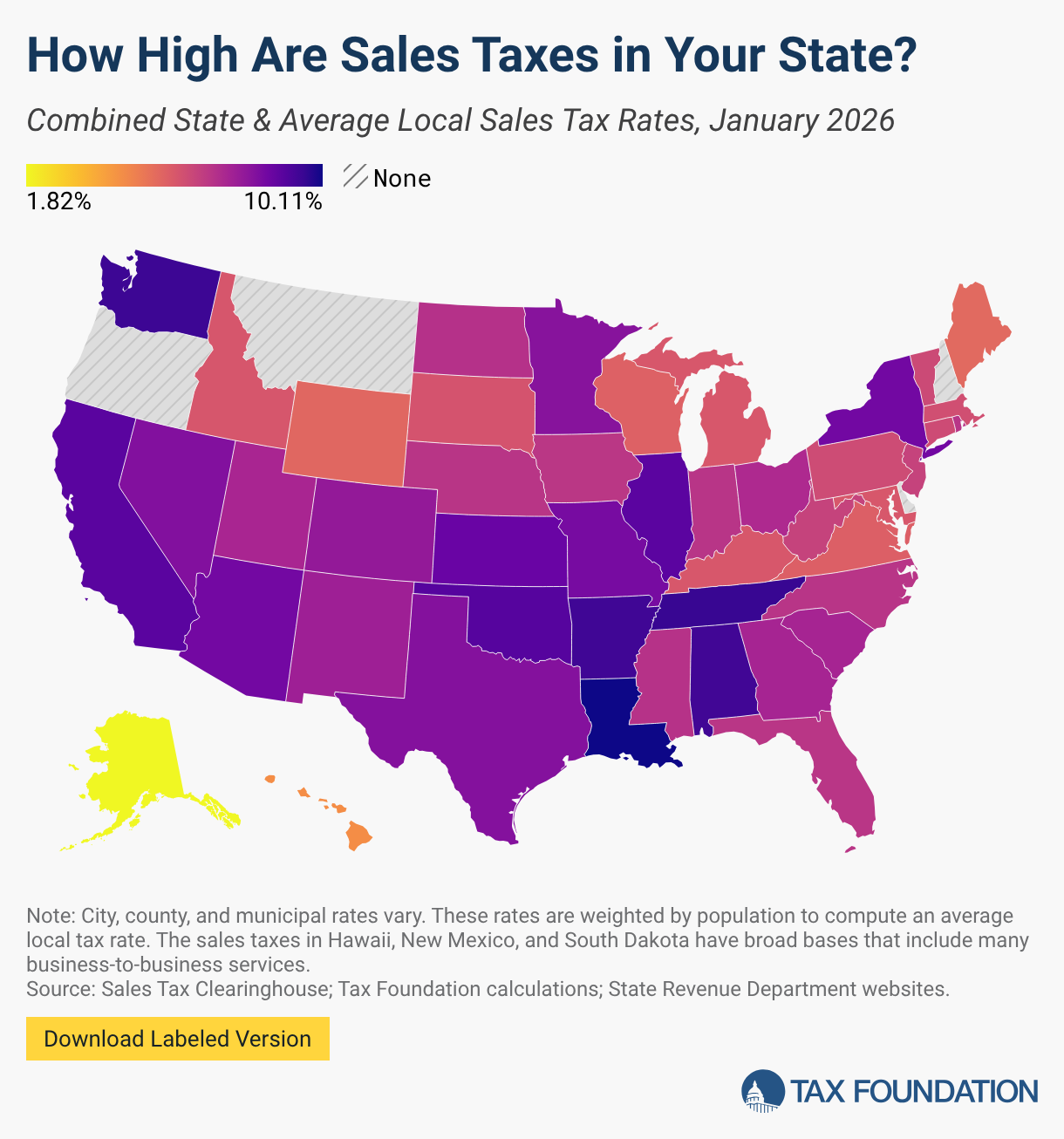
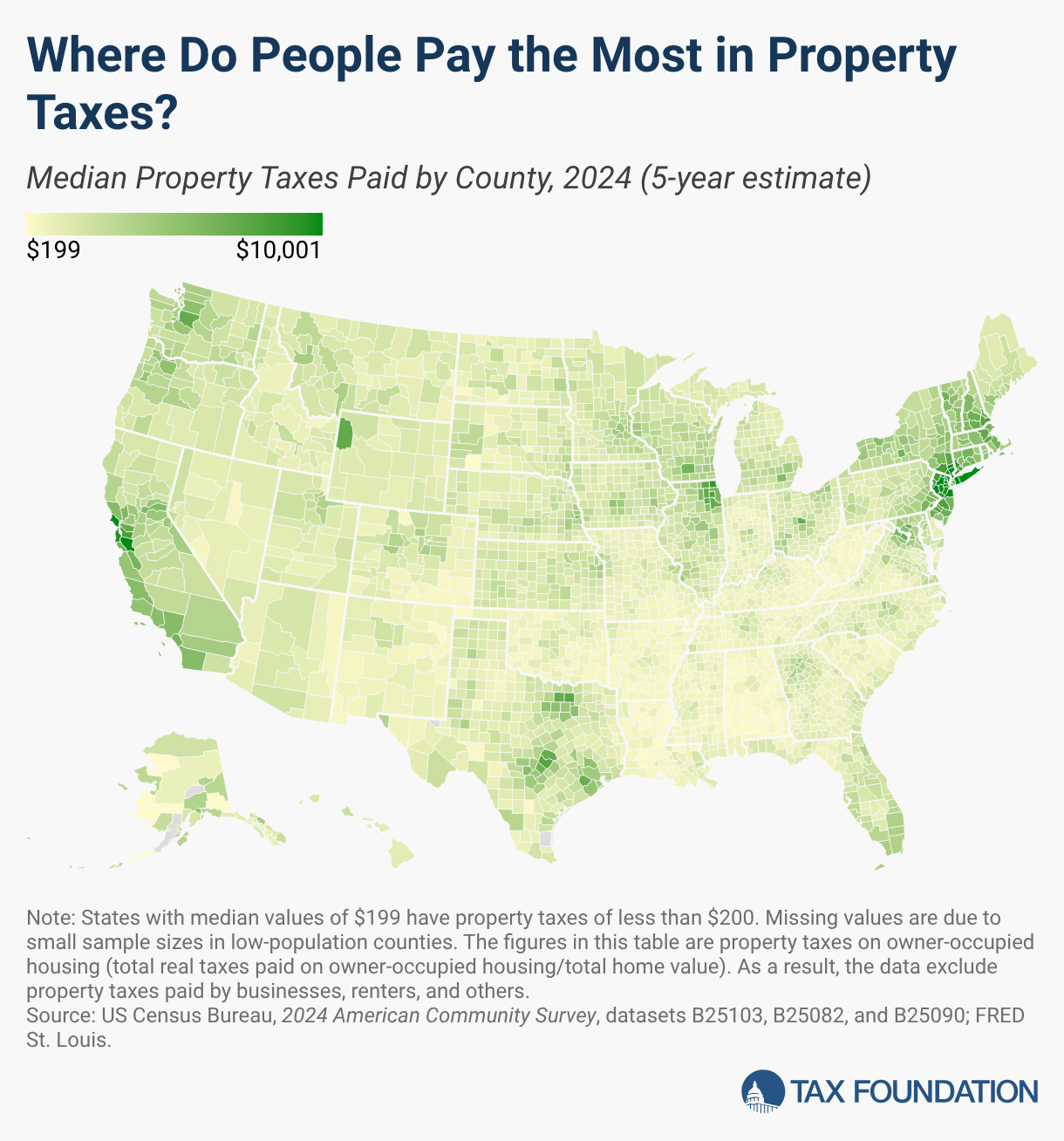
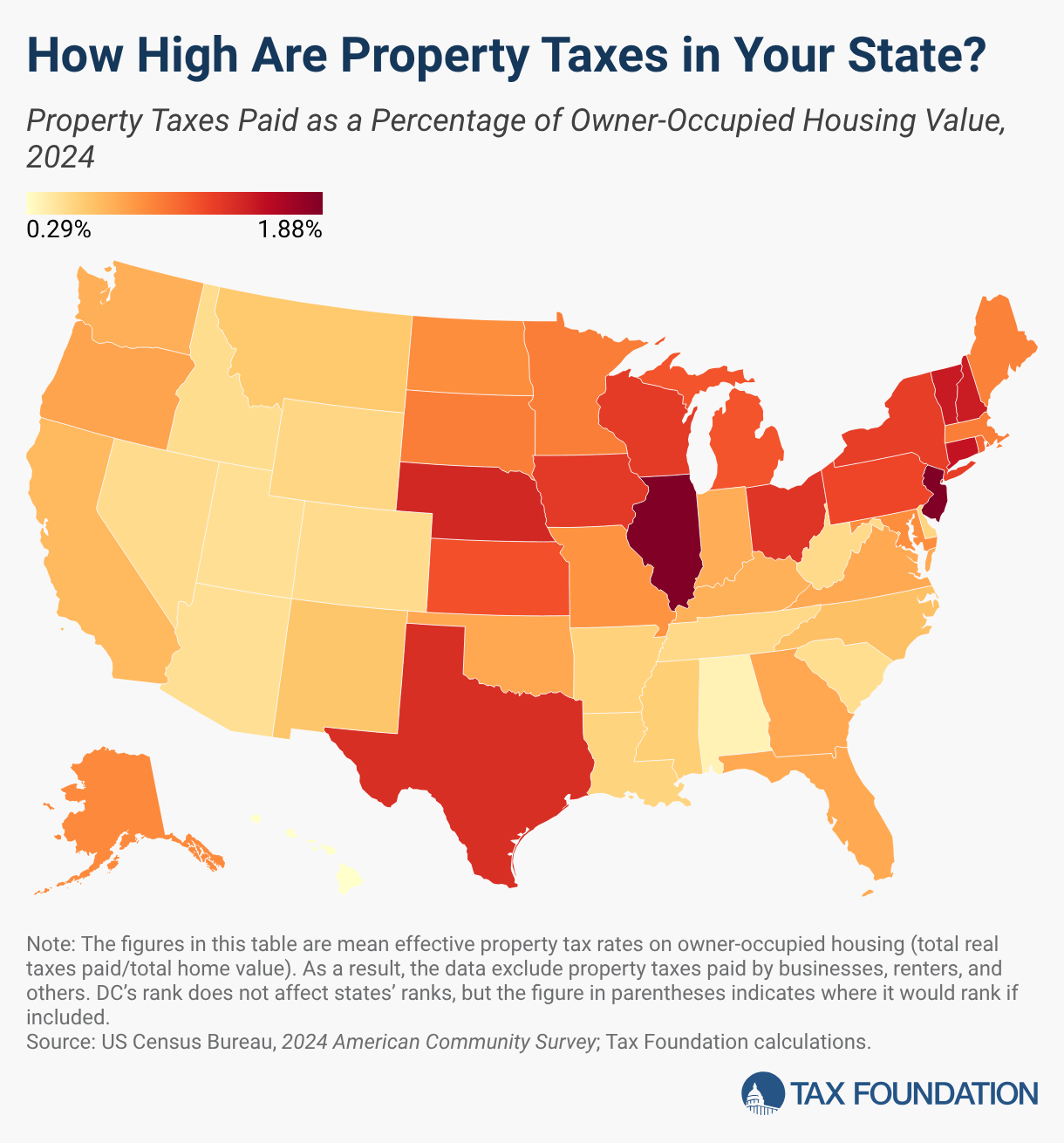
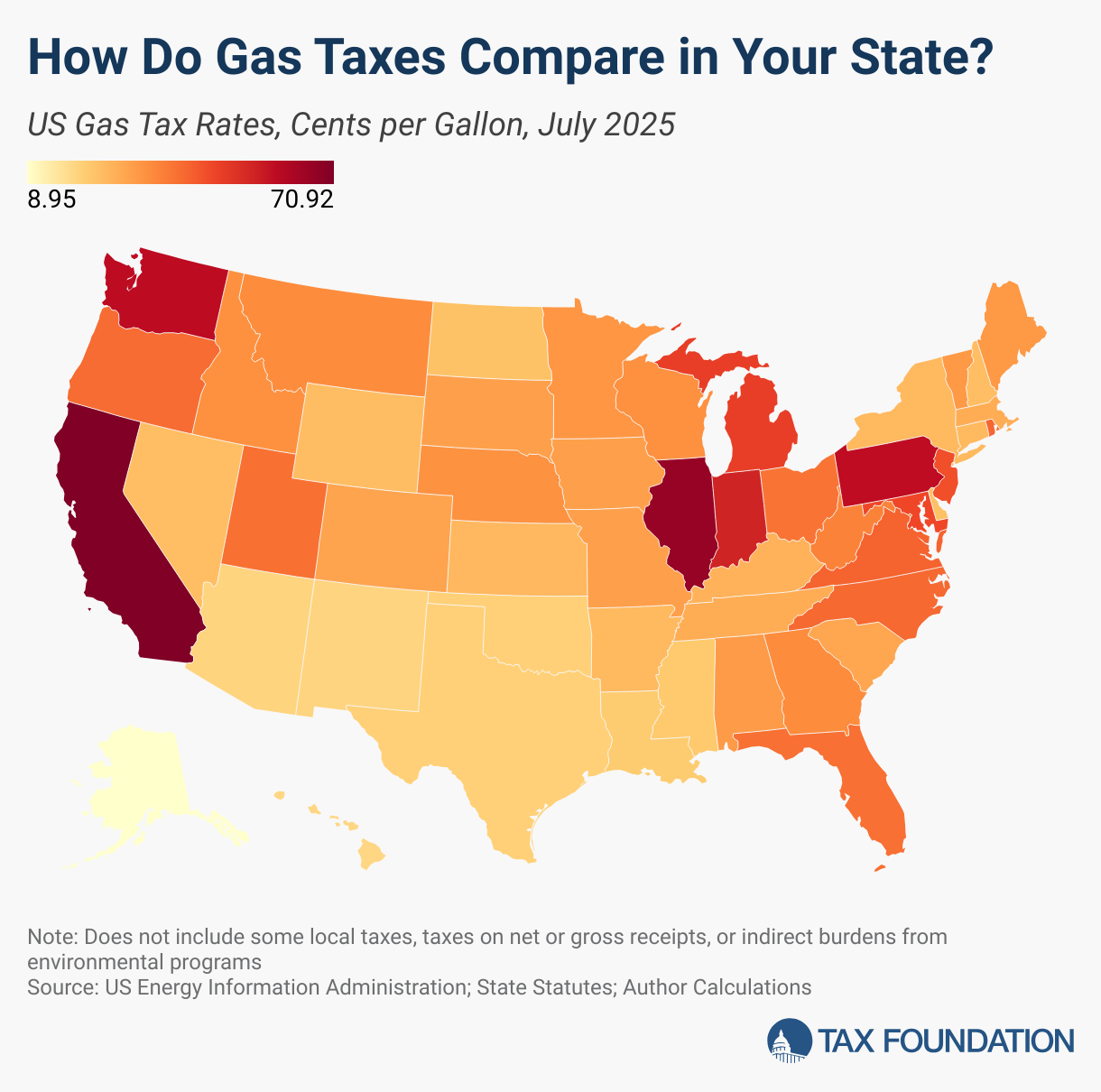
Texas does not have an individual income tax. Texas does not have a traditional corporate income tax but does impose a gross receipts tax (Franchise Tax). Texas has a 6.25 percent state sales tax rate and an average combined state and local sales tax rate of 8.19 percent. Texas has a 1.40 percent effective property tax rate on owner-occupied housing value. Texas does not have an estate tax or inheritance tax. Texas’s gas tax is 20 cents per gallon, and its cigarette excise tax is $1.41 per pack of 20 cigarettes.

Texas Tax Rankings, Debt, and Tax Revenue

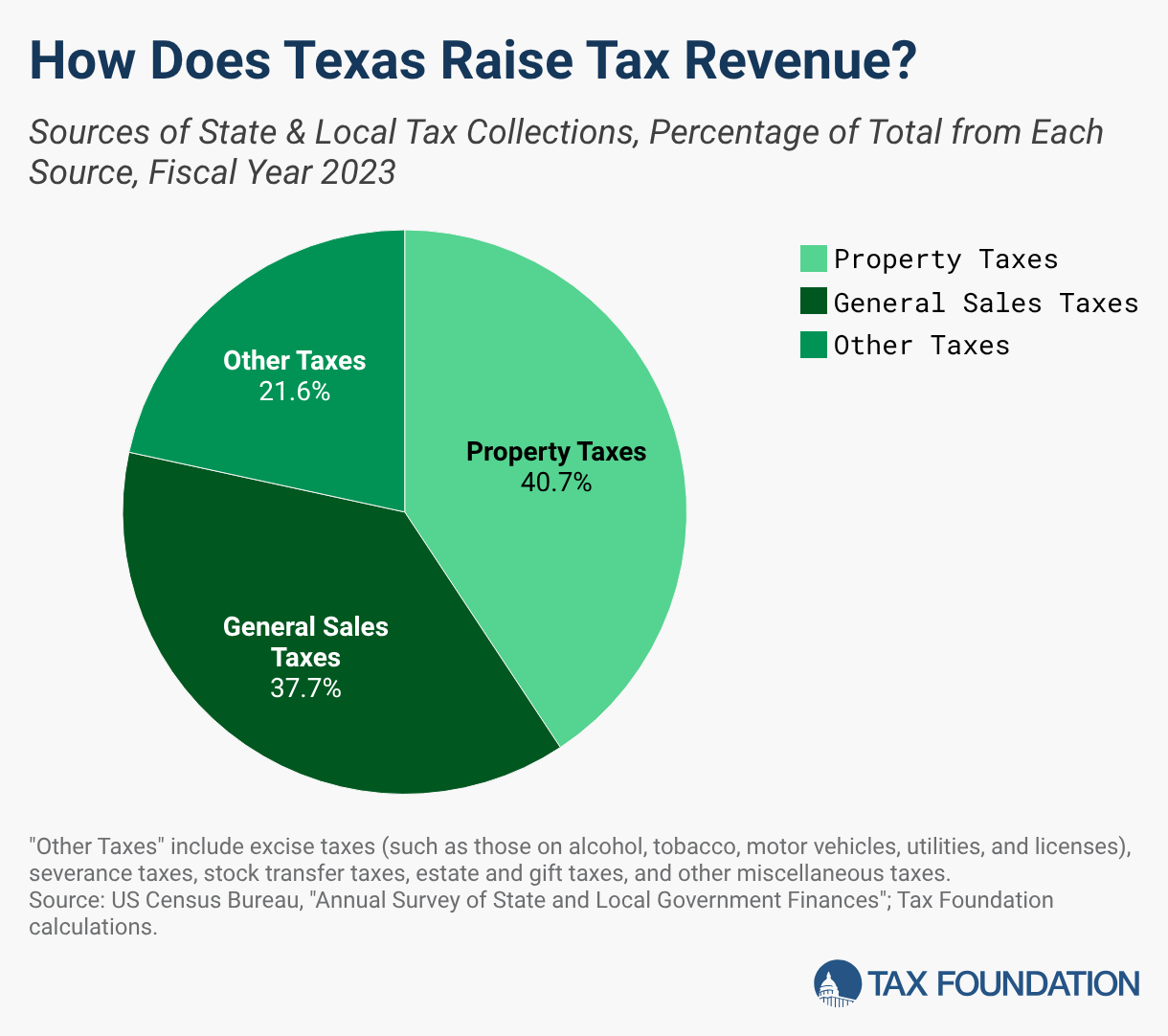
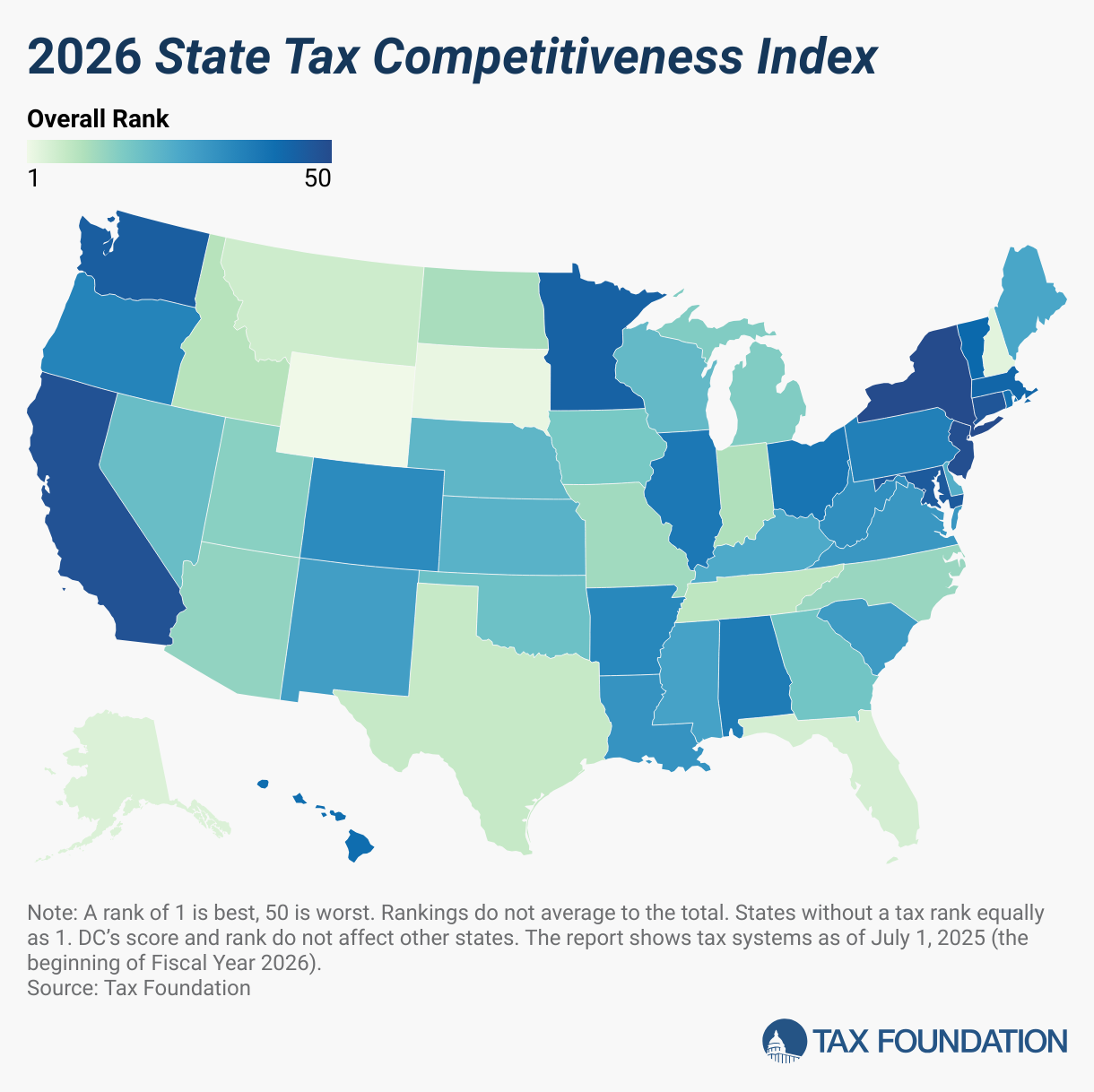
Texas raises tax revenue primarily through property taxes (40.7 percent of total state and local tax revenue), general sales taxes (37.7 percent), and other taxes (21.6 percent). Texas collects $5,737 in state and local tax collections per capita, carries $12,170 in state and local debt per capita, and has an 82 percent funded ratio of public pension plans. Texas’s tax system ranks 7th overall on the 2026 State Tax Competitiveness Index.

Understanding Texas’s Tax System

Each state’s tax code is a multifaceted system with many moving parts, and Texas is no exception. Use the tabs below to compare Texas taxes with other states and to see how Texas raises tax revenue. You can also browse our tax maps, which are compiled from our annual publication, Facts & Figures 2026: How Does Your State Compare?

See Related Articles

Tax Data by State

Get facts about taxes in your state and around the US

Explore Data

How Do Taxes in Texas Compare?

How Does Texas Collect Revenue?

How Does Texas' Tax System Rank?


All Related Articles

2021 state income tax rates. 2021 state individual income tax rates. States with no income tax. 2021 top state marginal individual income tax rates

State Individual Income Tax Rates and Brackets, 2021

Individual income taxes are a major source of state government revenue, accounting for 37 percent of state tax collections in fiscal year (FY) 2017. Several states had notable individual income tax changes in 2020: Arizona, Arkansas, Massachusetts, Michigan, Minnesota, North Carolina, Ohio, Tennessee, Virginia, and Wisconsin.

22 min read
Where did Americans move in 2020? 2020 state migration data, 2020 moving study, state-by-state migration trends, state migration trends, state migration data

Where Did Americans Move in 2020?

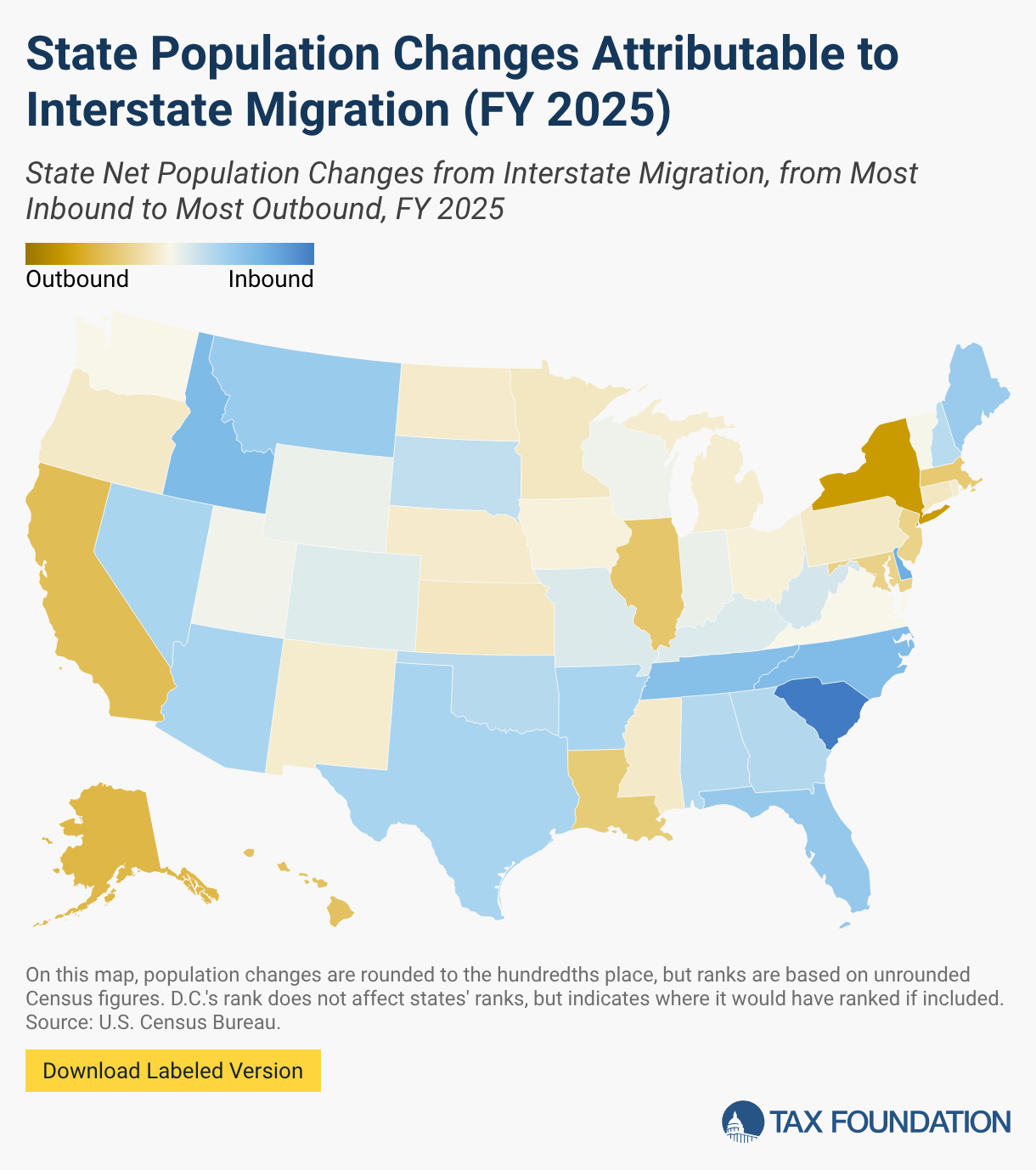
States compete with each other in a variety of ways, including in attracting (and retaining) residents. Sustained periods of inbound migration lead to (and reflect) greater economic output and growth. Prolonged periods of net outbound migration, however, can strain state coffers, contributing to revenue declines as economic activity and tax revenue follow individuals out of state.

4 min read
Schumer marijuana bill recreational marijuana tax revenue by state

Several States Considering Legal Recreational Marijuana

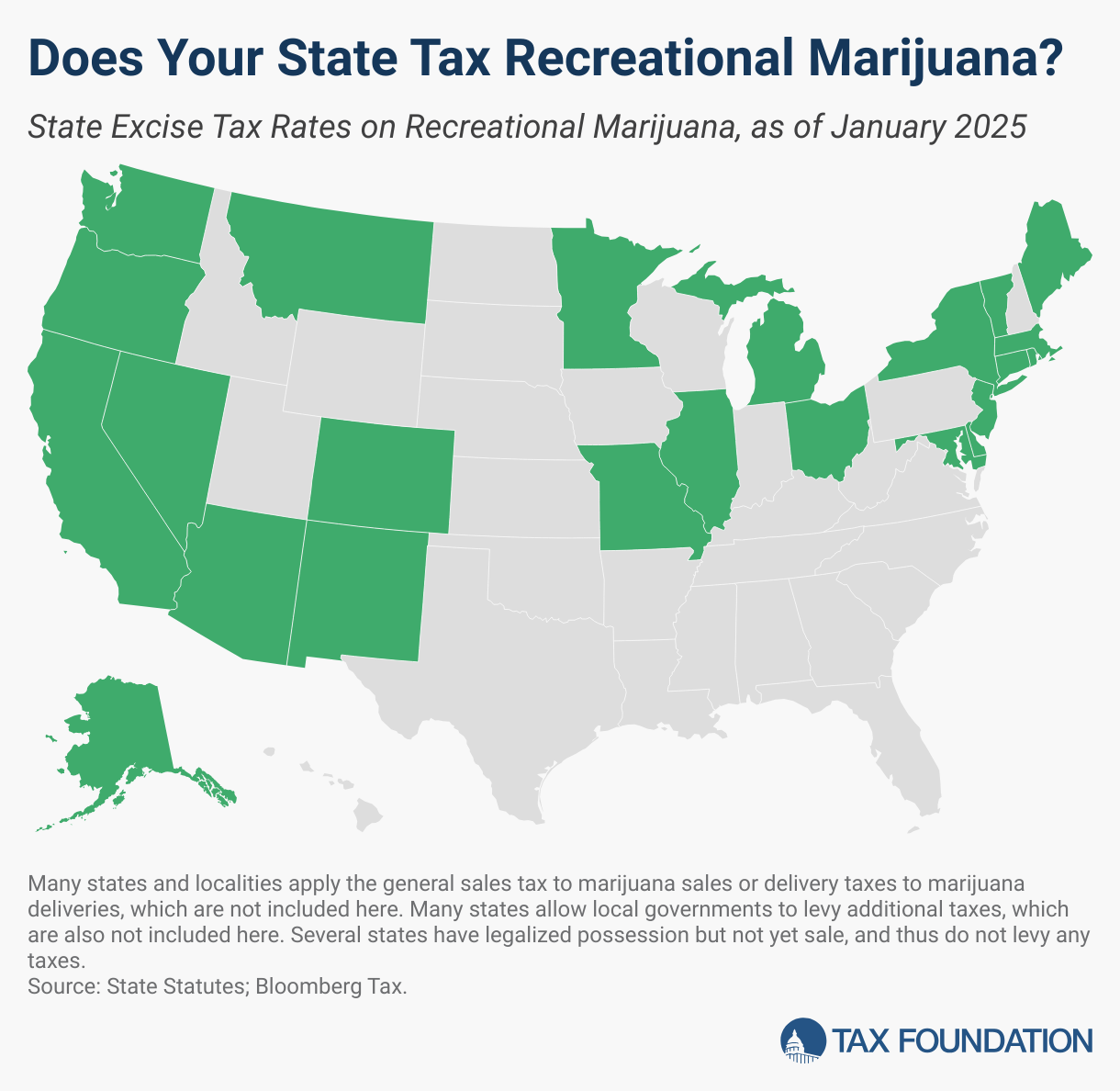
With most states experiencing reduced tax revenues due to the coronavirus pandemic, several are contemplating whether recreational marijuana legalization and taxation may be one avenue to raise new revenue. While states that have already legalized do raise meaningful revenue, lawmakers should remember that establishment of legal markets takes time.

5 min read
2021 sales taxes, 2021 state and local sales tax rates. 2021 state sales tax rates, 2021 sales tax rates. sales tax rates by state, sales taxes by state

State and Local Sales Tax Rates, 2021

While many factors influence business location and investment decisions, sales taxes are something within lawmakers’ control that can have immediate impacts.

12 min read
tax exemption definition TaxEDU 2021 state tax changes. net operating loss policies in the OECD NOL omnibus covid-19 relief deal. phase 4 coronavirus relief, phase 4 business relief, phase 4 relief net operating loss, cost recovery

State Tax Changes Effective January 1, 2021

Twenty-six states and the District of Columbia had notable tax changes take effect on January 1, 2021. Because most states’ legislative sessions were cut short in 2020 due to the COVID-19 pandemic, fewer tax changes were adopted in 2020 than in a typical year.

24 min read