Skip to content

Taxes In New Jersey

2026 New Jersey Tax Rates, Collections, and Burdens

How Do New Jersey Taxes Compare to Other States?

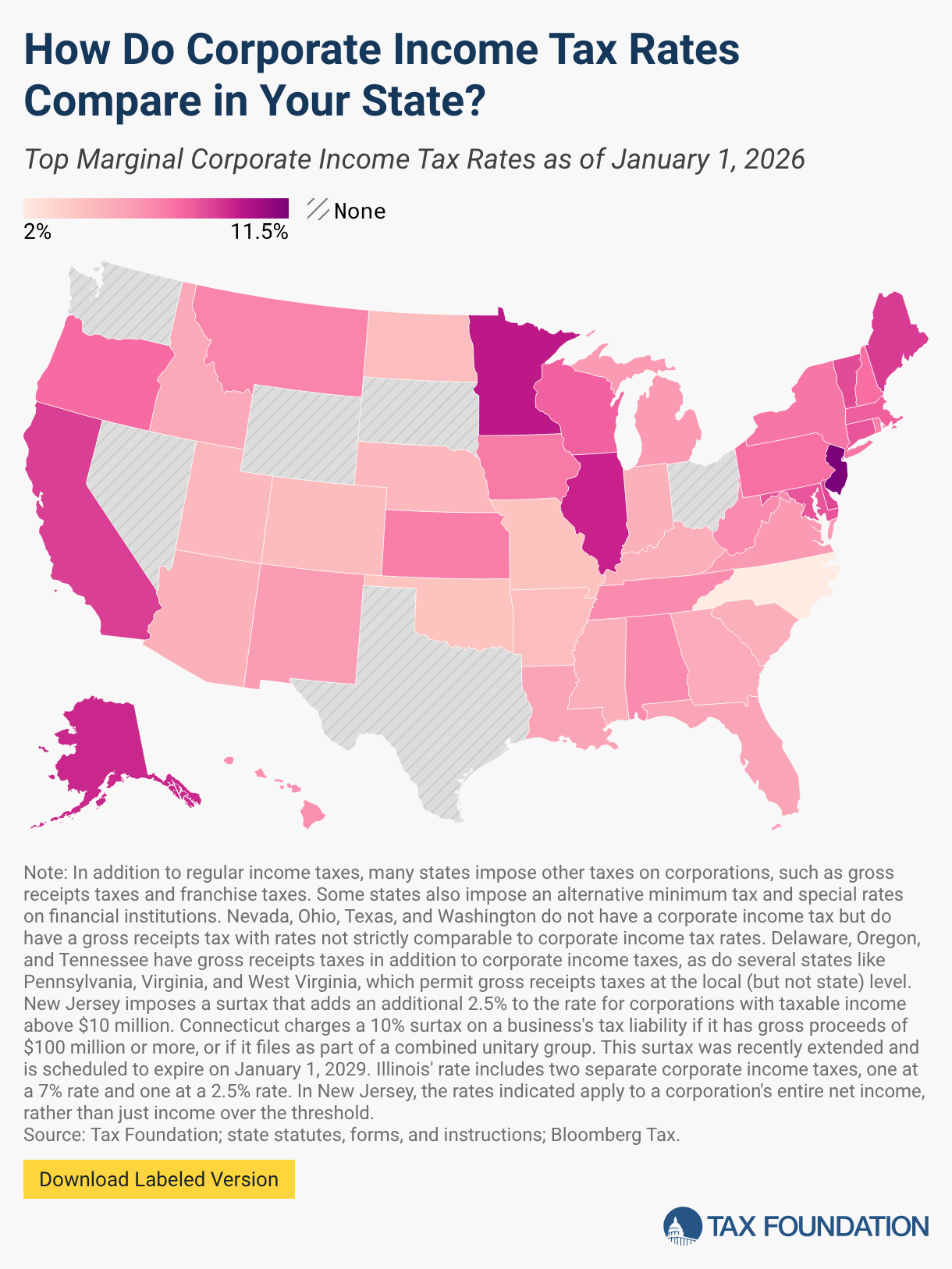
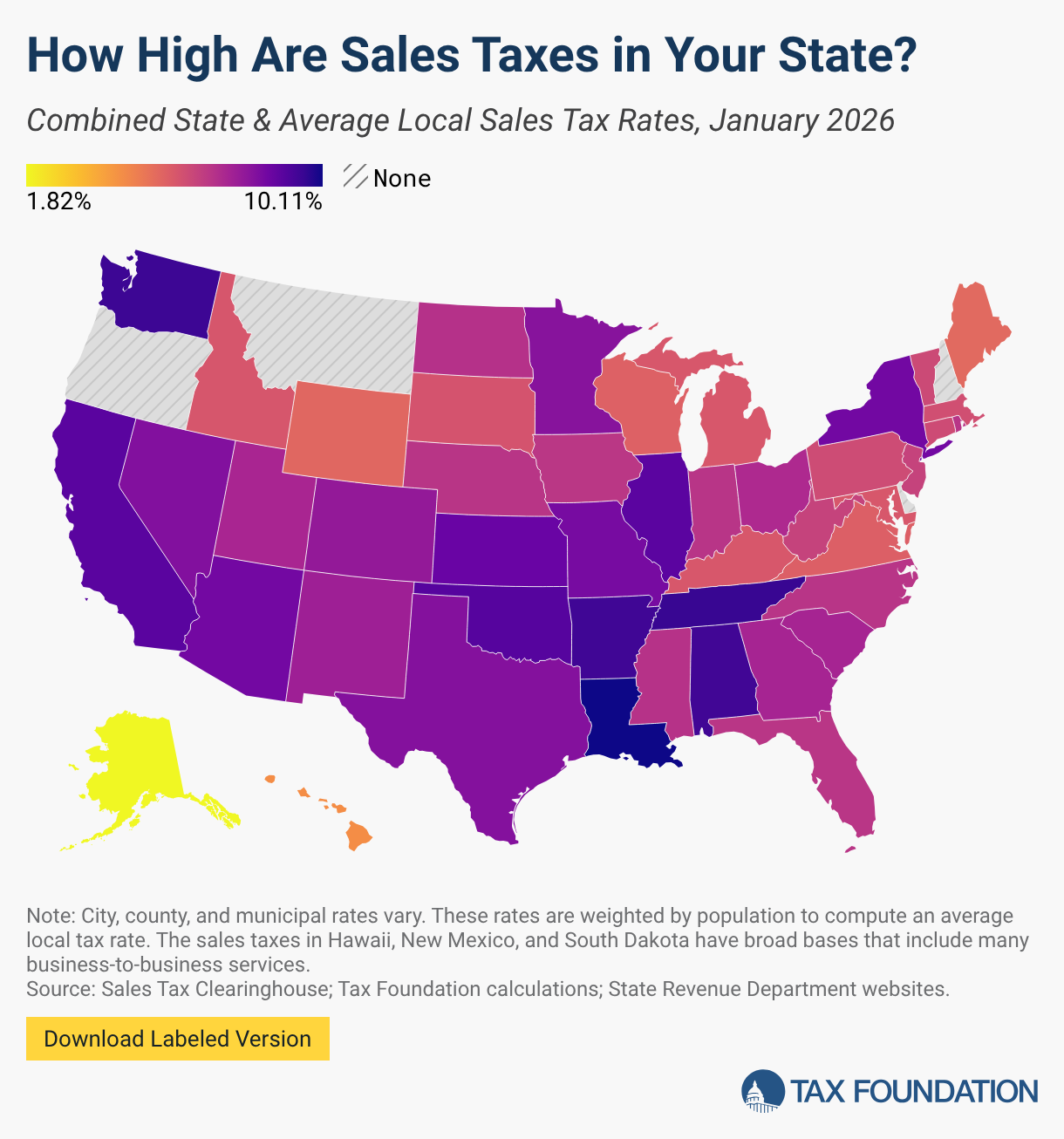
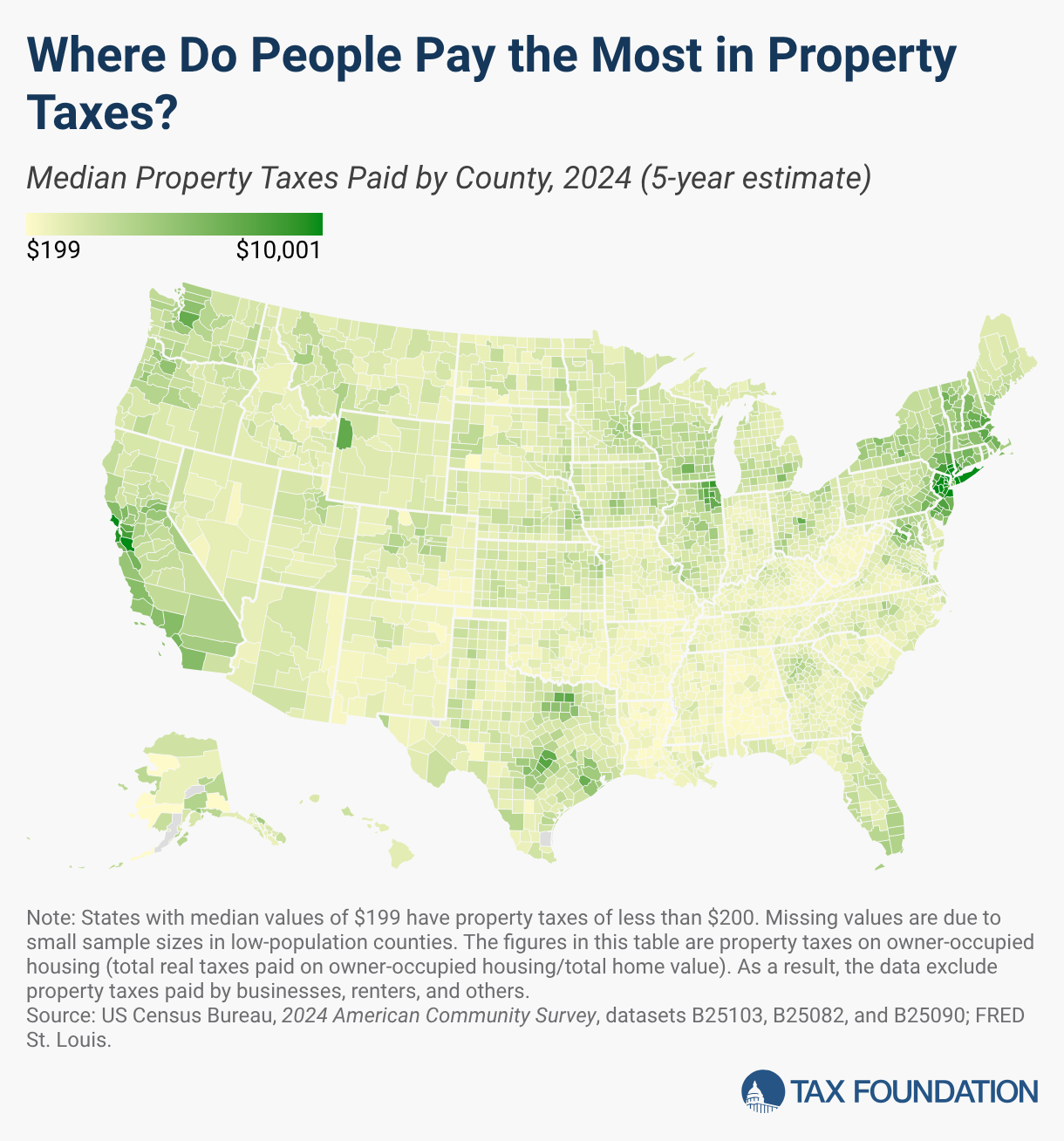
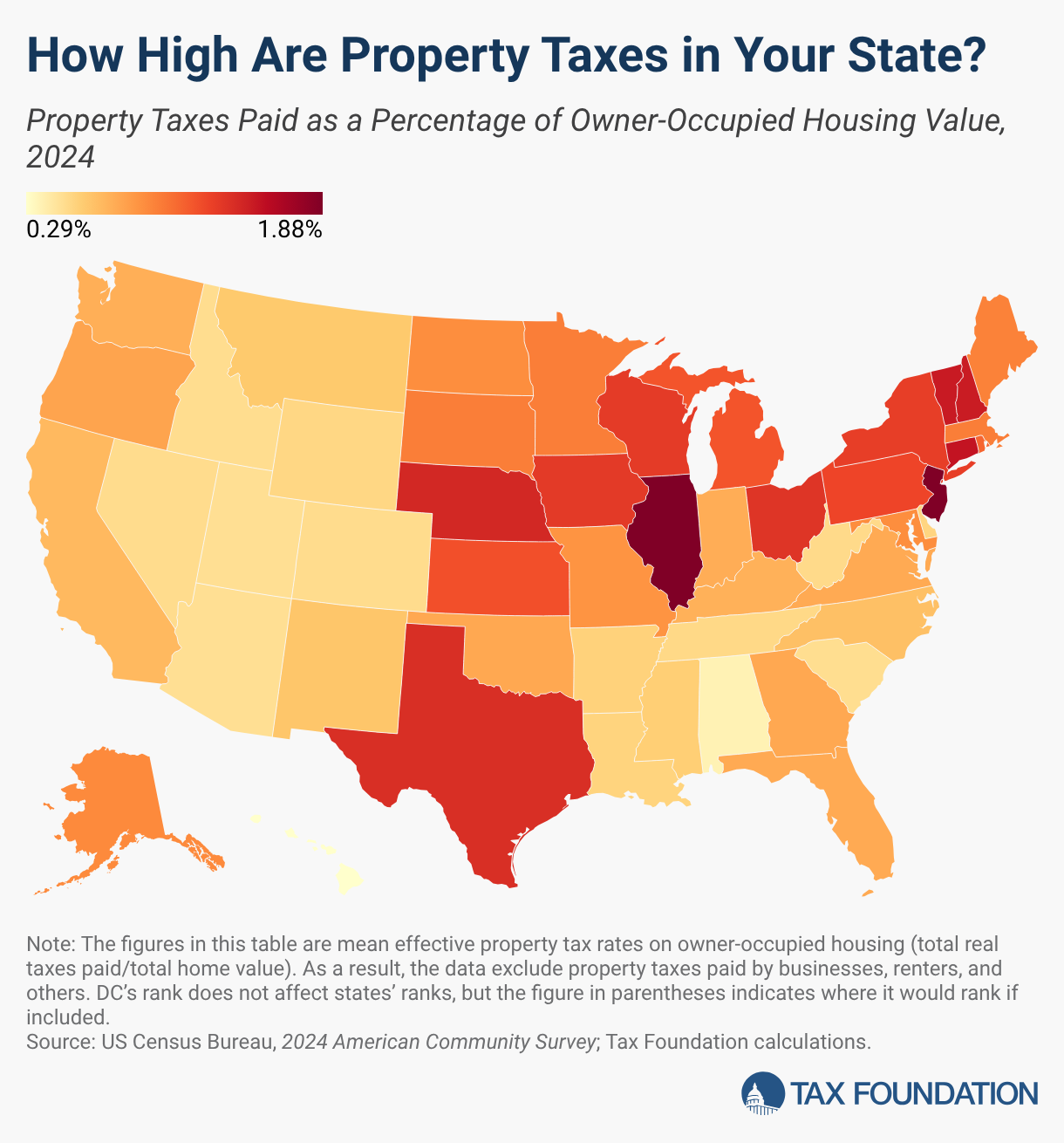
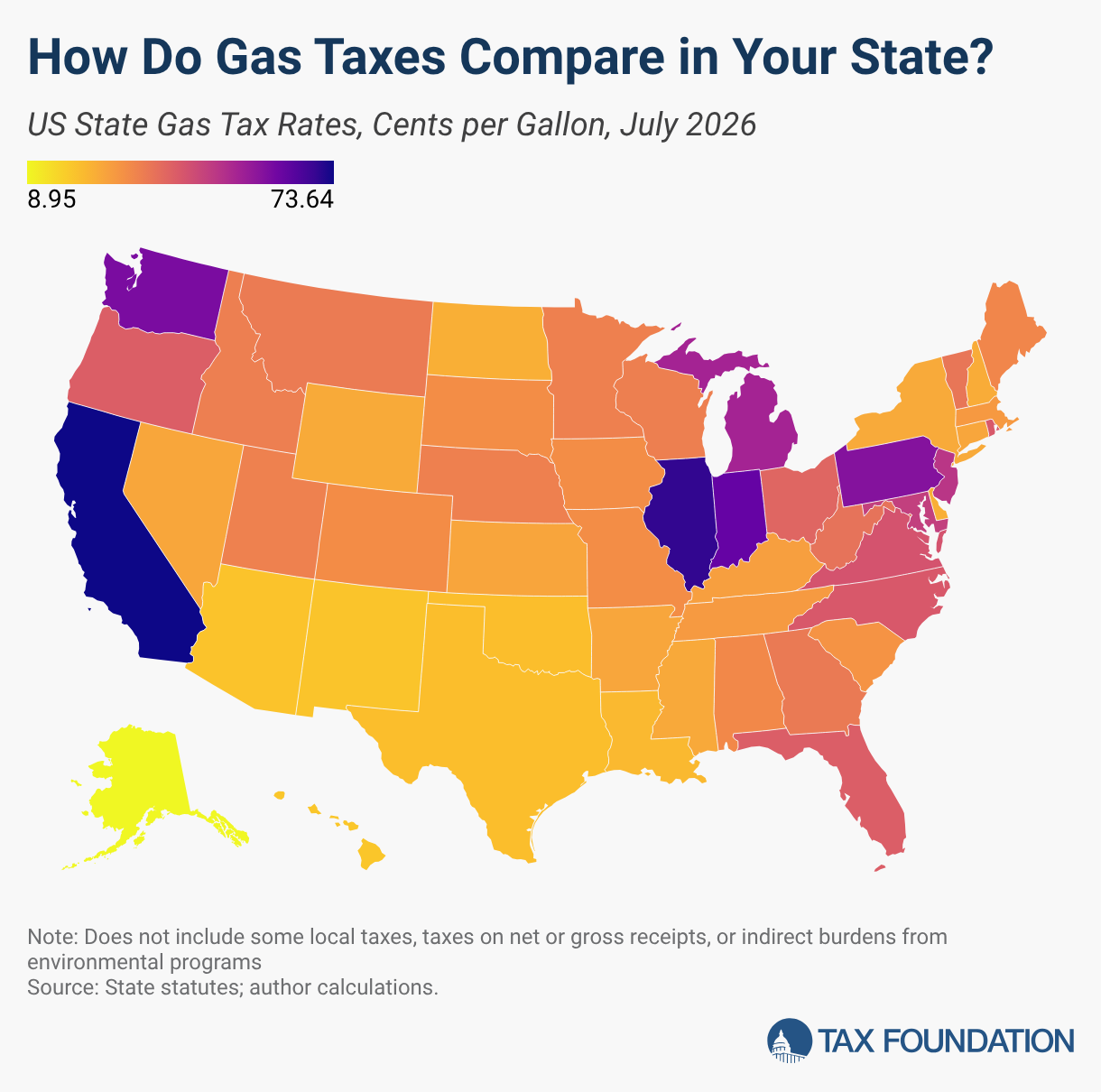
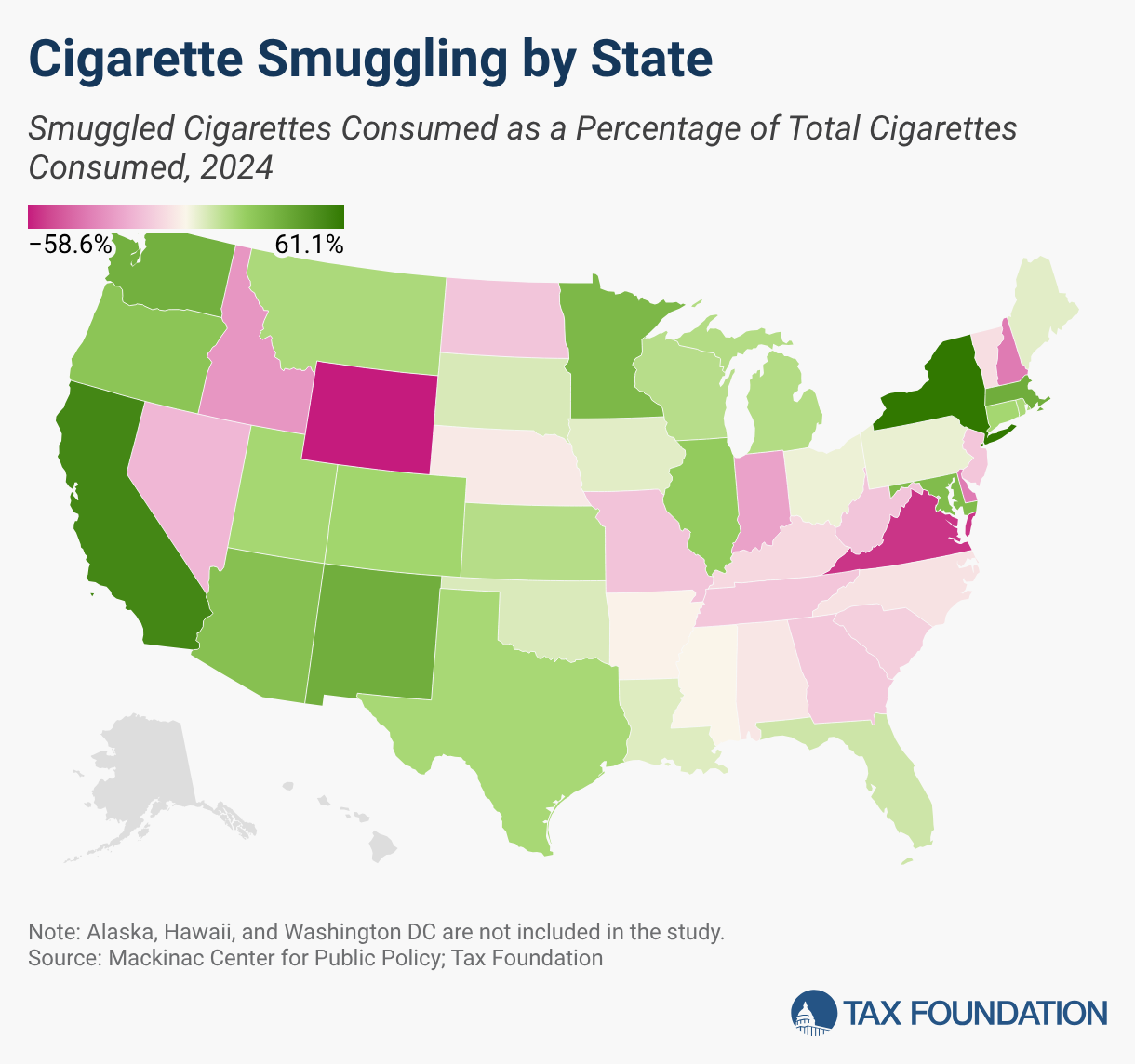
New Jersey has a graduated state individual income tax, with rates ranging from 1.40 percent to 10.75 percent. New Jersey has a graduated corporate income tax with a top rate of 11.50 percent—the highest in the nation—a 6.625 percent state sales tax rate, and an average combined state and local sales tax rate of 6.60 percent. New Jersey has a 1.88 percent effective property tax rate on owner-occupied housing value—also the highest in the nation. New Jersey has an inheritance tax. New Jersey’s gas tax is 49.15 cents per gallon, and its cigarette excise tax is $3.00 per pack of 20 cigarettes.

New Jersey Tax Rankings, Debt, and Tax Revenue

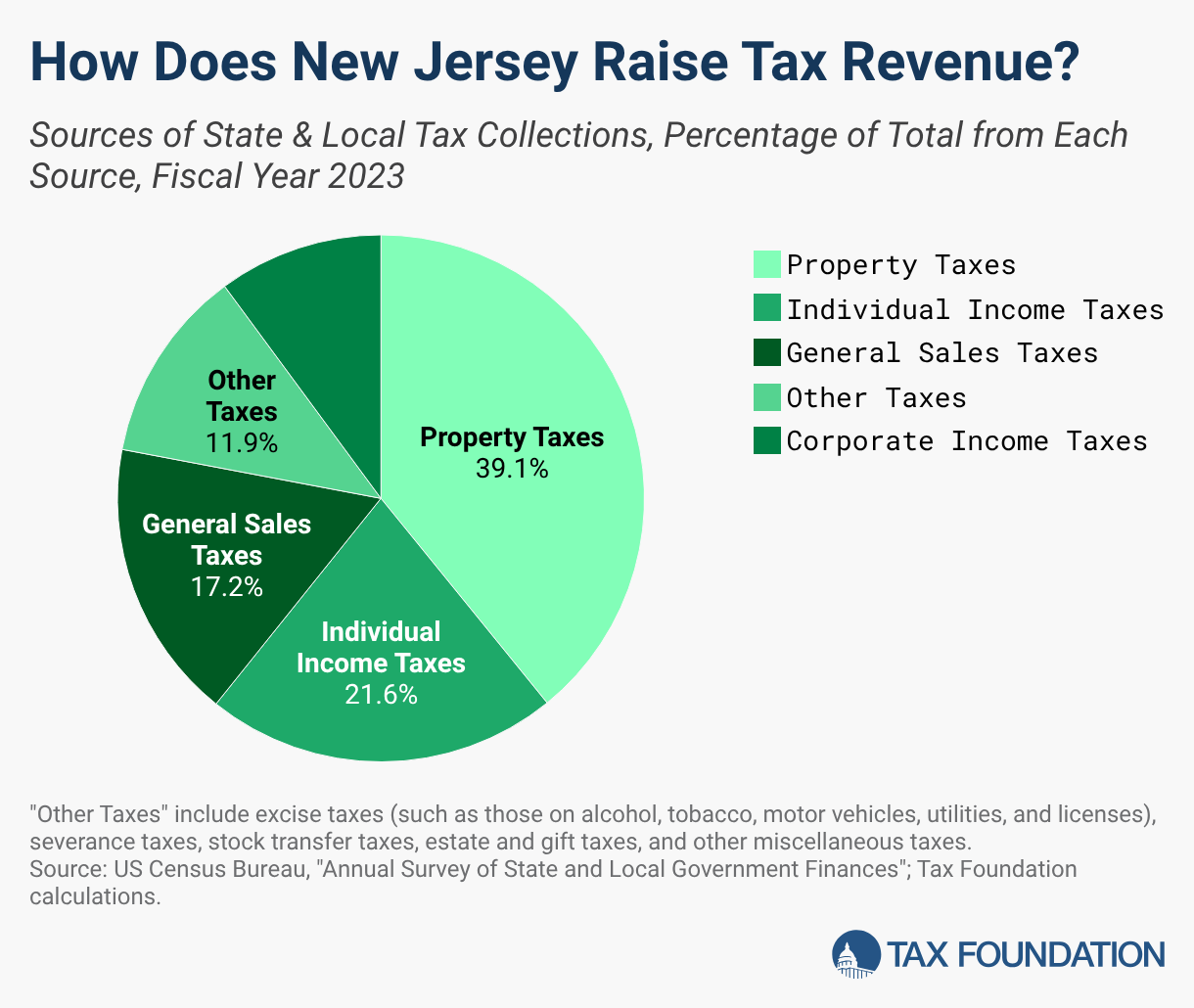
New Jersey raises tax revenue primarily through property taxes (39.1 percent of total state and local tax revenue), individual income taxes (21.6 percent), and general sales taxes (17.2 percent). New Jersey collects $9,178 in state and local tax collections per capita, carries $9,375 in state and local debt per capita, and has a 60 percent funded ratio of public pension plans. New Jersey’s tax system ranks 48th overall on the 2027 State Tax Competitiveness Index.

Understanding New Jersey’s Tax System

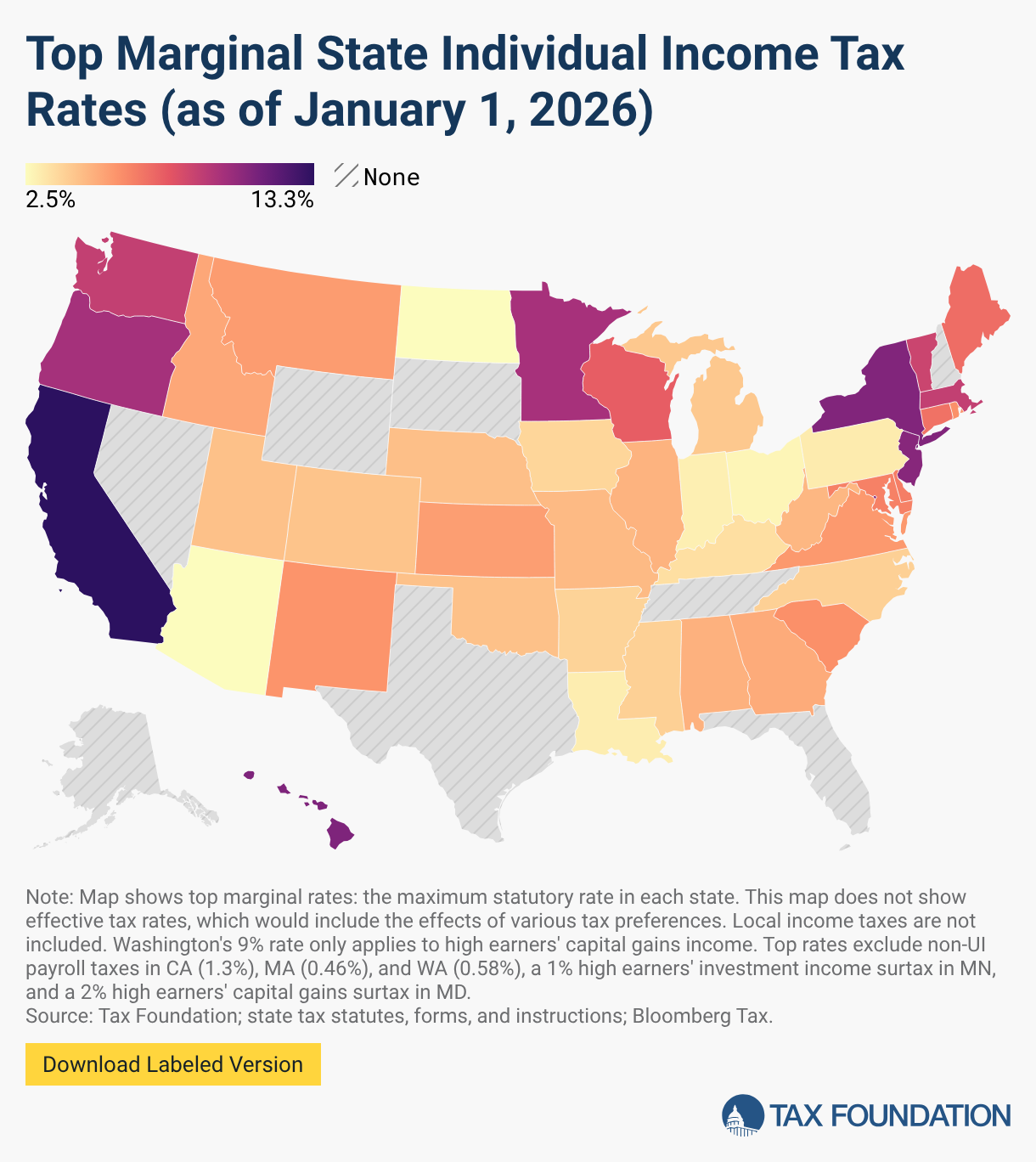
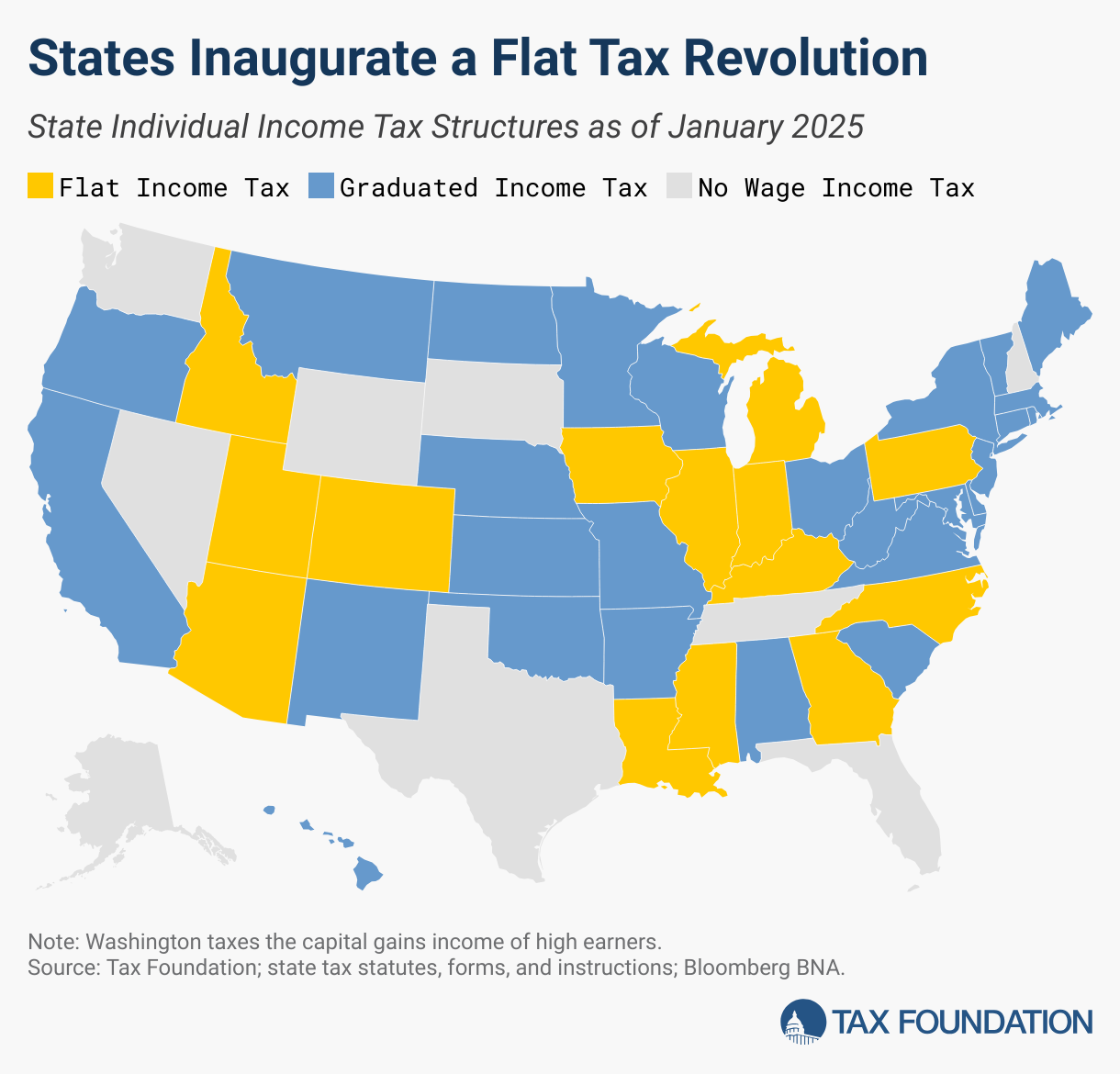
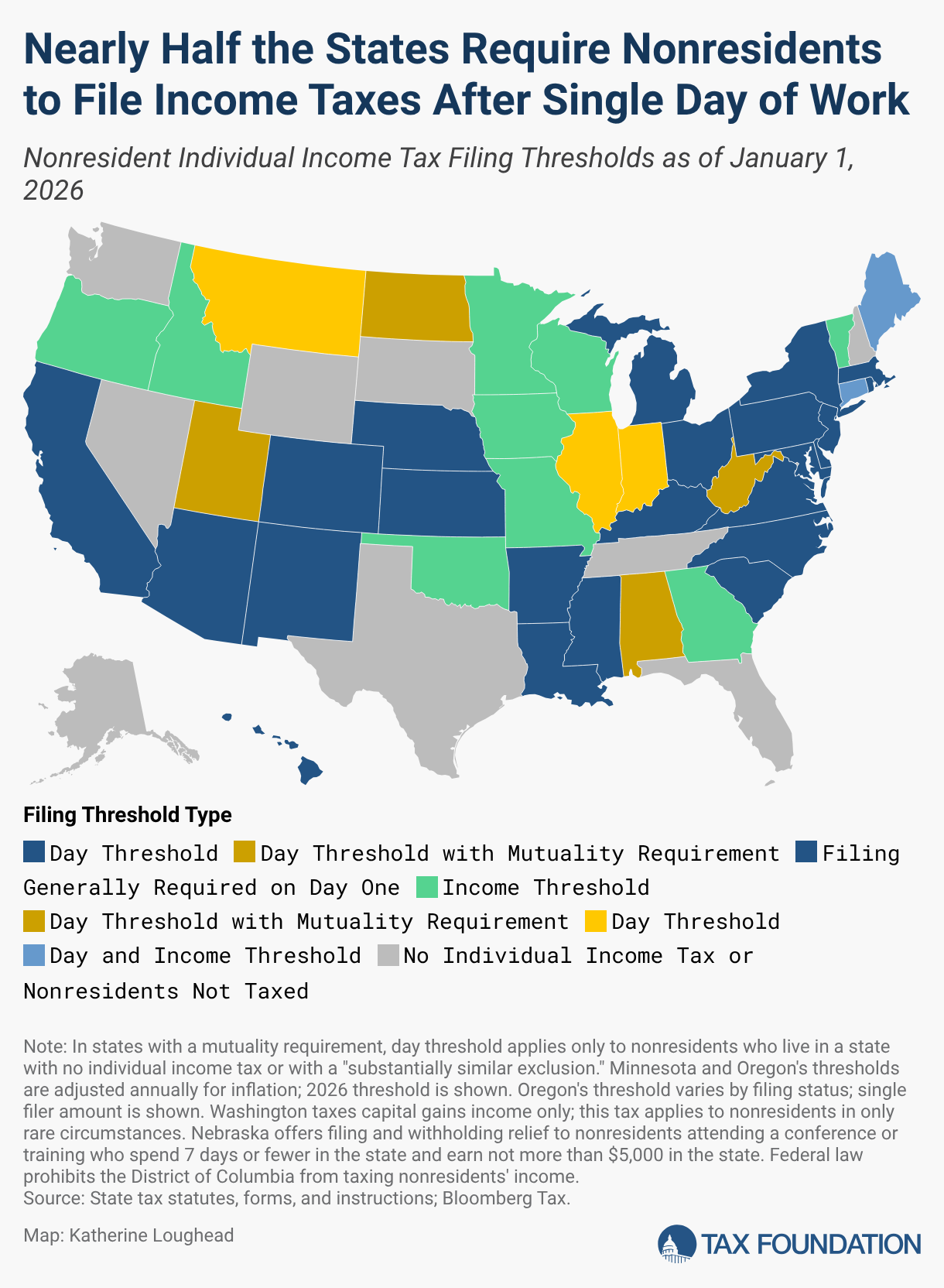
Each state’s tax code is a multifaceted system with many moving parts, and New Jersey is no exception. Use the tabs below to compare New Jersey taxes with other states and to see how New Jersey raises tax revenue. You can also browse our tax maps, which are compiled from our annual publication, Facts & Figures 2026: How Does Your State Compare?

See Related Articles

Tax Data by State

Get facts about taxes in your state and around the US

Explore Data

How Do Taxes in New Jersey Compare?

How Does New Jersey Collect Revenue?

How Does New Jersey's Tax System Rank?


All Related Articles

tobacco tax data cigarette tax data cigarette tax revenue tobacco tax revenue cigarette smuggling data

Compare Tobacco Tax Data in Your State

Tobacco is the most highly taxed consumer product in the United States. The tools on this page allow you to explore state tax rates and the effects tax policy and tobacco regulations can have on state revenues, smuggling, and effective tax rates for different income groups.

2 min read
2026 State Tax Competitiveness Index 2026 State Tax Rankings

2026 State Tax Competitiveness Index

The State Tax Competitiveness Index enables policymakers, taxpayers, and business leaders to gauge how their states’ tax systems compare. While there are many ways to show how much state governments collect in taxes, the Index evaluates how well states structure their tax systems and provides a road map for improvement.

122 min read
Eliminate property taxes and property tax repeal and property tax replacement options state and local tax trends in 2025 and 2026

There’s No Good Way to Pay for Property Tax Repeal

Backfilling forgone local property tax revenue through new state taxes is difficult because it dramatically shifts overall tax burdens, undermines local accountability, and cannot easily adjust for changing population mixes.

20 min read
The One Big Beautiful Bill Act Creates Unequal Tax Treatment for Gambling Losses

The One Big Beautiful Bill Act Creates Unequal Tax Treatment for Gambling Losses

In a surprising tax code alteration that has frustrated Americans who enjoy gambling, a provision in the One Big Beautiful Bill Act limits gambling losses that can be used to offset gambling winnings to 90 percent of their value. This provision introduces a steep tax penalty for professional gamblers and certain casual bettors.

5 min read
One Big Beautiful Bill state tax impact including state tax conformity and state tax revenue state tax implications

State Tax Implications of the One Big Beautiful Bill Act

For Congress, work on the One Big Beautiful Bill Act is done. But in state capitols, the work has not yet begun. Many of the tax changes in the federal reconciliation act flow through to state tax codes—automatically in some states, and subject to an update in states’ Internal Revenue Code conformity date in others.

39 min read