





Most countries’ personal income taxes have a progressive structure, meaning that the tax rate paid by individuals increases as they earn higher wages. The highest taxA tax is a mandatory payment or charge collected by local, state, and national governments from individuals or businesses to cover the costs of general government services, goods, and activities. rate individuals pay differs significantly across European countries.
The top statutory personal income tax rate applies to the share of income that falls into the highest tax bracket. For instance, if a country has five tax brackets, and the top income tax rate of 50 percent has a threshold of €1 million, each additional euro of income over €1 million would be taxed at 50 percent.
Governments can generally generate revenue more efficiently by leveraging marginal tax rates at the lower end of the income distribution than by using higher top rates. This is because applying a higher rate to a tax bracket negatively affects the incentive to earn more or less income only for individuals in that bracket, while also raising revenue from all taxpayers in higher brackets. In contrast, high top rates negatively affect the earning incentives of all individuals from whom they raise revenue.
2026 Data
2025
2024
2023
2022
2021
2020
2019
Expand or Collapse Table
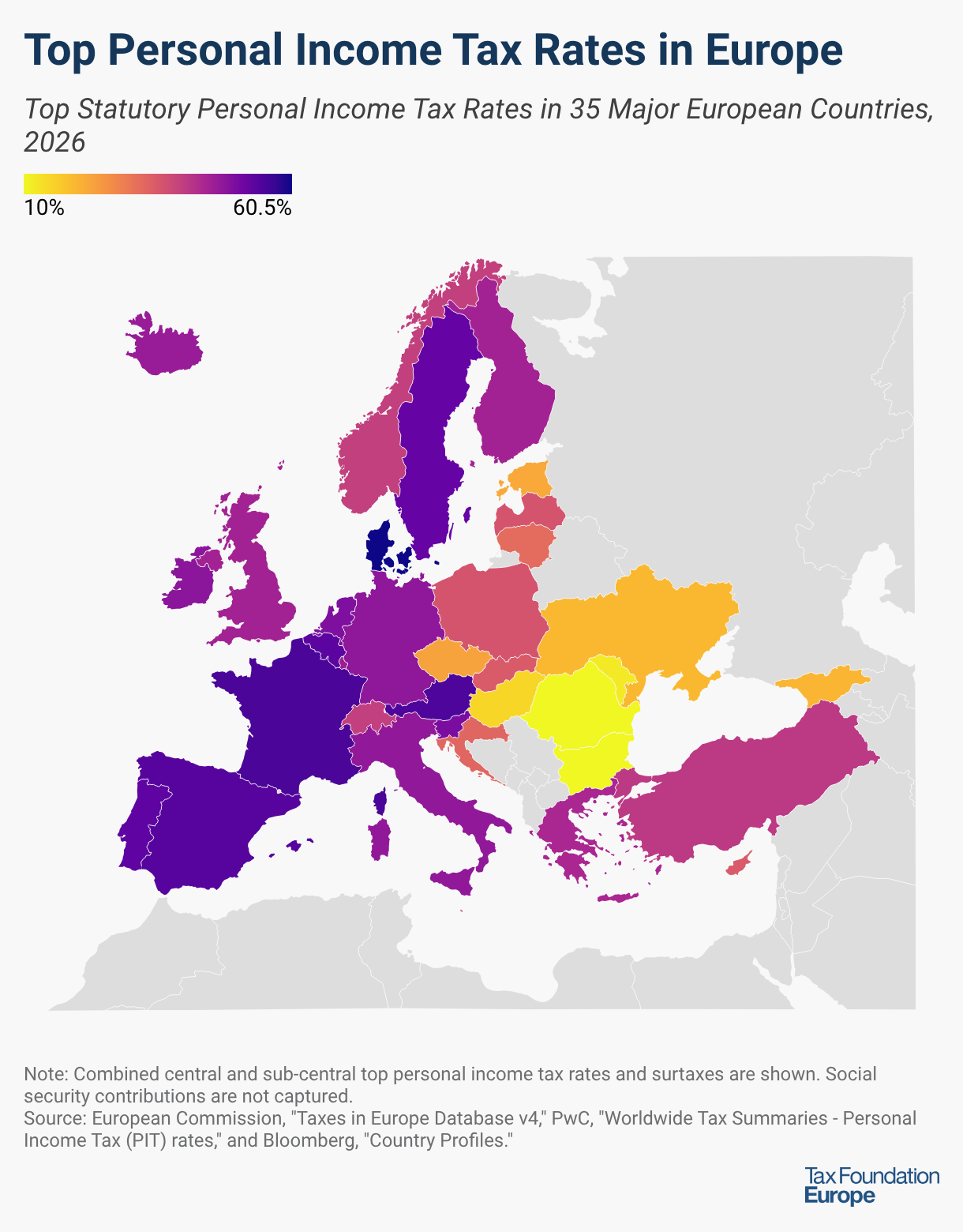
2026 Top Personal Income Tax Rates in Europe
Top Statutory Personal Income Tax Rates in 35 Major European Countries, 2026
| Country | Top Statutory Personal Income Tax Rate |
|---|---|
| Austria (AT) | 55.0% |
| Belgium (BE) | 53.5% |
| Bulgaria (BG) | 10.0% |
| Croatia (HR) | 33.0% |
| Cyprus (CY) | 35.0% |
| Czech Republic (CZ) | 23.0% |
| Denmark (DK) | 60.5% |
| Estonia (EE) | 22.0% |
| Finland (FI) | 45.0% |
| France (FR) | 55.4% |
| Georgia (GE) | 20.0% |
| Germany (DE) | 47.5% |
| Greece (GR) | 44.0% |
| Hungary (HU) | 15.0% |
| Iceland (IS) | 46.3% |
| Ireland (IE) | 48.0% |
| Italy (IT) | 47.2% |
| Latvia (LV) | 36.0% |
| Lithuania (LT) | 32.0% |
| Luxembourg (LU) | 45.8% |
| Malta (MT) | 35.0% |
| Moldova (MD) | 12.0% |
| Netherlands (NL) | 49.5% |
| Norway (NO) | 39.6% |
| Poland (PL) | 36.0% |
| Portugal (PT) | 53.0% |
| Romania (RO) | 10.0% |
| Slovak Republic (SK) | 35.0% |
| Slovenia (SI) | 50.0% |
| Spain (ES) | 54.0% |
| Sweden (SE) | 52.3% |
| Switzerland (CH) | 39.7% |
| Turkey (TR) | 40.8% |
| Ukraine (UA) | 19.5% |
| United Kingdom (GB) | 45.0% |
Source: European Commission, "Taxes in Europe Database v4," PwC, "Worldwide Tax Summaries - Personal Income Tax (PIT) rates," and Bloomberg, "Country Profiles."

Expand or Collapse Table
2025 Top Personal Income Tax Rates in Europe
Top Statutory Personal Income Tax Rates in 35 Major European Countries, 2025
| Country | Top Statutory Personal Income Tax Rate |
|---|---|
| Austria (AT) | 55.0% |
| Belgium (BE) | 53.5% |
| Bulgaria (BG) | 10.0% |
| Croatia (HR) | 35.4% |
| Cyprus (CY) | 35.0% |
| Czech Republic (CZ) | 23.0% |
| Denmark (DK) | 55.9% |
| Estonia (EE) | 22.0% |
| Finland (FI) | 51.8% |
| France (FR) | 55.4% |
| Georgia (GE) | 20.0% |
| Germany (DE) | 47.5% |
| Greece (GR) | 44.0% |
| Hungary (HU) | 15.0% |
| Iceland (IS) | 46.3% |
| Ireland (IE) | 48.0% |
| Italy (IT) | 47.2% |
| Latvia (LV) | 36.0% |
| Lithuania (LT) | 32.0% |
| Luxembourg (LU) | 45.8% |
| Malta (MT) | 35.0% |
| Moldova (MD) | 12.0% |
| Netherlands (NL) | 49.5% |
| Norway (NO) | 39.6% |
| Poland (PL) | 36.0% |
| Portugal (PT) | 53.0% |
| Romania (RO) | 10.0% |
| Slovakia (SK) | 25.0% |
| Slovenia (SI) | 50.0% |
| Spain (ES) | 54.0% |
| Sweden (SE) | 52.3% |
| Switzerland (CH) | 39.7% |
| Turkey (TR) | 40.8% |
| Ukraine (UA) | 19.5% |
| United Kingdom (GB) | 45.0% |
Source: European Commission, "Taxes in Europe Database v4"; PwC, "Worldwide Tax Summaries - Personal Income Tax (PIT) Rates"; Bloomberg, "Country Profiles."
Data compiled by Alex Mengden
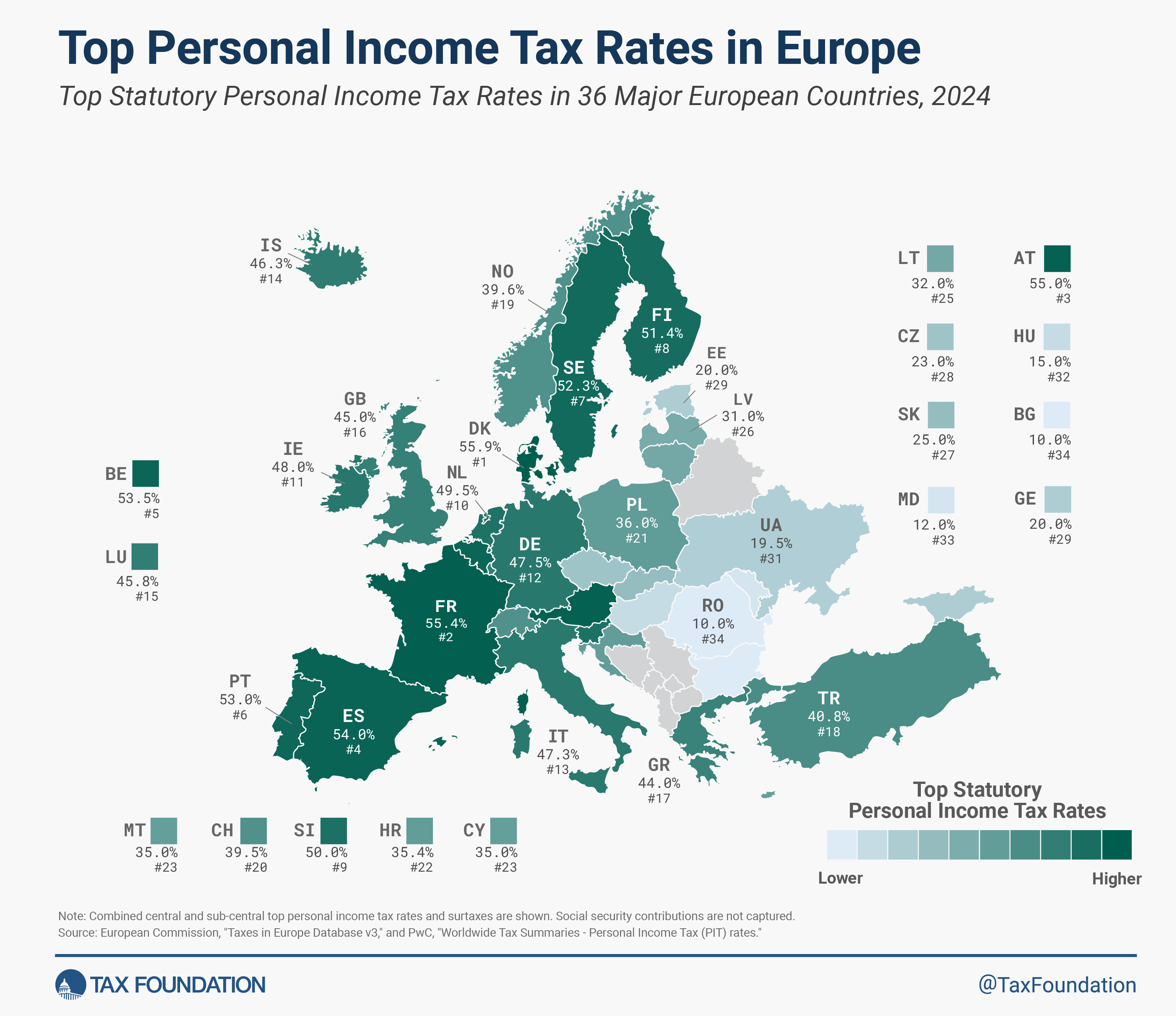
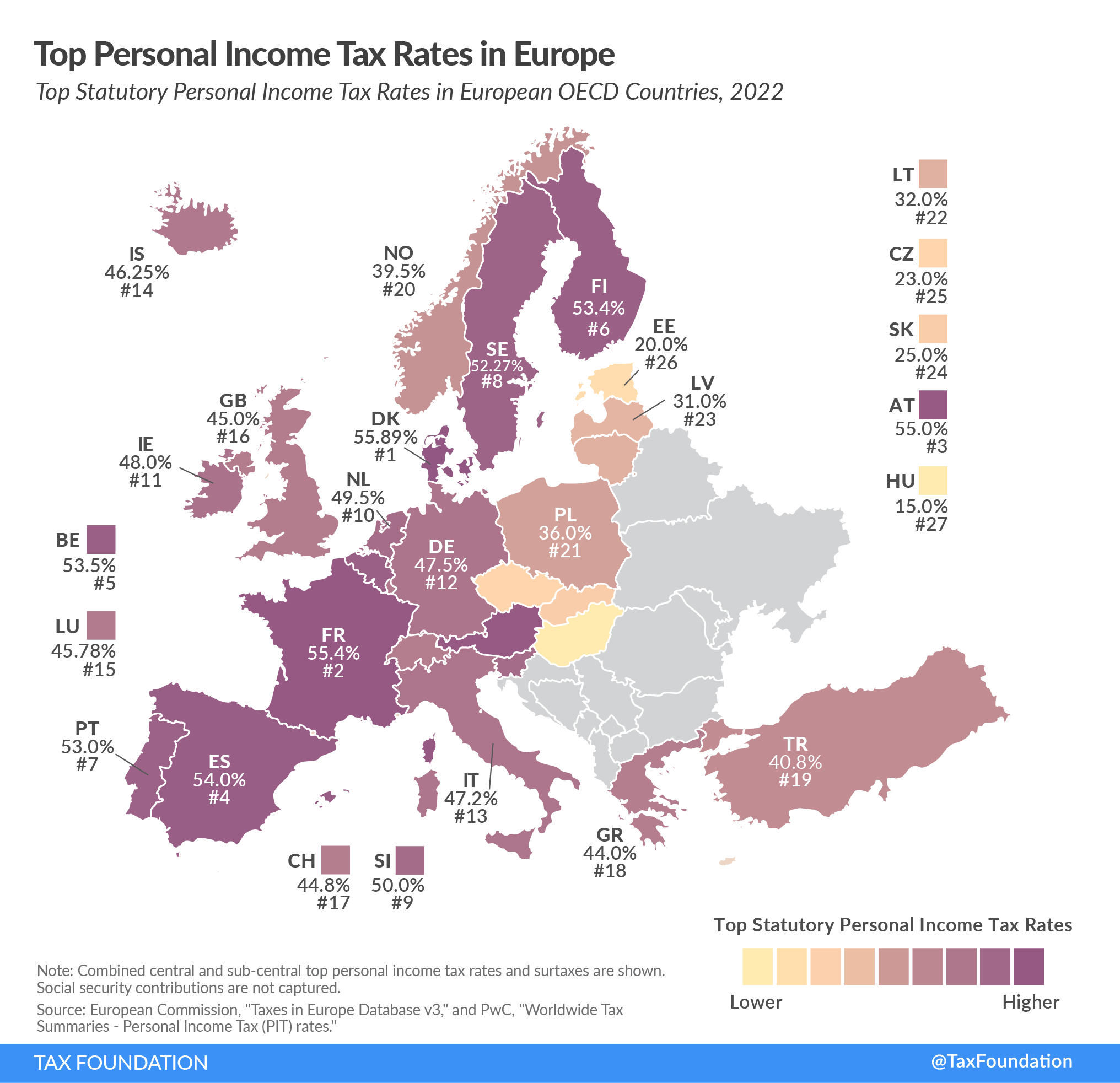
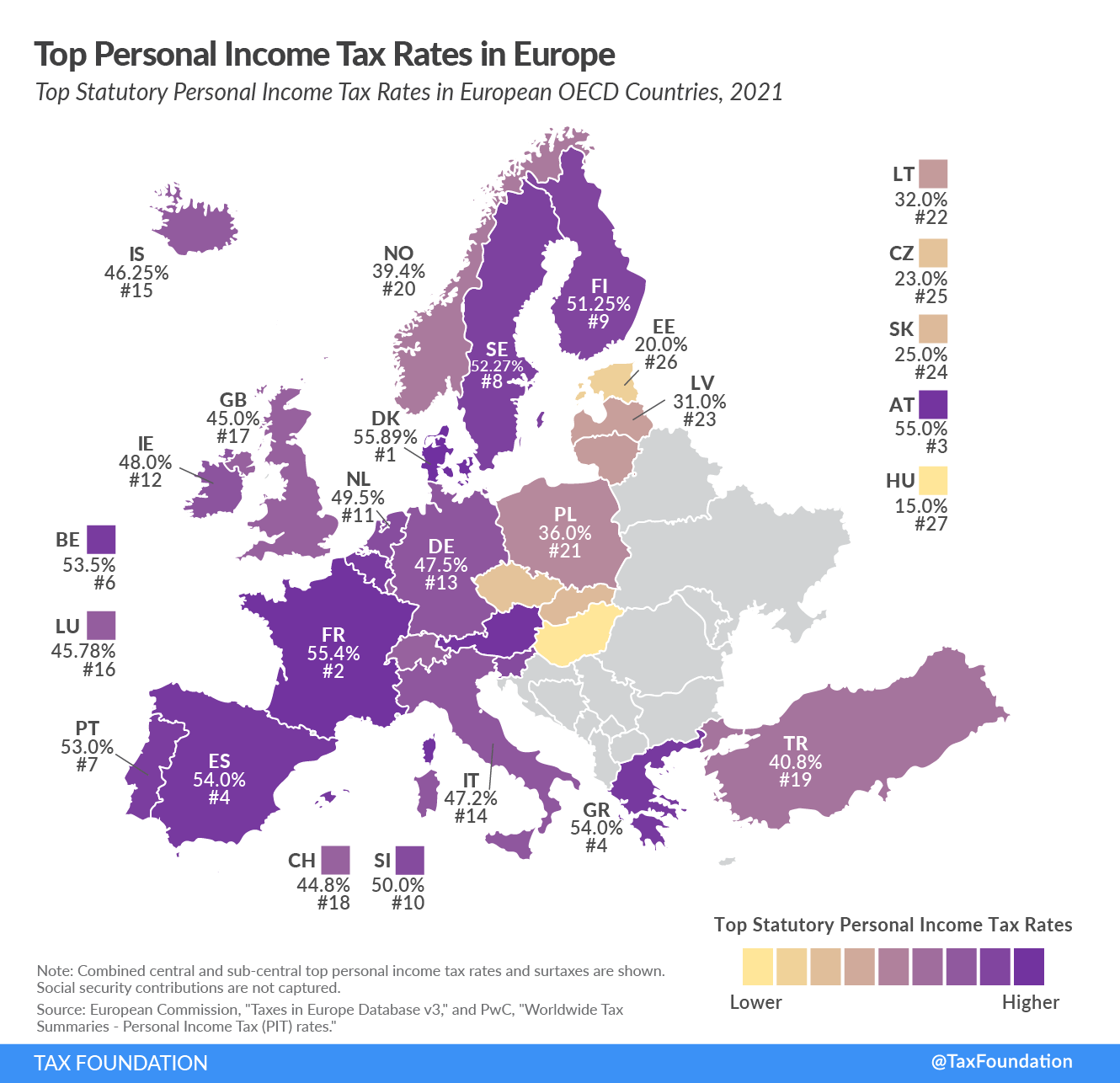
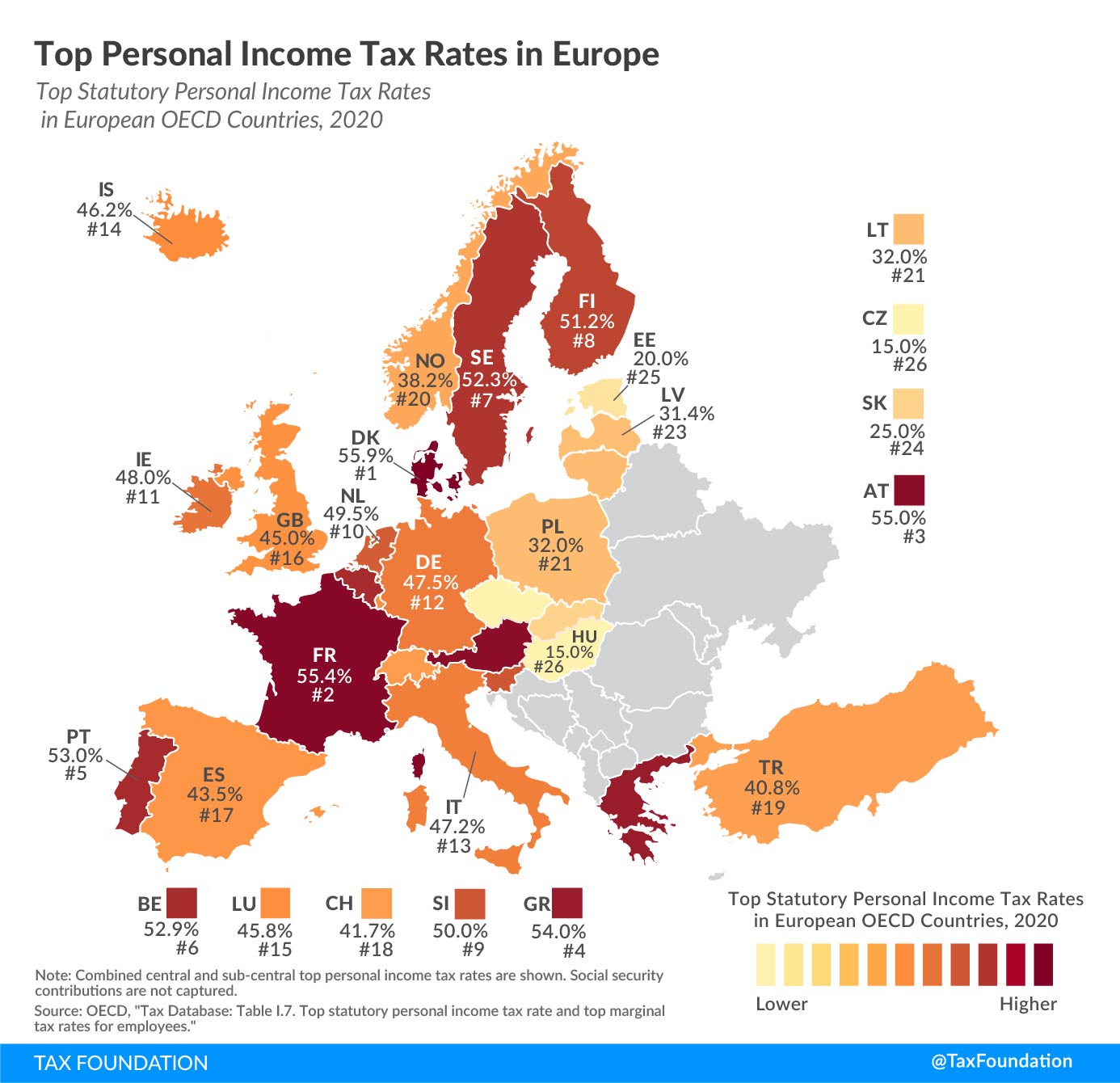
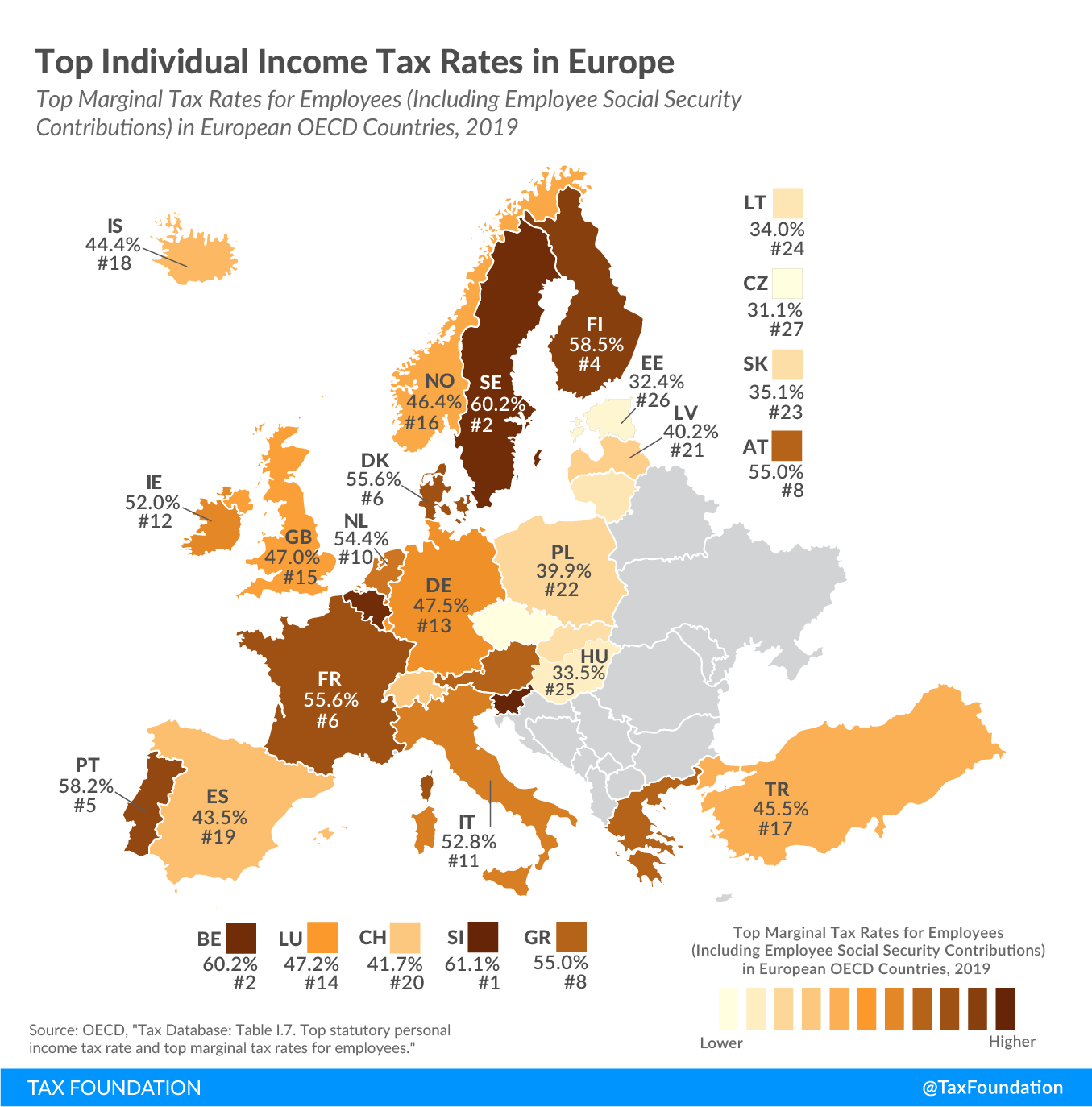
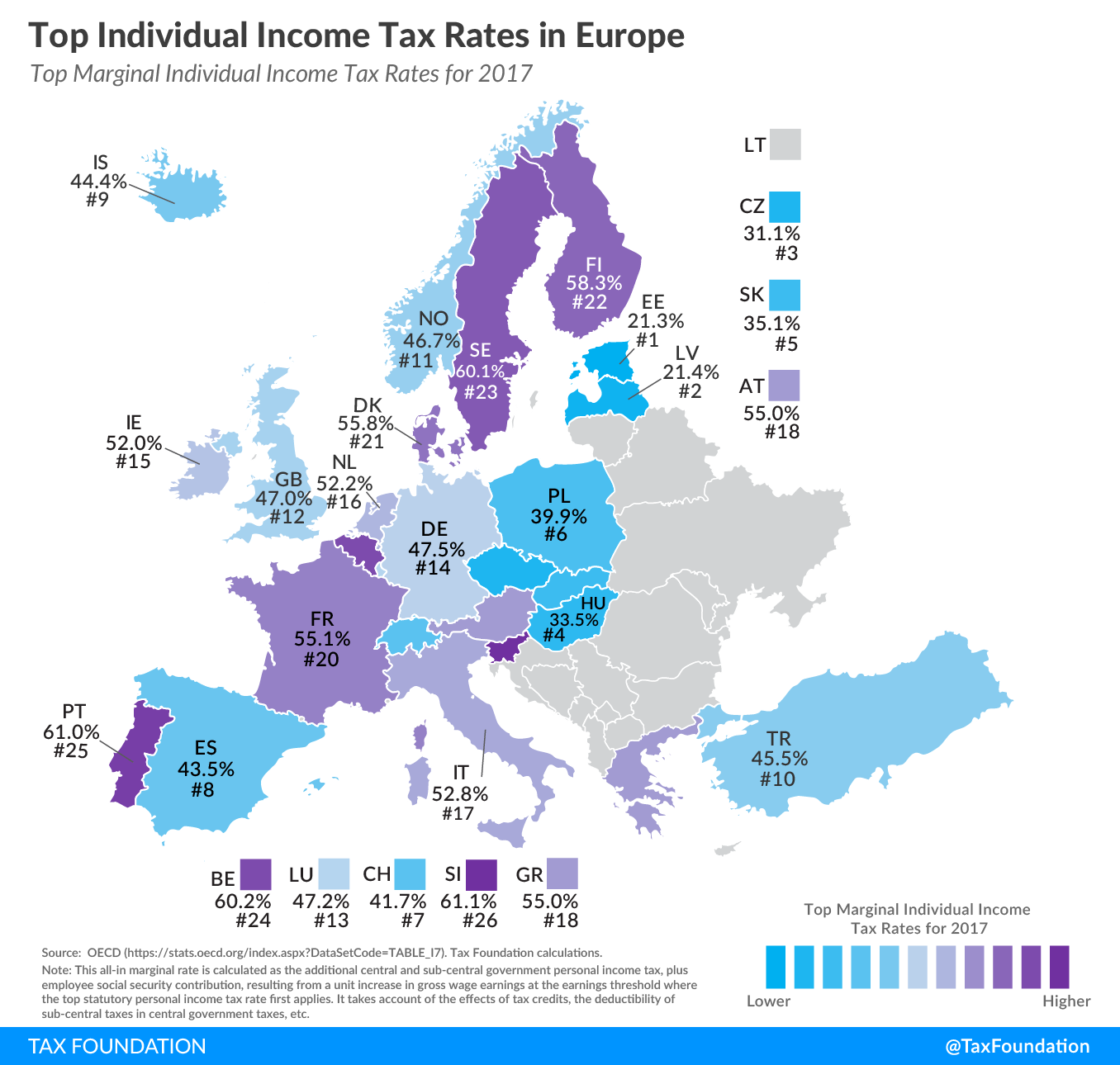
Among European OECD countries, the average statutory top personal income tax rate lies at 43.4 percent in 2026. Denmark (60.5 percent), France (55.4 percent), and Austria (55 percent) have the highest top rates. Hungary (15 percent), Estonia (22 percent), and the Czech Republic (23 percent) have the lowest top rates.
European countries that are not part of the OECD tend to feature lower rates and tax personal income at a single rate. Bulgaria and Romania (10 percent) levy the lowest rate, followed by Moldova (12 percent), Ukraine (19.5 percent), and Georgia (20 percent).
For comparison, the simple average combined state and federal top income tax rate for the 50 US states and the District of Columbia lies at 42.14 percent as of January 2025, with rates ranging from 37 percent in states without a state income tax to 50.3 percent in California.
Several European countries have changed their top personal income tax rates from last year. Denmark has added one more income tax bracket for incomes above DKK 2.8 million (EUR 375,000), increasing its top rate from 55.6 to 60.5 percent. The Slovak Republic added two tax bracketsA tax bracket is the range of incomes taxed at given rates, which typically differ depending on filing status. In a progressive individual or corporate income tax system, rates rise as income increases. There are seven federal individual income tax brackets; the federal corporate income tax system is flat. to its schedule, shifting its top rate from 25 to 35 percent. In contrast, Finland reduced its top personal income tax rate from 51.5 to 45 percent.
Other European countries are due for potential changes to their top personal income tax rates in the coming years. Austria postponed the planned expiration of its highest tax bracket in 2026 to the year 2030, leaving its top income tax rate at 55 percent instead of reverting back to 50 percent.
Stay informed on the tax policies impacting you.
Subscribe to our free newsletter to get the latest tax data, news and analysis.
Subscribe
Errata: A previous edition of this post mistakenly referenced an increased personal income tax rate in Estonia, but the rate increase was not triggered for 2026. It has been corrected.
About the Author

Alex Mengden is an Economist at the Tax Foundation, where he focuses on international tax issues and tax policy in Europe. He holds a BA in philosophy and economics from the University of Bayreuth and an MSc in economics from the Ludwig Maximilian University of Munich.