Tracking the Impact of the Trump Tariffs & Trade War
The Trump tariffs have not meaningfully altered the trade balance and amount to an average tax increase per US household of $700 in 2026.
56 min read
The Trump tariffs have not meaningfully altered the trade balance and amount to an average tax increase per US household of $700 in 2026.
56 min read
The ongoing economic uncertainty from global geopolitical threats, supply chain disruptions, rising interest rates, and lagging economic growth in many developed countries have highlighted the importance of private business investment.
32 min read
NYC’s congestion tolling has reduced congestion, raised money for the MTA, and sped up vehicles in the city. Its success has inspired proposals for congestion tolling in other major US cities, like Los Angeles and Washington, DC.
4 min read
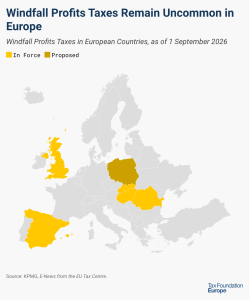
Poland is currently moving forward with legislation aimed at introducing a windfall profits tax. In doing so, it is following a broader European trend of renewed interest in such taxes in response to rising fuel prices triggered by the conflict in the Middle East.
6 min read
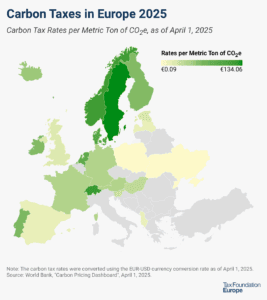
In recent years, several countries have taken measures to reduce carbon emissions, including instituting environmental regulations, emissions trading systems (ETSs), and carbon taxes.
5 min read
British taxation on the American colonies was a major catalyst for the American Revolution, but most of the tax revolts leading up to the war were in response to one tax type: excise taxes.
4 min read
Oregon’s Extended Producer Responsibility program to incentivize recycling does so with a complicated and unprincipled series of regulations, including confidentially determined tax rates on various materials derived from a revenue goal.
8 min read
Military action around the Strait of Hormuz has increased global oil prices. In response, policymakers around the world have put forward proposals targeting oil and gas producers who are seeing profits increase in the short run from the spike in prices.
5 min read
In response to surging gas prices, President Trump and several lawmakers have proposed suspending the federal gas tax via a gas tax holiday. Gas tax holidays have appeal across the political aisle, but suspending the federal gas tax is a uniquely ill-suited policy for addressing rising prices.
3 min read
Tax collections vary widely by state, making per capita collections figures—a measure of collections per person—especially useful, as they allow comparisons across differences in tax rates and bases, economic capacities, and policy decisions that impact the size and scope of government.
5 min read
Rental cars are some of the most heavily taxed transactions in the US. Rather than levying additional taxes on rental cars by trying to export the tax burden to nonresidents, municipalities should enact principled, neutral transportation tax policy that is unlikely to discourage visitors, tourists, and other economic activity.
5 min read
The carbon tax is often considered the ideal climate policy. However, existing carbon taxes do not match the ideal theoretical policy. More than two dozen carbon taxes exist in the world today, and they vary widely in terms of design.
61 min read
Gas tax prices are soaring across the country, and lawmakers are naturally looking for ways to alleviate the pain at the pump. While gas tax holidays—which temporarily suspend fuel taxes to artificially lower the price of gas—are a politically welcomed intervention, taxpayers shouldn’t be so quick to celebrate.
Facts & Figures serves as a one-stop state tax data resource that compares all 50 states on over 40 measures of tax rates, collections, burdens, and more.
2 min read
The amount of revenue states raise through roadway-related revenues varies significantly across the US. Only two states raise enough revenue to fully cover their highway spending.
5 min read
Notably, the OBBBA makes permanent the individual tax changes first put in place by the TCJA, which avoids a tax hike on an estimated 62 percent of tax filers in 2026.
4 min read
Fuel taxes continue to be a central policy consideration for European countries amid geopolitical conflicts, increased emphasis on environmental policy, and economic conditions experienced by average consumers.
6 min read
Our analysis of the major tax provisions included in the OBBBA finds it will increase long-run GDP by 0.7 percent. The major tax provisions will reduce federal tax revenue by nearly $5.2 trillion between 2025 and 2034, on a conventional basis.
12 min read
As European countries have undertaken a series of tax reforms designed for budgetary stability, policymakers should focus on consumption taxes by making them more neutral and efficient.
15 min read
Forty-three states will ring in 2026 with notable tax changes. Eight states will see reduced individual income tax rates in the new year while four states will see reduced corporate income tax rates.
30 min read