Skip to content

Taxes In Maine

2026 Maine Tax Rates, Collections, and Burdens

How Do Maine Taxes Compare to Other States?

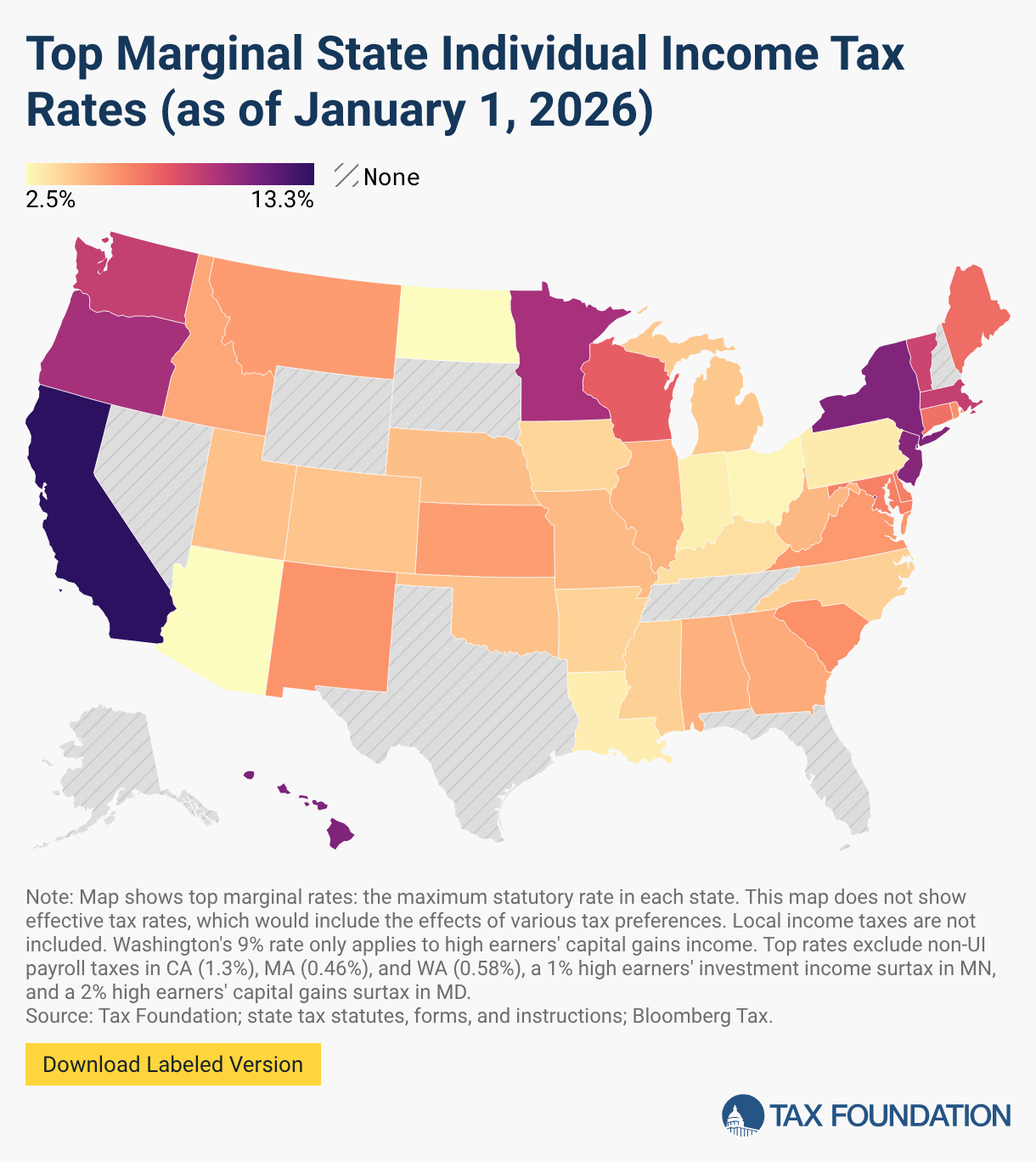
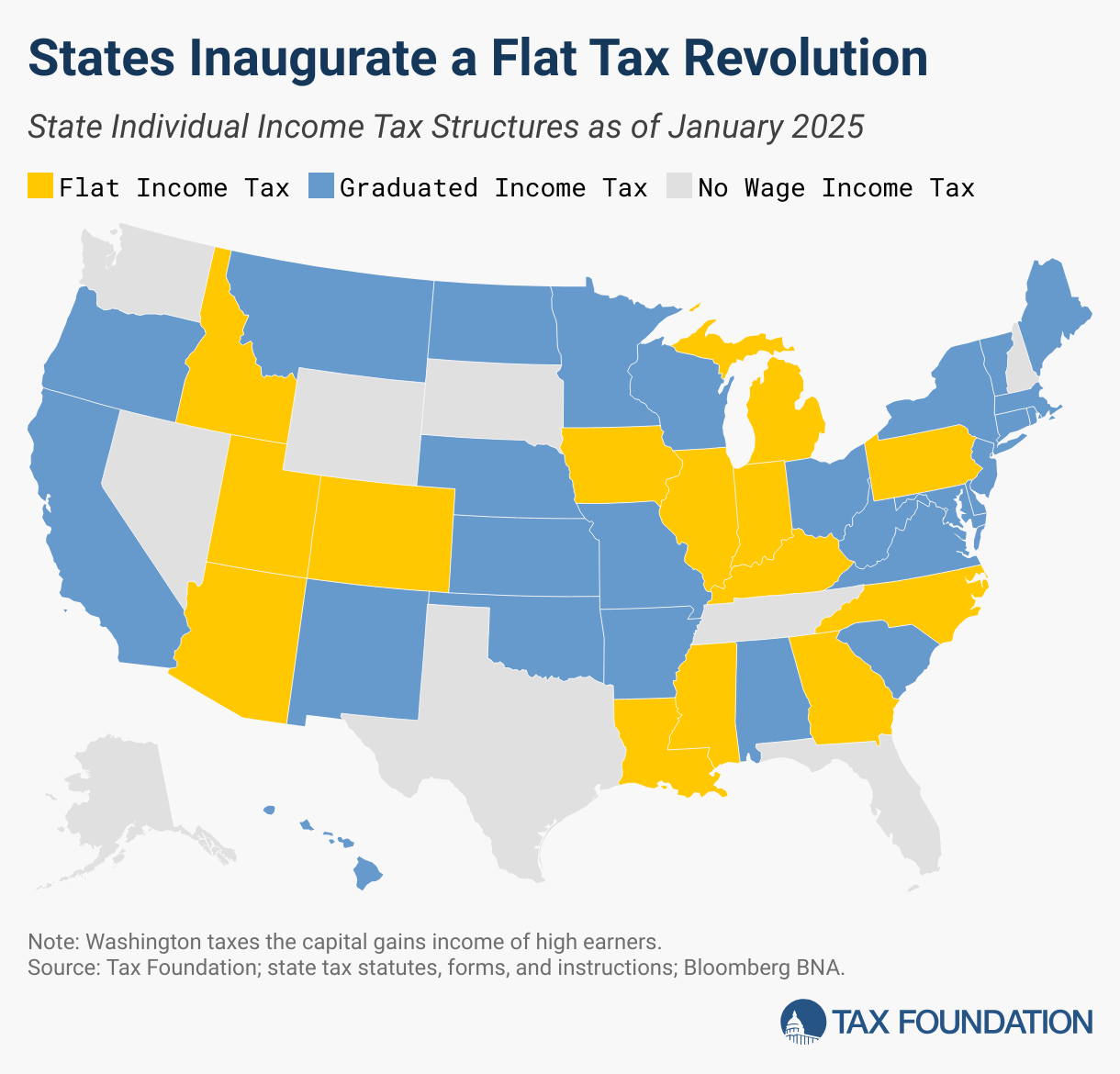
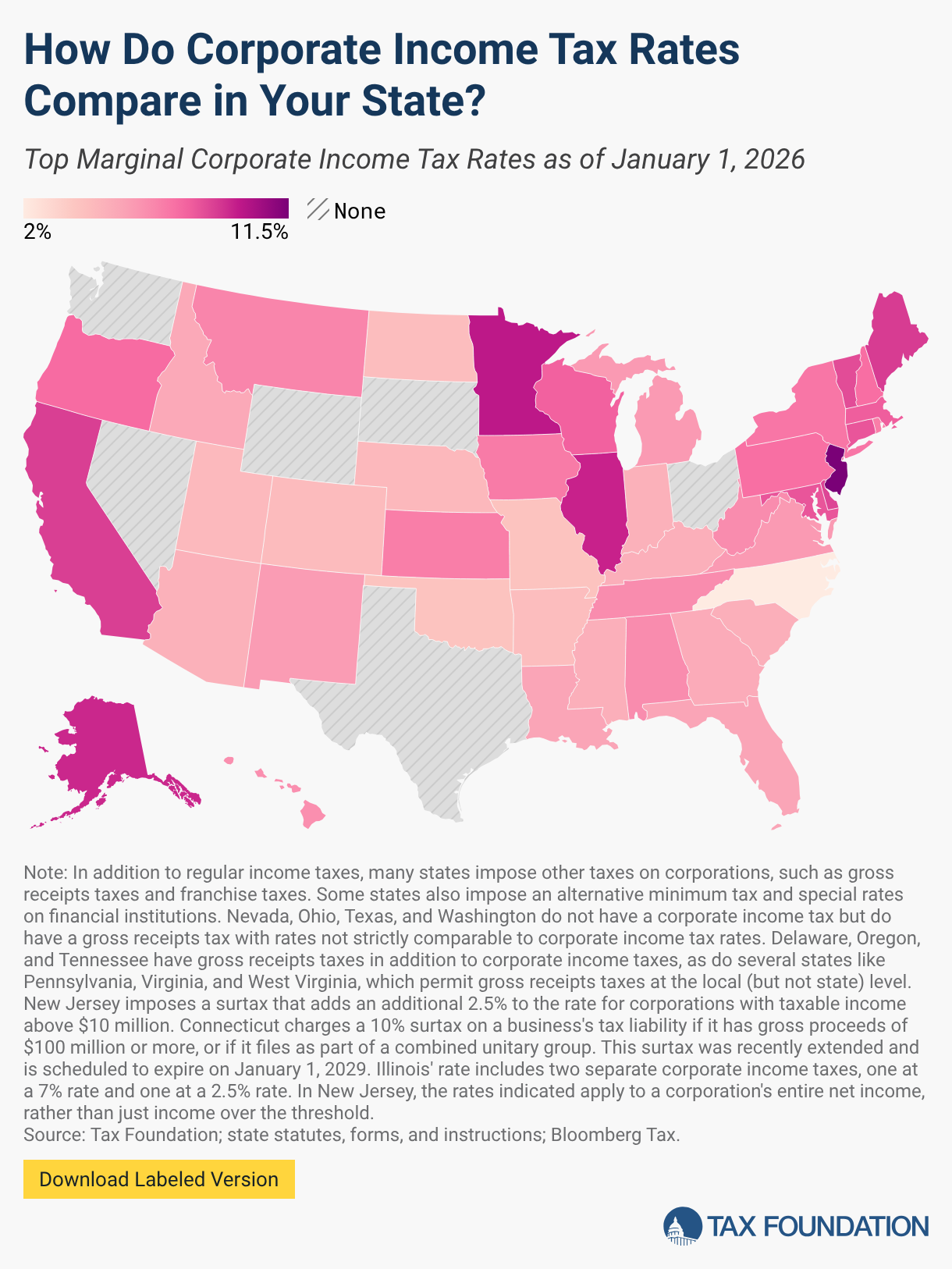
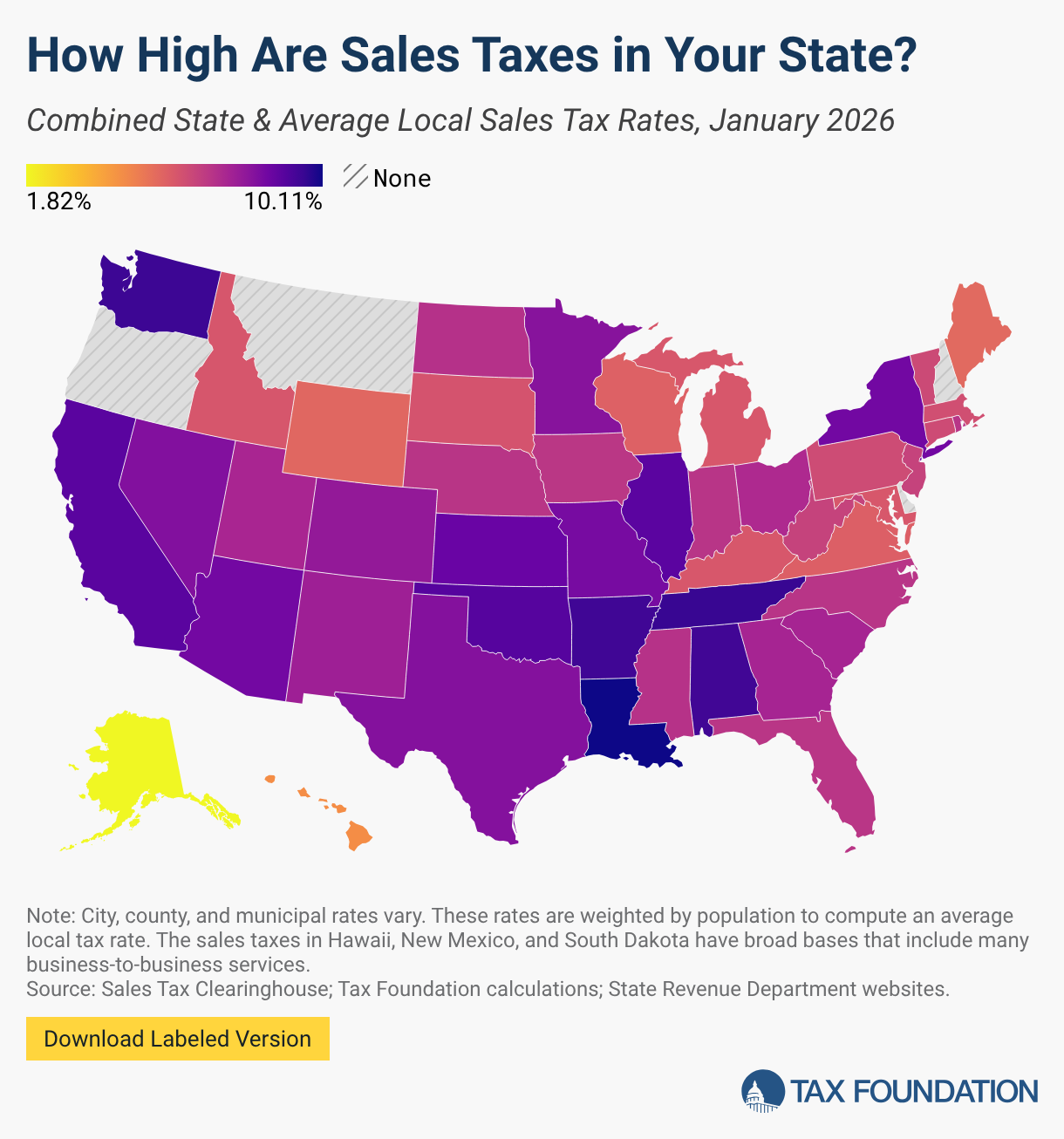
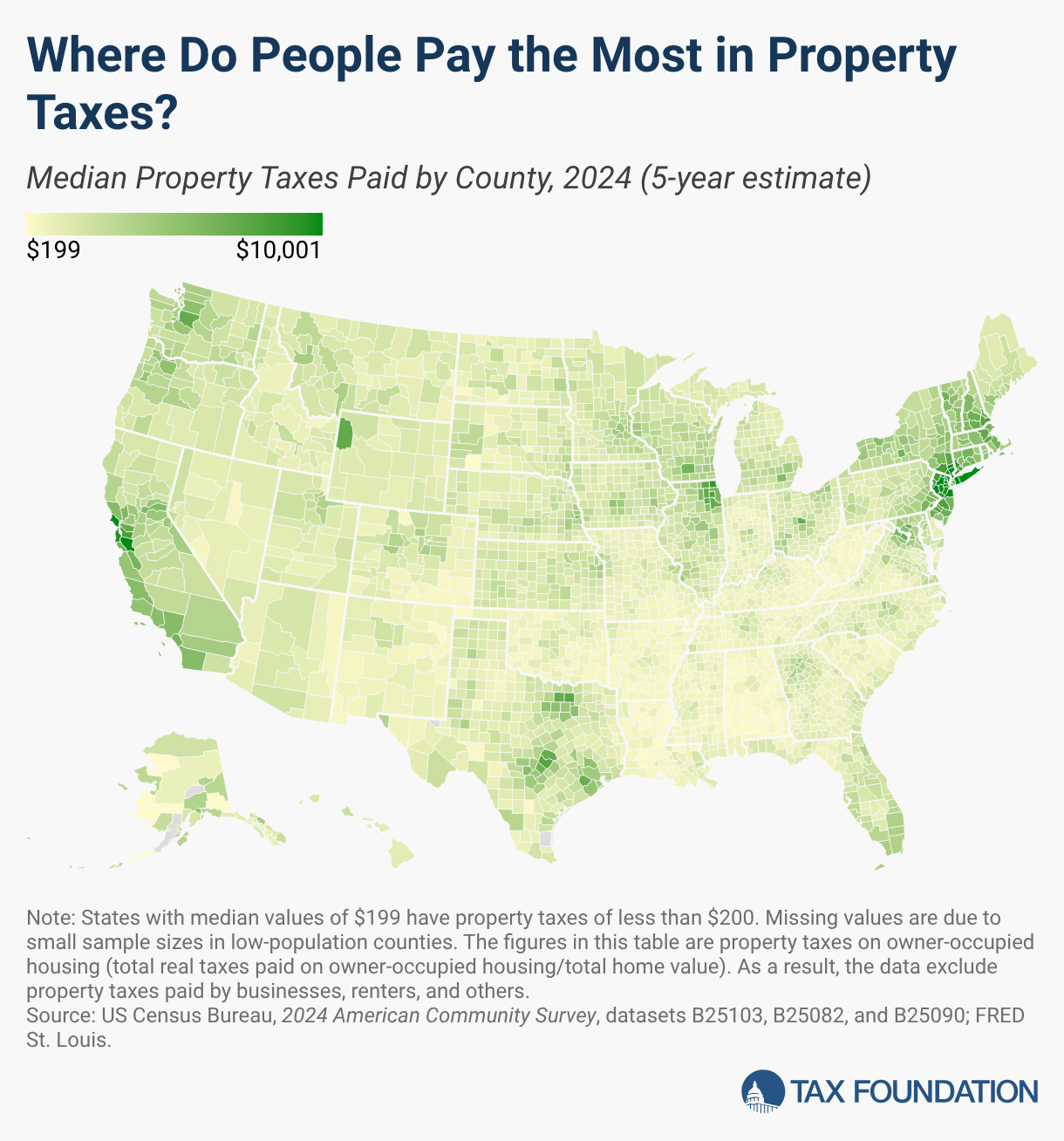
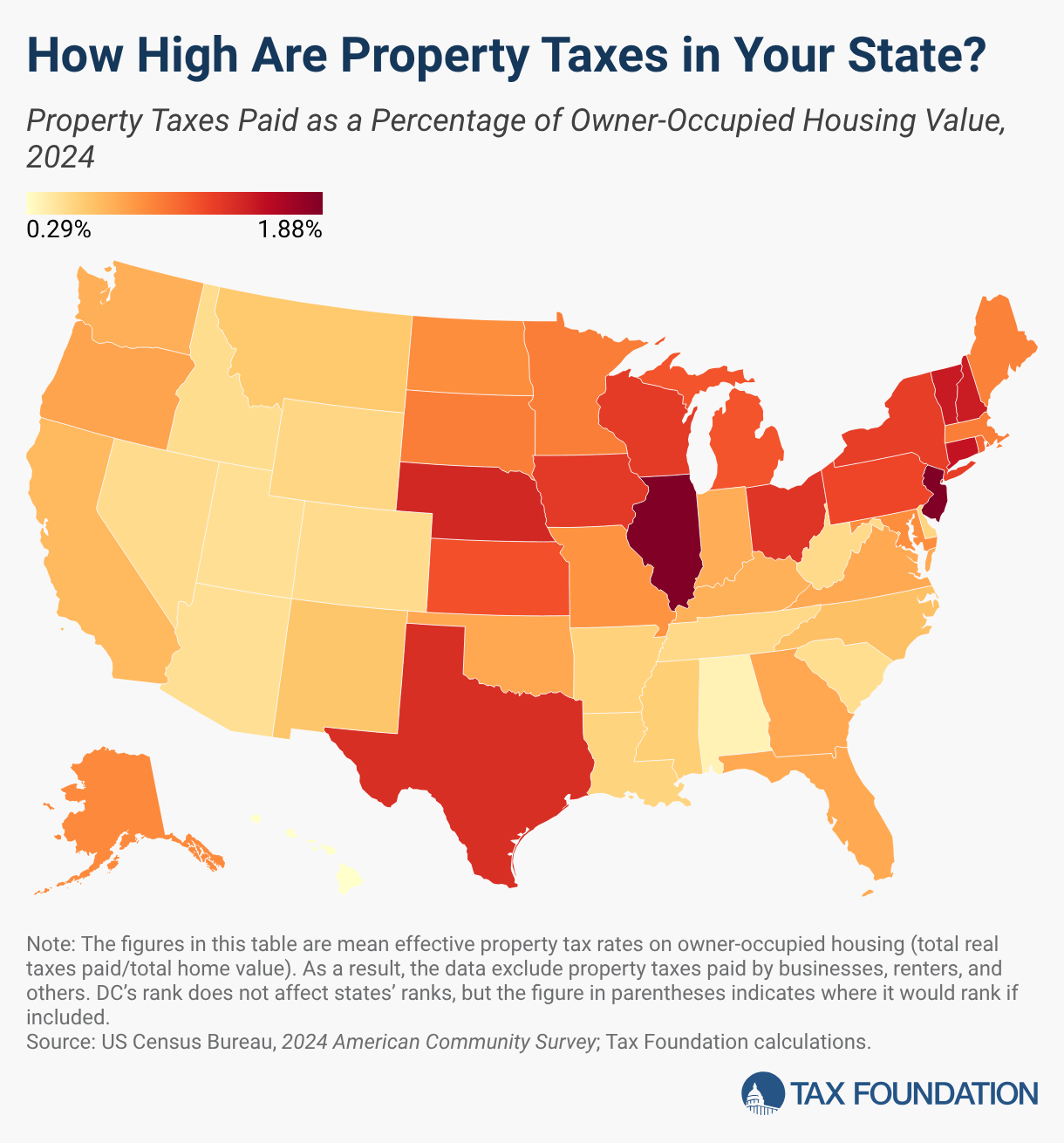
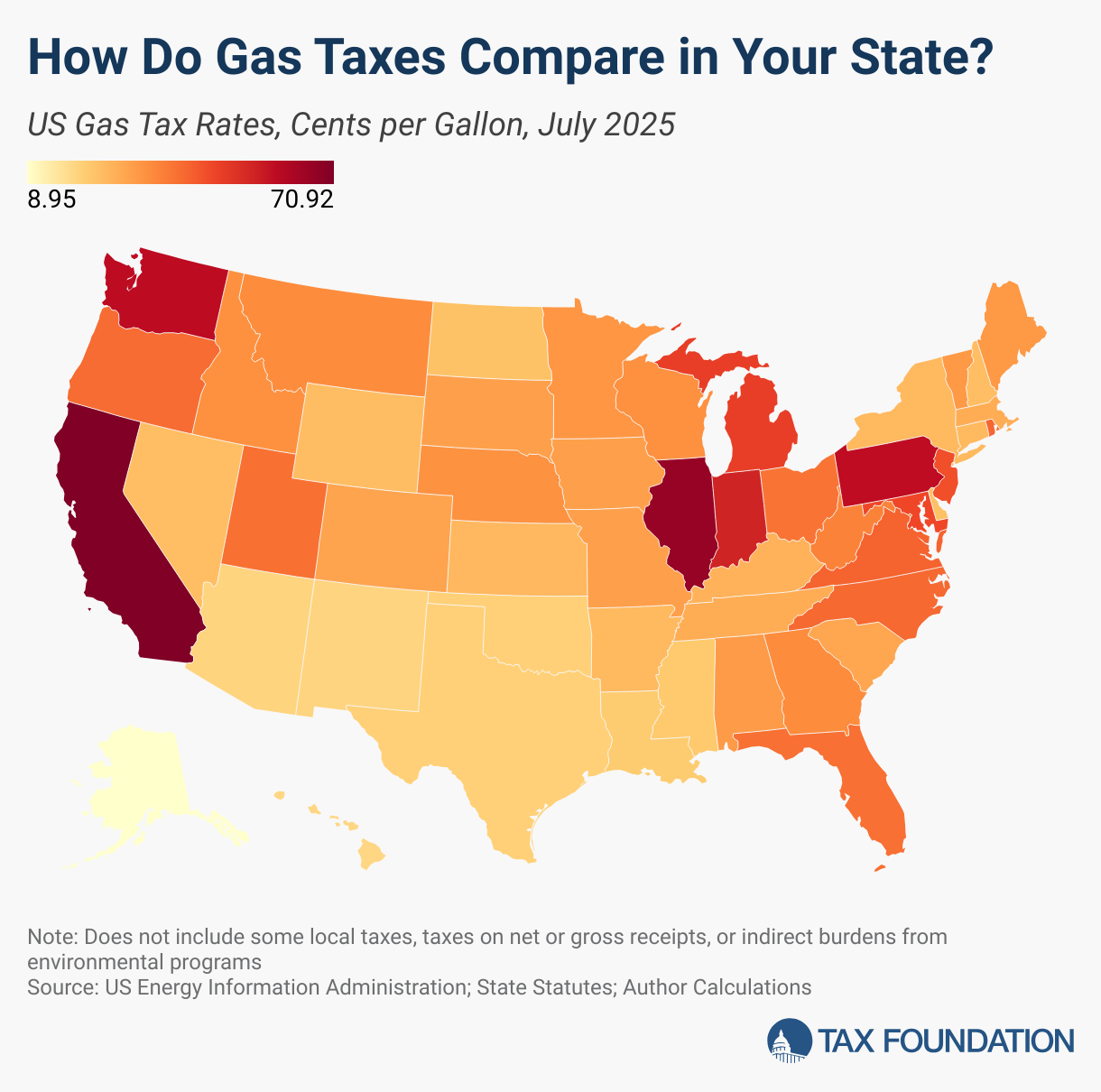
Maine has a graduated state individual income tax, with rates ranging from 5.80 percent to 9.15 percent following the enactment of a two percentage point increase to the top rate during the 2026 legislative session. Maine has a graduated corporate income tax, with a top rate of 8.93 percent, a 5.50 percent state sales tax rate, and an average combined state and local sales tax rate of 5.50 percent. Maine has a 0.98 percent effective property tax rate on owner-occupied housing value. Maine has an estate tax. Maine’s gas tax is 31.45 cents per gallon, and its cigarette excise tax is $3.50 per pack of 20 cigarettes.

Maine Tax Rankings, Debt, and Tax Revenue

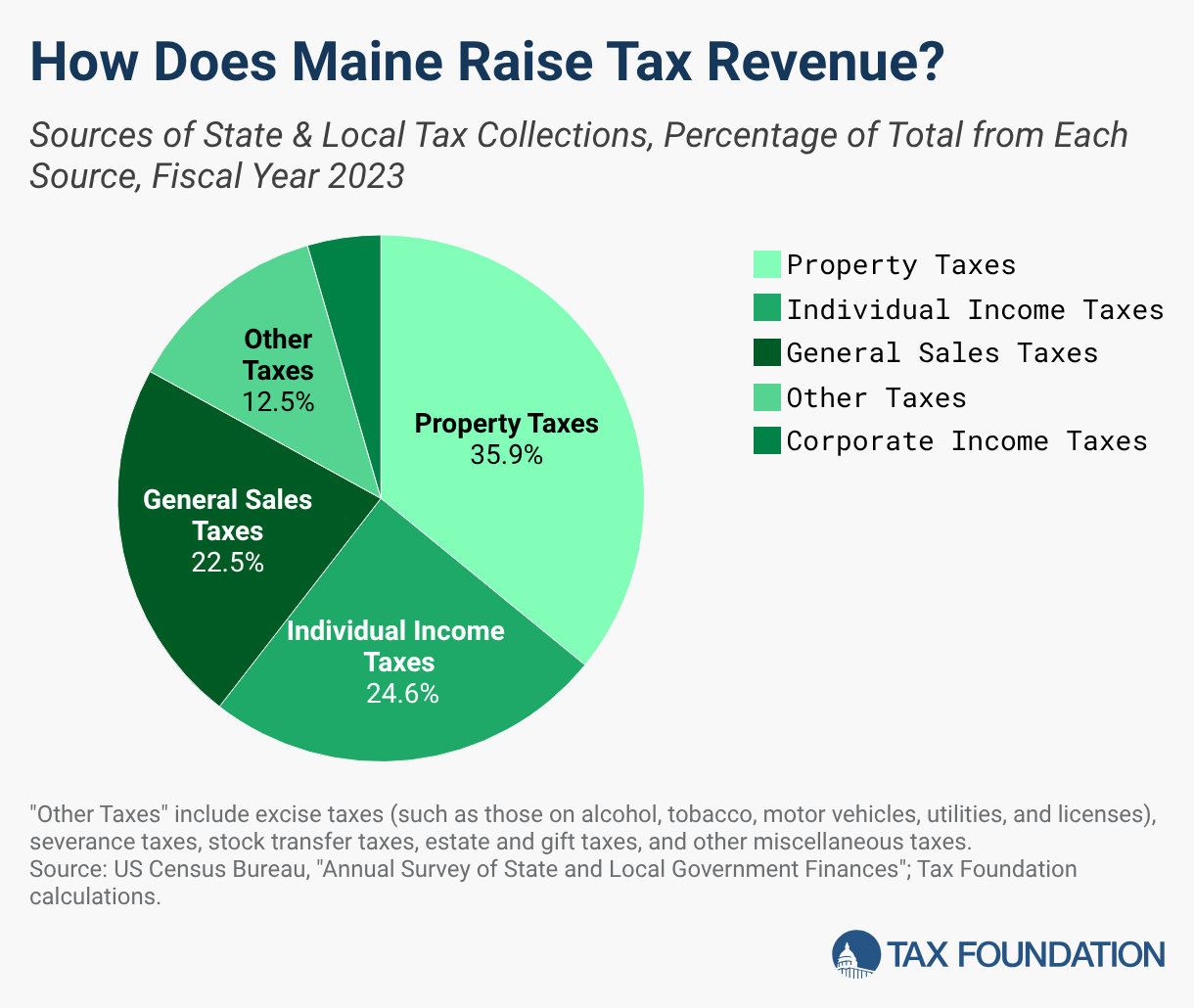
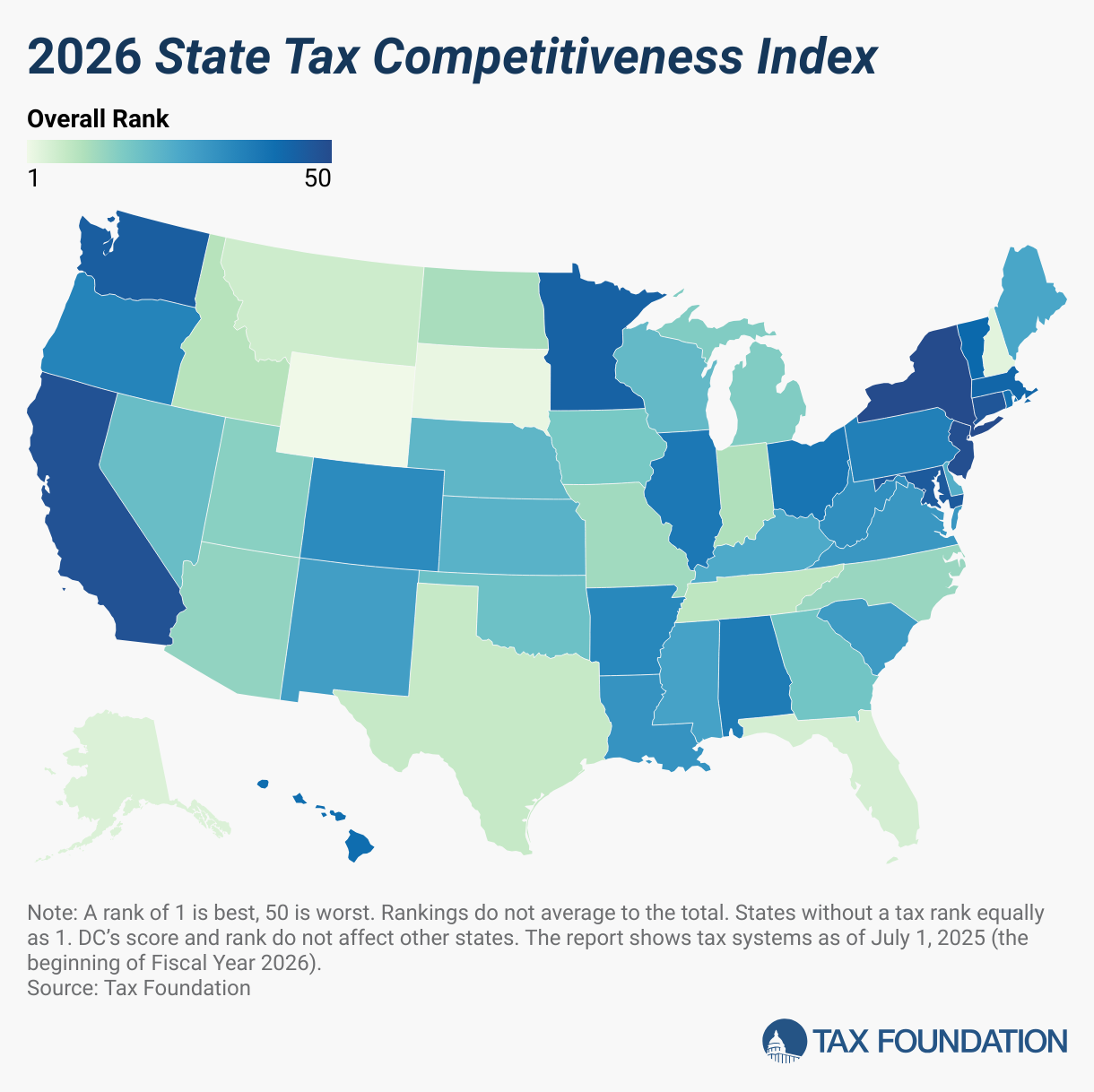
Maine raises tax revenue primarily through property taxes (35.9 percent of total state and local tax revenue), individual income taxes (24.6 percent), and general sales taxes (22.5 percent). Maine collects $7,220 in state and local tax collections per capita, carries $6,270 in state and local debt per capita, and has a 91 percent funded ratio of public pension plans. Maine’s tax system ranks 26th overall on the 2026 State Tax Competitiveness Index.

Understanding Maine’s Tax System

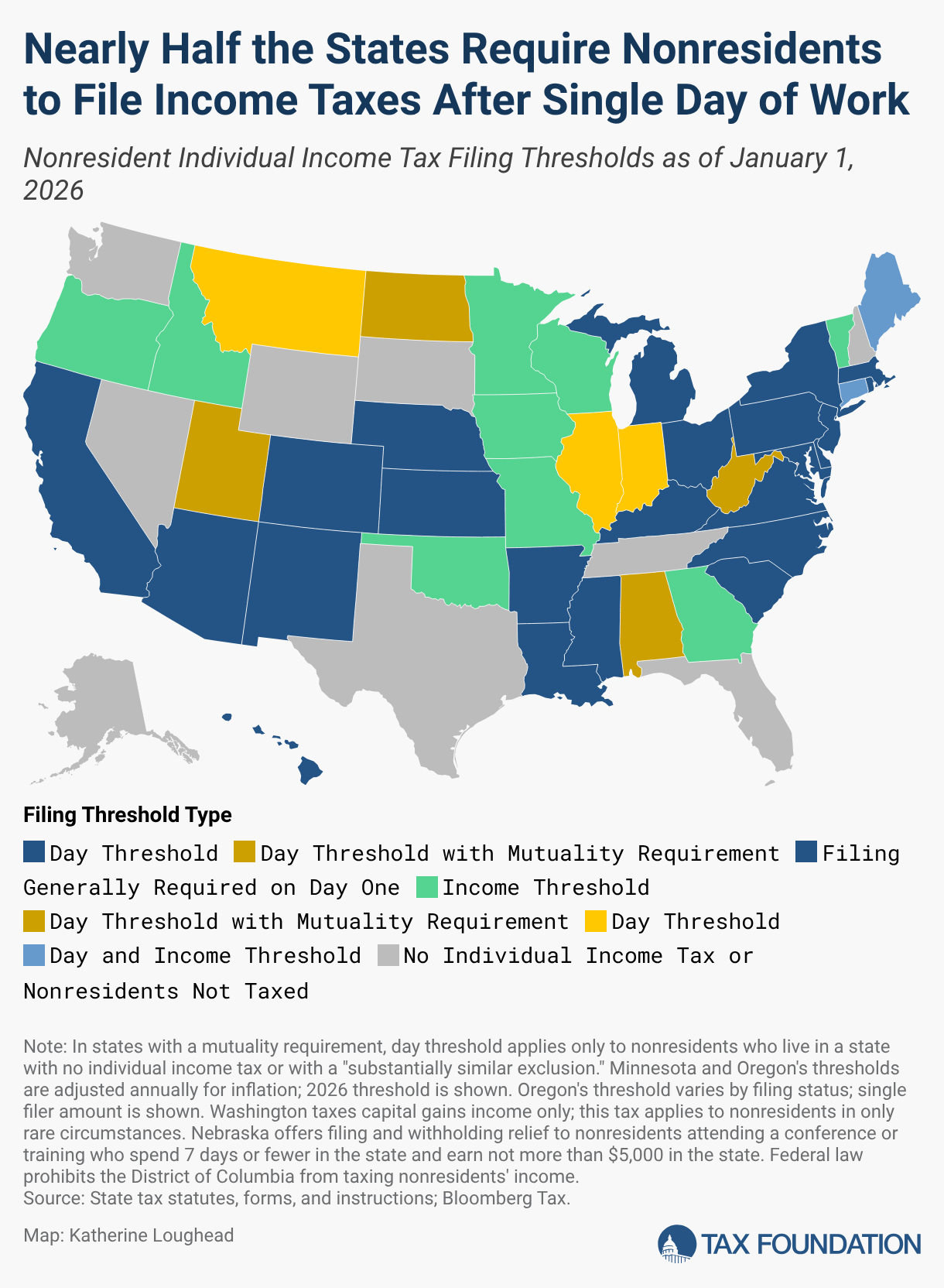
Each state’s tax code is a multifaceted system with many moving parts, and Maine is no exception. Use the tabs below to compare Maine taxes with other states and to see how Maine raises tax revenue. You can also browse our tax maps, which are compiled from our annual publication, Facts & Figures 2026: How Does Your State Compare?

See Related Articles

Tax Data by State

Get facts about taxes in your state and around the US

Explore Data

How Do Taxes in Maine Compare?

How Does Maine Collect Revenue?

How Does Maine's Tax System Rank?


All Related Articles

real value of $100 metropolitan areas

Purchasing Power: The Real Value of $100 by Metropolitan Area, 2023

Many policies, such as minimum wage levels, tax brackets, and means-tested public benefit income thresholds, are denominated in nominal dollars, even though a dollar in one region may go much further than a dollar in another. Lawmakers should keep that reality in mind as they make changes to tax and economic policies.

6 min read
GILTI to NCTI, State Tax Codes Decouple

Some States Will Tax NCTI Despite Prior Votes to Exempt International Income

Several states have decoupled from GILTI by name rather than statutory citation. Lawmakers in those states should amend these statutes to ensure that their tax code does not accidentally incorporate a much more aggressive tax on international income than the tax from which they previously decoupled.

6 min read
tobacco tax data cigarette tax data cigarette tax revenue tobacco tax revenue cigarette smuggling data

Compare Tobacco Tax Data in Your State

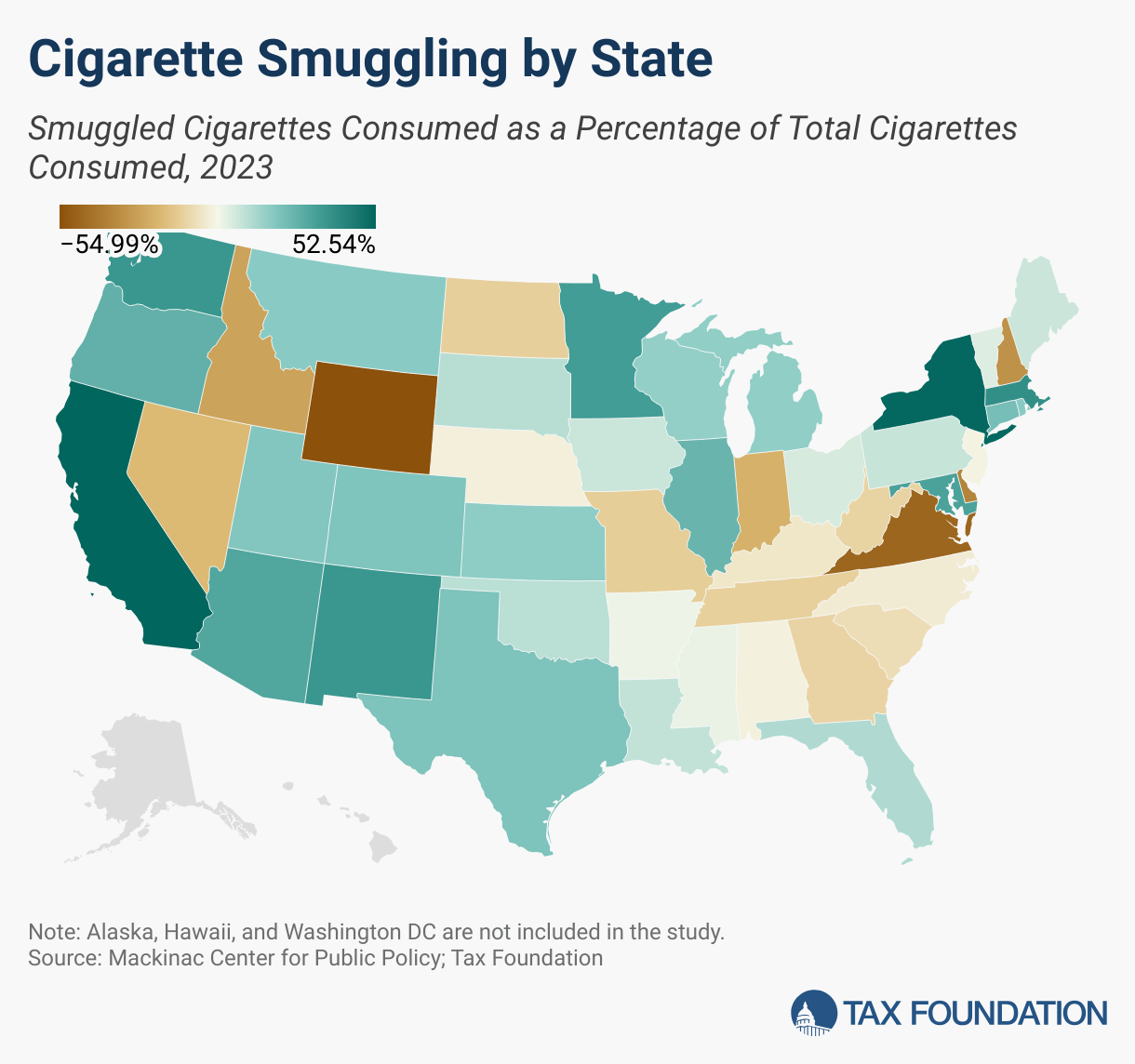
Tobacco is the most highly taxed consumer product in the United States. The tools on this page allow you to explore state tax rates and the effects tax policy and tobacco regulations can have on state revenues, smuggling, and effective tax rates for different income groups.

2 min read
2026 State Tax Competitiveness Index 2026 State Tax Rankings

2026 State Tax Competitiveness Index

The State Tax Competitiveness Index enables policymakers, taxpayers, and business leaders to gauge how their states’ tax systems compare. While there are many ways to show how much state governments collect in taxes, the Index evaluates how well states structure their tax systems and provides a road map for improvement.

122 min read