
Expert
Janelle Fritts
Senior Policy Analyst
Janelle Fritts is a Senior Policy Analyst with the Tax Foundation’s Center for State Tax Policy. She is the lead researcher on the annual State Tax Competitiveness Index and serves as a resource to policymakers in their efforts to modernize and improve the structures of their state tax codes. Her work has been cited in The New York Times, the Associated Press, Bloomberg, and numerous state media outlets across the country.
Janelle has been with the Tax Foundation since 2019, with a brief hiatus to teach high school literature, logic, and rhetoric. Before joining the state team, she interned at the Mackinac Center for Public Policy, the Reason Foundation, and the Illinois Policy Institute. She graduated from Dordt University (Sioux Center, Iowa) with a bachelor’s degree in English with a writing emphasis and a minor in Chemistry.
Born and raised in Midland, Michigan, Janelle now lives in Reston, Virginia. In her free time, she enjoys baking, thrifting, and spending time with her husband and infant daughter.
Latest Work
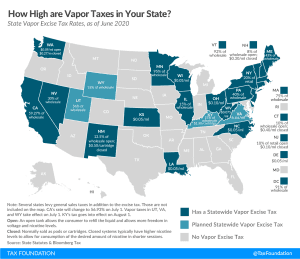
Vaping Taxes by State, 2020
Many states may be looking toward vapor and other excise taxes to fill budget holes caused by the coronavirus crisis. While those areas may represent untapped revenue sources for many states, taxing those activities is unlikely to raise much revenue in the short term.
3 min read
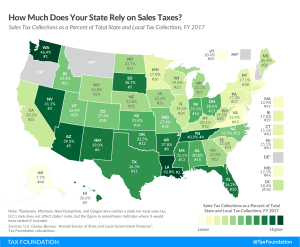
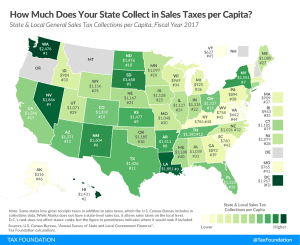
To What Extent Does Your State Rely on Sales Taxes?
Consumption taxes, like sales taxes, are more economically neutral than taxes on capital and income because they target only current consumption.
3 min read
Louisiana Considers Temporary Suspension of Part of Corporation Franchise Tax
State recovery plans should lessen the burden on businesses by shifting from capital stock taxes and other taxes that are charged regardless of profitability. Louisiana does well to target its Corporation Franchise Tax, a burdensome tax that would target businesses that may already be struggling.
2 min read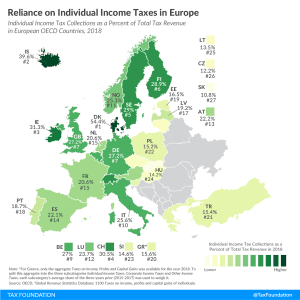
To What Extent Does Your State Rely on Individual Income Taxes?
While the current crisis has caused consumption to drop dramatically, it is generally true that income taxes are more volatile than consumption taxes in an economic downturn and income taxes tend to be more harmful to economic growth than consumption taxes and property taxes.
3 min read
Alabama, Missouri Bills Would Exempt CARES Relief from Income Tax Calculation
Alabama and Missouri are considering excluding the CARES Act Economic Impact Payments from being taxed and exclude them from state income tax calculations.
2 min read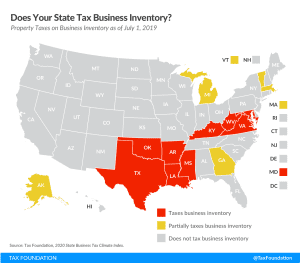
Does Your State Tax Business Inventory?
Inventory taxes are levied regardless of whether a business makes a profit, adding to the burden of businesses already struggling to stay afloat.
2 min read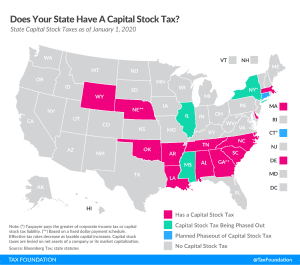
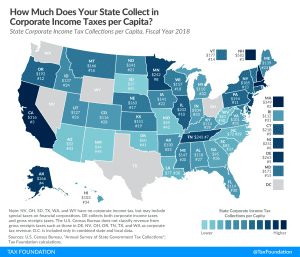
Does Your State Levy a Capital Stock Tax?
As many businesses may need time to return to profitability after this crisis, states should prioritize reducing reliance on capital stock taxes, and shift toward more neutral forms of business taxation.
4 min read
Louisiana Can Look to Tax Reform for Aid in a Post-Coronavirus Recovery
As states look for a path out of these fiscally troubling times, Louisiana has several options for aspects of its tax code to promote economic recovery and growth. The Pelican State’s federal deductibility, Corporation Franchise Tax, and sales tax structure present opportunities for beneficial tax reform in the wake of the coronavirus crisis.
3 min read
Gross Receipts Taxes by State, 2020
While it’s unclear how soon state economies may be able to fully open again, it’s not too early for states to consider how they can remove barriers to businesses & consumers resuming activity.
3 min read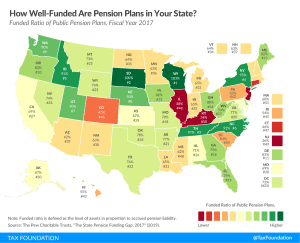
How Well-Funded Are Pension Plans in Your State?
The current crisis highlights the cost of underfunding pensions in years of economic growth. Twenty states have pension plans that were less than two-thirds funded, and five states had pension plans that were less than 50 percent funded.
3 min read
State Rainy Day Funds and the COVID-19 Crisis
State revenue stabilization funds, often called rainy day funds, are better funded now than they were at the start of the Great Recession and can be a valuable tool as states face a sharp pandemic-linked economic contraction.
18 min read
Tracking State Legislative Responses to COVID-19
Many states are racing to pass budgets, emergency COVID-19 supplemental appropriations, and other must-pass legislation as quickly as possible. We’re tracking the latest state legislative responses to the coronavirus crisis.
66 min read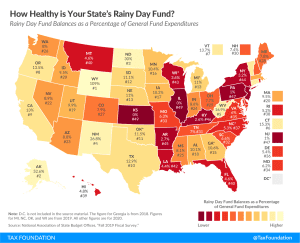
How Healthy is Your State’s Rainy Day Fund?
Rainy day funds have increasingly emerged as a standard component of states’ budgeting toolkits. Economic cycles can have significant impacts on state revenue, but states can prepare for the inevitable downturns during good times by putting away money in a revenue stabilization fund.
2 min read