The Hidden Tariff Burden of Related-Party Trade
Studies have repeatedly shown that US businesses and consumers are bearing a disproportionate share of the tariff burden.
7 min read

Studies have repeatedly shown that US businesses and consumers are bearing a disproportionate share of the tariff burden.
7 min read
While economic levers like sanctions and tariffs have long been recognized as geoeconomic tools, tax policies have rarely been considered a part of this toolkit.
36 min read
There is a real danger that the well-founded admiration of expensing can slip into the belief that rates will not matter if the business tax base is correctly designed. Avi-Yonah’s article is a recent and well-articulated version of this intellectual undercurrent.
7 min read
A Destination-Based Cash Flow Tax (DBCFT) reduces the tax code’s penalty on investment, narrows its bias toward debt over equity, and removes much of the incentive to shift profits abroad.
7 min read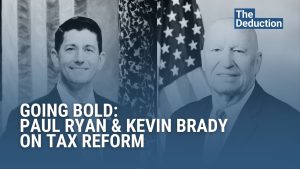
Ten years ago, then-Speaker Paul Ryan and Ways and Means Chairman Kevin Brady released the “Better Way” Tax Plan, the blueprint that would eventually become the Tax Cuts and Jobs Act of 2017—the largest overhaul of the US tax code in over 30 years.

If America’s leaders today want to learn how to build a lasting system on the foundation of simplicity and neutrality, they should follow the Siim Kallas blueprint.
4 min read
The new public country-by-country reporting regimes adopted by the EU and Australia, and changes from the Financial Accounting Standards Board for financial accounts, are meant to promote transparency by multinational enterprises but have ubiquitous structural differences.
10 min read
Foreign R&D generally complements domestic innovation rather than substituting for it, so penalizing foreign R&D weakens US firms in cross-border mergers and acquisitions and in domestic production that depends on global scale.
7 min read
The EU public country-by-country data provides information on taxes and profits that do not align with standard financial disclosure requirements.
6 min read
The new data disclosures will draw significant attention in 2026 and beyond. However, because the data is rooted in financial accounting concepts, affected by timing issues, and shaped by inconsistent reporting regimes, it is poorly suited for drawing strong conclusions about tax policy or corporate behavior.
7 min read
Digital services taxes address a real concern—the need to adapt taxation to the digital economy—but they are not the right solution. They raise limited revenue, are often passed on to consumers rather than large digital firms, create economic distortions, increase complexity and compliance costs, negatively impact innovation and competitiveness, and risk international retaliation.

Since digital services taxes generate little revenue, place the cost on European consumers and not on large digital companies as intended, and risk escalating trade disputes, policymakers should rethink their strategy.
14 min read
Europe’s turn toward the UN is ultimately not a sign that governments are ready to resolve fundamental disputes over taxing rights. If anything, international cooperation on the goal that matters most—fair treatment of cross-border trade—is crumbling.

Carryover provisions help businesses “smooth” their risk and income, making the tax code more neutral across investments and over time.
5 min read
Currently, about half of all European OECD countries have either announced, proposed, or implemented a digital services tax. Because these taxes mainly impact US companies and are thus perceived as discriminatory, the US responded with retaliatory tariff threats.
5 min read
California lawmakers are considering mandating worldwide combined reporting, bringing back a policy the state abandoned in the 1980s due to strong pushback from international trading partners and the federal government. The policy failed to work as intended then and doesn’t make any better sense now.
8 min read
The side-by-side agreement is an important step in trans-Atlantic economic relations, however, there is more work to be done—on both sides of the Atlantic. If there’s a downside to the side-by-side agreement, it’s the risk of locking in mediocre tax policy choices for the long run.

The variety of approaches to taxation among European countries creates a need to evaluate these systems relative to each other. For that purpose, we have developed the European Tax Policy Scorecard—a relative comparison of European countries’ tax systems.
55 min read
Notably, the OBBBA makes permanent the individual tax changes first put in place by the TCJA, which avoids a tax hike on an estimated 62 percent of tax filers in 2026.
4 min read
The Trump administration has rightly shifted its focus from pursuing legislative changes to implementing new permanent rules. But in this shift, it’s crucial that the White House doesn’t lose focus on the larger task at hand.