Why We’re Closely Watching Moore v. U.S.
The Moore case could have important impacts on tax policy.
5 min read
The Moore case could have important impacts on tax policy.
5 min read
For U.S. policymakers looking to encourage greater saving and financial security, particularly among low- and moderate-income households facing serious affordability challenges, the experiences in both the UK and Canada indicate that universal savings accounts are an effective policy tool to help reach that goal.
4 min read
When Caitlin Clark and Angel Reese made their WNBA preseason debuts, basketball fans across the country tuned in. But there’s another audience that also follows along: state revenue officials, who will expect their piece of the pie each time these star athletes—and their teammates—come to town.
3 min read
Buckle up as we navigate the twists and turns of infrastructure and road funding. As electric vehicles gain traction, traditional gas taxes are running out of fuel to support our infrastructure budget.
Policymakers should have two priorities in the upcoming economic policy debates: a larger economy and fiscal responsibility. Principled, pro-growth tax policy can help accomplish both.
21 min read
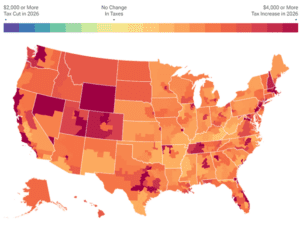
At the end of 2025, the individual tax provisions in the Tax Cuts and Jobs Act (TCJA) expire all at once. Without congressional action, most taxpayers will see a notable tax increase relative to current policy in 2026.
4 min read
The TCJA improved the U.S. tax code, but the meandering voyage of its passing and the compromises made to get it into law show the challenges of the legislative process.
6 min read
All taxes tell a story, and today we’ll explore how taxes influenced Bob Dylan’s decision to sell his music catalog, how the “chicken tax” reshaped the auto industry, and how the historic “tax on air and light” had profound effects on architecture and living conditions.
Here’s how much NFL players can expect to pay in state and local income taxes—to all relevant states—at multiple salary levels, by team.
7 min read
April means Tax Day, a yearly reminder that most people don’t like our tax code. As a recent Tax Foundation poll found, people don’t understand it either. With a looming tax battle on Capitol Hill, the need for tax policy education has never been higher.
One relatively easy but meaningful step policymakers can take to make future tax seasons less burdensome is to modernize their state’s nonresident income tax filing, withholding, and reciprocity laws.
7 min read
When the tax code is stable and predictable, individuals, families, and businesses can set goals for the future and make plans to achieve them.
Lawmakers should aim for policies that support investment and hiring in the United States and refining anti-avoidance measures to improve administrability and lower compliance costs.
All Americans are affected by the tax code—but do they understand the tax code?
Despite taxes playing a significant role in personal finances and being levied on a sizable portion of the U.S. population, most Americans are not just unhappy with the current tax code but also do not understand it.
4 min read
Portugal’s personal income tax system levies high tax rates on an unusually narrow set of high earners, striking a poor balance between earnings incentives and revenue contributions.
4 min read
Facts & Figures serves as a one-stop state tax data resource that compares all 50 states on over 40 measures of tax rates, collections, burdens, and more.
2 min read
Given that U.S. debt is roughly the size of our annual economic output, policymakers will face many tough fiscal choices in the coming years. The good news is there are policies that both support a larger economy and avoid adding to the debt.
6 min read
Designing tax policy in a way that sustainably finances government activities while minimizing distortions is important for supporting a productive economy.
3 min read