

Georgia Income Tax Reform Would Improve Standing Among Neighbors, Country
In a time of increased mobility and tax competition, a lower rate and simpler tax structure would help Georgia stand out among states. Lawmakers would be wise to consider reforming the state’s income tax to improve the state’s competitiveness.
3 min read
Missouri’s Tax Competitiveness
While Missouri has room for improvement, the state is making waves, positioning itself as an increasingly attractive location for business investment. And as ongoing reforms further enhance the competitiveness of the state’s tax code, more businesses will take notice.
8 min read
A Regulatory Tax Hike on U.S. Multinationals
While much of the policy focus has been on proposals embedded in the Build Back Better agenda, a meaningful tax hike for multinational companies has already been adopted.
1 min read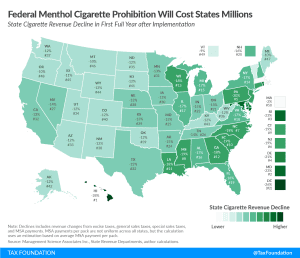
Federal Menthol Cigarette Ban May Cost Governments $6.6 Billion
The FDA’s expected announcement of a national ban on menthol-flavored cigarettes and cigars with a characterizing flavor would carry significant revenue implications for both the federal government and state governments, with likely limited benefits in smoking cessation.
6 min read
The Global Minimum Tax Changes the Game for Build Back Better Revenue
One goal for the Build Back Better Act has been to increase the amount of revenue the U.S. raises from U.S. companies at home or abroad. With the global minimum tax rules in play, it is likely that the expected gains to the U.S. Treasury from foreign profits of U.S. companies will diminish.
5 min read
Rushing Headlong into Formulary Apportionment
Complex tax policies that work well “in theory” can often have a hard time when the rubber meets the road. One instance of this is the challenge that the OECD has created for itself with the global tax deal, also fondly known as Pillar 1 and Pillar 2.
7 min read
Proposal to Rid Ohio of Gross Receipt Taxes
A group of lawmakers in Ohio have proposed to repeal the state’s gross receipt tax (GRT), also known as the commercial activity tax (CAT).
5 min read
Alabama Should Pursue Permanent, Not Piecemeal, Solutions to Federal Deductibility Issues
Alabama lawmakers are acting to ensure that federal relief from the American Rescue Plan Act does not increase tax liabilities in the state.
4 min read
Large Spread in Tax Treatment of Sports Betting Operators
Since 2018, 30 states and the District and Columbia have legalized and imposed taxes on sports betting. States that have yet to legalize, but which may do so, should pay attention to the impact of tax design in states that already have legal and taxed sports betting—specifically tax base design.
8 min read
Massachusetts Should Reject Gross Receipts Taxes
Not only is the tax inequitable and inefficient, it also could be what drives businesses and remote workers into another state.
7 min read