Massachusetts Proposition 2 ½ Is Working
With Proposition 2 ½, property taxes in Massachusetts are still high, but without it, property tax bills would have risen significantly more than they already have in the past 40 years.
12 min read

With Proposition 2 ½, property taxes in Massachusetts are still high, but without it, property tax bills would have risen significantly more than they already have in the past 40 years.
12 min read
Some state lawmakers are considering decoupling from the pro-growth expensing provisions of the OBBBA due to revenue concerns, but it is valuable to recognize just how much the corporate tax base has expanded over the past decade.
6 min read
Cigarette tax avoidance costs states billions in forgone tax revenue and necessitates additional spending on enforcement of the ineffective policies.
6 min read
The One Big Beautiful Bill Act contains several key policies that will affect how many taxpayers itemize, and how itemizers may benefit from deducting charitable donations.
4 min read
The US Supreme Court heard oral arguments on November 5 to determine whether the president’s emergency powers under the International Emergency Economic Powers Act (IEEPA) include the power to impose tariffs.
6 min read
Spain’s central government could learn some valuable lessons from its regional governments and other European countries about sound tax policy.
7 min read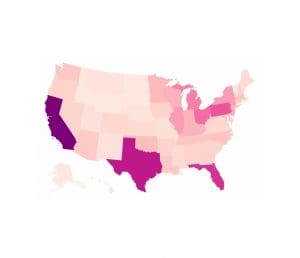
Tobacco is the most highly taxed consumer product in the United States. The tools on this page allow you to explore state tax rates and the effects tax policy and tobacco regulations can have on state revenues, smuggling, and effective tax rates for different income groups.
2 min read
Chicago Mayor Brandon Johnson’s (D) 2026 budget includes a new employer head tax, a new tax on social media companies, and an increase in the “cloud tax,” among other proposed tax increases that would hurt employment and penalize innovation.
8 min read
Excise taxes are regressive, and other alternatives are frequently available to incentivize behavior change.
6 min read
Due to the incentive for jurisdictions to implement a qualified domestic minimum top-up tax (QDMTT), Pillar Two leaves a geographic asymmetry. Additional tax revenues would predominantly accrue to low-tax jurisdictions, with high tax jurisdictions receiving little to no increase.
2 min read
Sean Bray interviewed Dr. Aitor Navarro, Senior Research Fellow at the Max Planck Institute for Tax Law and Public Finance, about the future of the EU tax mix.
16 min read
Narrowly targeted tax policies are rarely effective in achieving their goals, and the expanded senior deduction under the OBBBA is no exception.
4 min read
In the spirit of change and improvement, it’s worth looking back to see which states have truly embraced tax competitiveness since 2020, and which ones have lagged behind.
6 min read
 Short Form
The recently enacted One Big Beautiful Bill Act (OBBBA) is certainly big, but is it “beautiful”? Many provisions in the OBBBA will have noticeable impacts on individual taxpayers, including some that are beneficial to your wallet.
4 min read
While the Council of DC is right to consider decoupling its tax code from several revenue-reducing provisions in the OBBBA, they should maintain conformity with the business expensing reforms that are strongly pro-growth, better align with sound tax principles, and primarily change the timing of revenues.
4 min read
The Supreme Court is deciding a case over whether the President can impose sweeping tax increases on imported goods. It’s a multi-trillion-dollar question with enormous implications for the US economy, taxpayers, and limitations on emergency powers.
5 min read
France is proposing to double the tax rate of its digital services tax (DST) to 6 percent, making the DST even more discriminatory.
5 min read
The State Tax Competitiveness Index enables policymakers, taxpayers, and business leaders to gauge how their states’ tax systems compare. While there are many ways to show how much state governments collect in taxes, the Index evaluates how well states structure their tax systems and provides a road map for improvement.
122 min read
Taxes are an important part of the mix, and modernizing a state’s tax structure helps position it for growth. States that rank better on the Index have better-structured tax codes, and states with better-structured tax codes get Wins Above Replacement.
5 min read
22 of the 27 EU Member States have implemented both the income inclusion rule and the qualified domestic minimum top-up tax in 2025.
4 min read