At the Republican National Convention in Dallas, President Trump promised payments of $5,000 to every adult citizen in the US if the Republicans maintain control of the House and the Senate in the upcoming midterm elections. Vice President JD Vance later supported the idea, saying that the president’s new tariffs are generating a lot of revenue that can be shared with Americans.
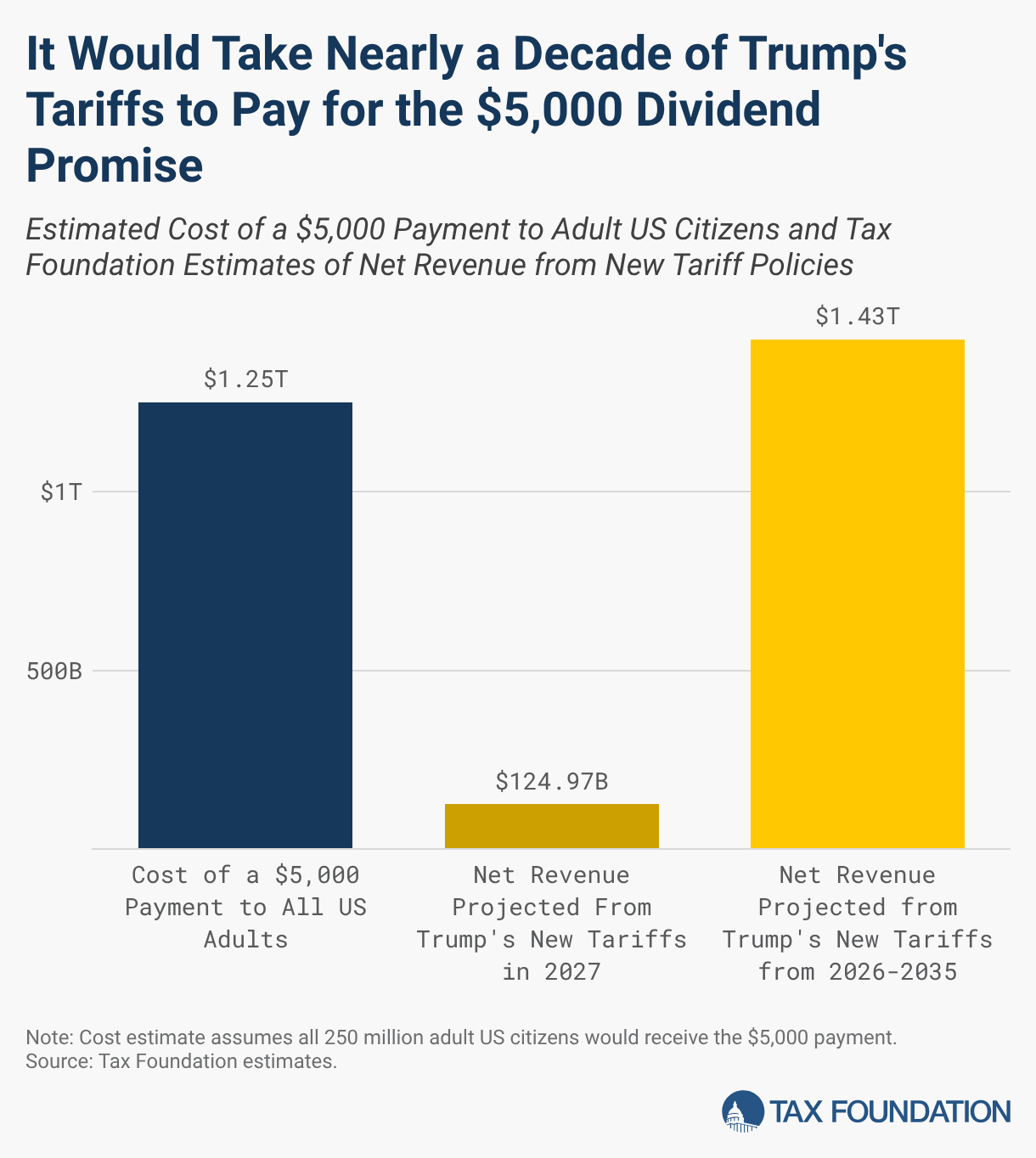
A $5,000 dividend payment would be extremely costly. The proposal is light on details, and doesn’t specify income limitations for the promised payments. Without further restrictions, sending a $5,000 payment to the 250 million adults who are eligible to vote would cost $1.25 trillion.
That steep cost would come as the federal government is already projected to run a budget deficit of nearly $1.9 trillion in fiscal year 2027. Spending upwards of $1 trillion on a new one-time payment program would balloon the deficit to nearly $3 trillion, even with the new revenue coming in from the president’s tariffs.
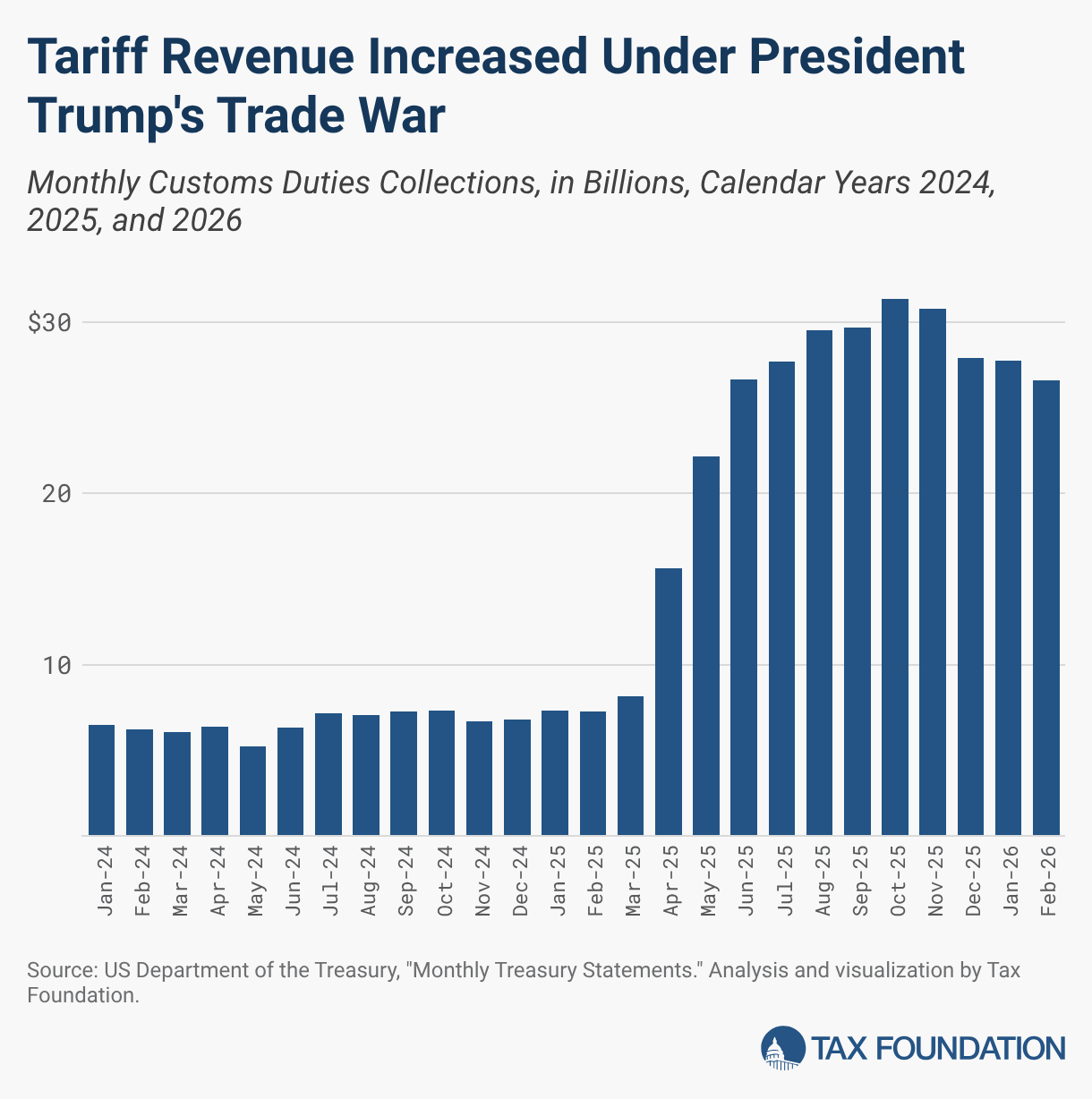
It is true that since President Trump took office, tariffTariffs are taxes imposed by one country on goods imported from another country. Tariffs are trade barriers that raise prices, reduce available quantities of goods and services for US businesses and consumers, and create an economic burden on foreign exporters. collections have risen. Prior to the new tariffs, the government brought in $79 billion in customs duties in calendar year 2024. That rose to $264 billion in calendar year 2025 after the Trump administration imposed several rounds of new tariffs. But in recent months, collections have dipped and even been negative as the federal government refunds tariffs struck down as illegal by the Supreme Court.
After those fluctuations smooth out, and if the policies stay in place, we estimate that Trump’s new tariffs will generate about $125 billion in net revenue for the federal government in 2027, and $1.4 trillion over the 10 years from 2026 through 2035. Net revenue is lower than the total of the new tariff payments for two reasons: 1) the new tariffs reduce imports, which means pre-existing tariffs generate less revenue, and 2) each dollar of tariff collections reduces the bases of other federal taxes like income and payroll taxes, lowering the revenue that would otherwise be generated from these taxes.
By our estimates, the revenue raised by the new tariffs in 2027 would cover only about one-tenth of the cost of the promised $5,000 dividend payment. It would take almost a decade of collections from the tariffs to cover the cost.
The cost of the $5,000 dividends could be trimmed if the payments were further limited, say, on the basis of income. But even a smaller program would be a misguided use of funds when the government is already on track to run massive budget deficits and when inflationInflation is when the general price of goods and services increases across the economy, reducing the purchasing power of a currency and the value of certain assets. The same paycheck covers less goods, services, and bills. It is sometimes referred to as a “hidden tax,” as it leaves taxpayers less well-off due to higher costs and “bracket creep,” while increasing the government’s spendin is already running above the Federal Reserve’s 2 percent target.
A deficit-financed dividend payment of this scale would signal to markets that the US is not serious about getting its fiscal house in order. It would risk further rises in interest rates, add to inflationary pressures, and worsen the very problems that are trying to be “solved” by the proposal. Americans would be better served if the Trump administration abandoned the tariffs, which are burdening businesses and workers in the US.
Stay informed on the tax policies impacting you.
Subscribe to our free newsletter to get the latest tax data, news and analysis.
Subscribe