Tariff Update: Where Things Stand After the Supreme Court Ruling
The US Supreme Court struck down the International Emergency Economic Powers Act (IEEPA) tariffs in February, so why are Americans still paying tariffs?


As Senior Marketing Associate and Creative Producer, Kyle Hulehan helps market the Tax Foundation’s research and analysis to legislators, the media, and taxpayers via email, web, and social media strategies. Kyle is also the host of The Deduction podcast.
Kyle Hulehan first joined the Tax Foundation in 2018 as an intern and then worked with several state-based nonprofits. Kyle completed his BA in Political Science at Grove City (Pa.) College before rejoining the Tax Foundation in 2022.
Kyle grew up in Roebling, New Jersey (20 miles southwest of the state’s capital, Trenton), where he is still a resident. He enjoys writing poetry, watching sports, and playing tennis in his free time.
The US Supreme Court struck down the International Emergency Economic Powers Act (IEEPA) tariffs in February, so why are Americans still paying tariffs?
What happens when voters decide tax policy directly? This November, roughly 40 tax measures are on the ballot across 17 states. Some states want higher taxes on top earners, others want to write low rates into their constitutions, and Missouri voters will decide whether to start a fund that could one day replace every state tax.
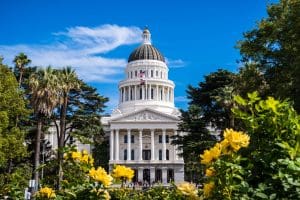
California’s billionaire tax is on the ballot this November, and it raises more questions than answers. From lost government revenue to legal battles that could drag on for years, what would this first-in-the-nation wealth tax actually do?
Ten years ago, then-Speaker Paul Ryan and Ways and Means Chairman Kevin Brady released the “Better Way” Tax Plan, the blueprint that would eventually become the Tax Cuts and Jobs Act of 2017—the largest overhaul of the US tax code in over 30 years.

Most Americans don’t understand how the tax code works, and it’s costing them.

Should you have to file a tax return in a state where you babysat for one hour? In 22 states, the answer is technically yes.

One year later, the evidence shows the tariffs were not reciprocal, did not generate the promised investment boom, raised less revenue than projected, and contributed to higher prices.

AI is everywhere, and now it’s in the tax policy debate.

Last Friday, the Supreme Court struck down President Trump’s IEEPA tariffs in a landmark 6-3 decision.

In this episode, we break down what the OBBBA did, walk through our projections, and zoom out to other defining fights of 2025: Trump’s “Liberation Day” tariffs, the Supreme Court challenge over presidential tariff power, and the growing wave of property tax revolts across the states.

In this episode of The Deduction, we unpack Trump’s tariffs as they head to the Supreme Court. We break down scenarios if the Court upholds or strikes the tariffs, who really pays, and how Congress might respond—your concise guide to tariffs and the Supreme Court.

With property tax bills on the rise, homeowners are searching for answers—and some even want to abolish the tax altogether. In this episode, we break down why property taxes are increasing, common but flawed solutions, and why the property tax remains an economically efficient revenue source.

In this episode of The Deduction podcast, host Kyle Hulehan discusses the complexities of the US tax system with Alex Muresianu, Senior Policy Analyst at the Tax Foundation.

Congress may have passed the One Big Beautiful Bill Act (OBBBA), but state lawmakers now face big choices. Most states link their tax codes to the federal system, meaning OBBBA’s provisions—good and bad—are about to ripple across state budgets.

Trump’s 2025 tariffs will hit nearly three-quarters of US food imports, raising prices on products that are often difficult or impossible to produce domestically. Senator Hawley has proposed a rebate program to return some of the revenue to households—but would it actually help?

They’re popular, highly visible, and marketed as tax relief—but research shows sales tax holidays are inefficient, create compliance headaches, and often miss the mark for the taxpayers they’re meant to help.
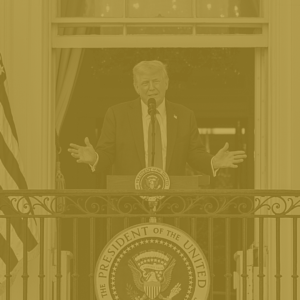
Who are Trump Accounts really for, and will they actually help families save? With yet another savings vehicle added to an already confusing system, do these accounts solve a real problem—or just add more complexity?
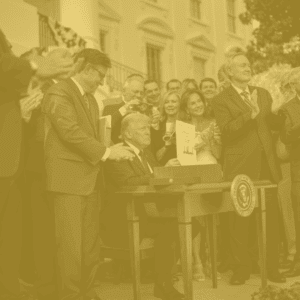
The One Big Beautiful Bill is now law—but what does it actually do? In this episode, we break down the new tax law’s key provisions, including who benefits, who doesn’t, and what it means for the economy, tax certainty, and the federal deficit.
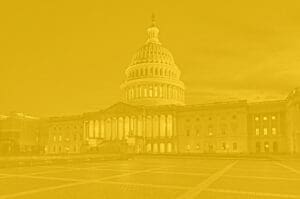
Congress is racing to pass the One Big Beautiful Tax Bill before the July 4 deadline. In this episode, Kyle Hulehan and Erica York break down what just happened over the weekend, what’s actually in the bill, and what comes next as the House and Senate try to reconcile their differences.

The House-passed reconciliation bill leaves out Trump’s promise to eliminate taxes on Social Security benefits, opting instead to expand the standard deduction for seniors.