A Taxing Approach to High Energy Costs Will Backfire
If you want more energy production, taxing producers is the wrong place to start. And if you want to tax companies more if they’re making big profits, the corporate income tax already does that.


If you want more energy production, taxing producers is the wrong place to start. And if you want to tax companies more if they’re making big profits, the corporate income tax already does that.

Introduced by Sens. Chuck Schumer (D-NY), Ron Wyden (D-OR), and Michael Bennet (D-CO), The Taxing Buybacks from Big Oil Windfalls Act would raise the stock buyback excise tax from 1 percent to 25 percent for large oil and gas companies.
4 min read
As lawmakers consider options for budgetary offsets, they should prioritize competitiveness and economic growth, as a heavier corporate tax burden will undermine the core purpose and achievement of the TCJA.
24 min read
On tax policy, Harris carries forward much of President Biden’s FY 2025 budget, including higher taxes aimed at businesses and high earners. She would also further expand the child tax credit (CTC) and various other tax credits and incentives while exempting tips from income tax.
17 min read
While federal tax collections—especially corporate taxes—have reached historically high levels, these gains have not kept pace with escalating spending, particularly on debt interest, leading to a substantial and concerning budget deficit in FY24.
6 min read
President Biden is proposing extraordinarily large tax hikes on businesses and the top 1 percent of earners that would put the US in a distinctly uncompetitive international position and threaten the health of the US economy.
19 min read
Do corporate tax cuts boost workers’ wages? The answer depends on your time frame.
4 min read
Congress should reconsider key elements of the IRA, including the book minimum tax and the green energy credits, with an eye towards simplification and fiscal responsibility.
46 min read
Lawmakers should focus on simplifying the federal tax code, creating stability, and broadly improving economic incentives. There are incremental steps that can be made on the path to fundamental tax reform.

The price tag of the Inflation Reduction Act’s green energy tax credits is much higher than originally thought. Among other things, the updated analysis indicates the Inflation Reduction Act does not reduce deficits after all.
6 min read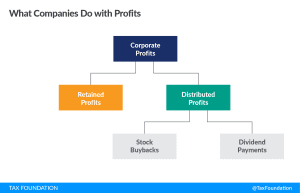
The distributed profits tax is a sounder approach to concerns about investment and stock buybacks than the existing policy approach.
6 min read
According to our analysis, President Biden’s budget would reduce long-run economic output by about 1.3 percent and eliminate 335,000 FTE jobs. See what tax policies the president is proposing.
17 min read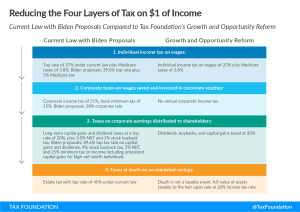
Tax reform should be about increasing fairness. And the way to get there is by reducing complexity and double taxation, not by doubling down on them.
6 min read
President Biden’s new budget proposal outlines several major tax increases targeted at businesses and high-income individuals that would bring U.S. income tax rates far out of step with international norms.
7 min read
President Biden shared his policy aspirations during the State of the Union address, outlining three tax proposals in his remarks: quadrupling the brand-new excise tax on stock buybacks, instituting a “billionaire minimum tax,” and extending the now-lapsed expanded Child Tax Credit. We discuss the prospects of major tax changes becoming law in a divided government and what these proposals signal about how President Biden thinks about tax policy as he enters the latter half of his first term.
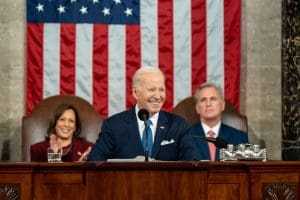
President Biden’s State of the Union Address outlined three tax proposals, including raising the tax on stock buybacks, imposing a billionaire minimum tax, and expanding the child tax credit.
6 min read
In response to high oil prices, Sen. Wyden has proposed raising taxes on oil and gas companies in three ways. His “Taxing Big Oil Profiteers Act” would create an additional 21 percent tax on so-called excess profits earned over 10 percent of revenues of oil companies with annual revenues over $1 billion; levy a tax on stock buybacks; and remove last-in, first-out (LIFO) tax treatment of inventory accounting.
7 min read
The Inflation Reduction Act calls for a new 1 percent excise tax on stock buybacks, the argument being it would be better for the economy if firms invested their surplus cash in the business, rather than returning this value to shareholders.
3 min read
Congress is debating new ways to raise revenue that would make the tax code more complex and more difficult to administer. The new proposals—imposing an alternative minimum tax on corporate book income, applying an excise tax on stock buybacks, and, at one point this week, a tax on unrealized capital gains for billionaires—are unreliable and highly complex ways to raise revenue.
10 min read
Research shows that a tax on stock buybacks would not be the right policy solution to encourage long-term investment or lift wages.
3 min read