Movers and Shakers in the 2027 State Tax Competitiveness Index
In the spirit of change and improvement, it’s worth looking back to see which states have truly embraced tax competitiveness since 2020, and which ones have lagged behind.
6 min read

In the spirit of change and improvement, it’s worth looking back to see which states have truly embraced tax competitiveness since 2020, and which ones have lagged behind.
6 min read
Spain’s 2026 election presents a clear divide in economic policy, with the Socialist Workers’ Party favoring higher taxes on capital and businesses, while the People’s Party and Vox advocate tax cuts to encourage investment, stimulate economic growth, and improve competitiveness.
13 min read
Taxes are an important part of the mix, and modernizing a state’s tax structure helps position it for growth. States that rank better on the Index have better-structured tax codes, and states with better-structured tax codes get Wins Above Replacement.
5 min read
The State Tax Competitiveness Index enables policymakers, taxpayers, and business leaders to gauge how their states’ tax systems compare. While there are many ways to show how much state governments collect in taxes, the Index evaluates how well states structure their tax systems and provides a road map for improvement.
121 min read
In red and blue states alike, voters showed wariness toward novel changes to the tax code, with two notable exceptions.
3 min read
The UK’s 2026 Autumn Budget largely favors short-term relief over growth, highlighting the need for pro-growth reforms such as replacing the Stamp Duty Land Tax with annual property or land taxes.
8 min read
This November, states across the country are asking voters to consider changes to their state constitutions to address the burden of rising property taxes.
7 min read
Under Spain’s current Social Democratic government, the country has fallen from 27th to 35th (out of 38 OECD countries) in the International Tax Competitiveness Index.
8 min read
No one enjoys paying taxes, but the property tax serves an important purpose, and Wyoming has already implemented significant property tax relief. Proposition 1 would undercut local finances to a degree that would likely force reliance on worse taxes (local or state) and prompt spending cuts that reduce homeowners’ property values.
5 min read
Florida has long maintained one of the nation’s most competitive state tax codes, but a fundamental change proposed by Amendment 3 could undermine that competitiveness.
30 min read
While there are many factors that affect a country’s economic performance, taxes play an important role. A well-structured tax code is easy for taxpayers to comply with and can promote economic development while raising sufficient revenue for a government’s priorities.
72 min read
What happens when voters decide tax policy directly? This November, roughly 40 tax measures are on the ballot across 17 states. Some states want higher taxes on top earners, others want to write low rates into their constitutions, and Missouri voters will decide whether to start a fund that could one day replace every state tax.
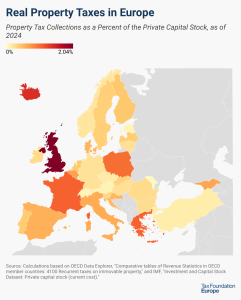
High property taxes levied not only on land but also on buildings and structures can discourage investment in infrastructure, which businesses would have to pay additional tax on.
3 min read
Missing out on a tax rebate check is certainly disheartening, but New Jersey wallets are getting actively drained by an even bigger problem in the tax code: the state’s graduated-rate income tax thresholds don’t change with inflation, either.
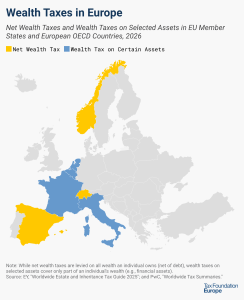
Wealth taxes not only collect little revenue and create legal uncertainty, but an OECD report argues that they can also disincentivize entrepreneurship, harming innovation and long-term growth.
5 min read
Voters beware: lower property taxes may sound good, but they come with significant trade-offs.

While a proposal to phase down property taxes on the primary residences of Florida homeowners may grab headlines, it risks severely undermining the competitiveness of Florida’s overall tax structure and leaving the state worse off.
7 min read
Tax collections vary widely by state, making per capita collections figures—a measure of collections per person—especially useful, as they allow comparisons across differences in tax rates and bases, economic capacities, and policy decisions that impact the size and scope of government.
5 min read
A new bill introduced in the Minnesota House seeks to tax non-real assets, imposing an annual tax of 1 percent on “taxable wealth” exceeding $10 million for individuals and trusts from tax year 2026 onward.
6 min read
Illinois’ proposed Millionaire’s Tax would raise taxes on Illinois families and businesses in an economically damaging way, further harming the state’s competitiveness and reducing economic opportunity even for those Illinois residents who would not owe the tax directly.