The Spiraling Cost of Federal Healthcare Subsidies and Carveouts
The US federal government faces several fiscal challenges in the coming decades, including the growing burden of federal healthcare programs and tax preferences.
14 min read
The US federal government faces several fiscal challenges in the coming decades, including the growing burden of federal healthcare programs and tax preferences.
14 min read
The “no tax on” deductions show the drawbacks of using narrowly tailored provisions to provide tax relief.
6 min read
Investment in digital assets, long thought of as a niche interest reserved for enthusiasts, has broken into the mainstream. In 2026, about one in five US adults report being invested in or using cryptocurrency.
5 min read
Tax Foundation’s new resource, Options for Reforming America’s Tax Code 3.0, demonstrates that not all revenue-raising options are created equal—some do more harm to the economy than others for the same amount of revenue.
7 min read
Federal government debt is over $32 trillion, around the size of the nation’s annual economic output (its gross domestic product, or GDP). Debt levels this high mean US borrowing costs are sensitive to interest rate changes that may otherwise seem small.
5 min read
While uncapping the payroll tax and raising individual income tax rates are often the go-to reform options for policymakers, base broadeners like ESI and other fringe benefits are much better alternatives. They can raise significant revenue, while improving the neutrality of the tax code and preventing the need for increases in statutory tax rates.
6 min read
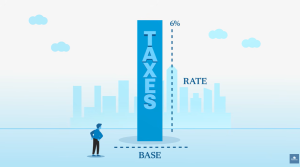
When thinking about taxes, we often consider the tax rate—or what percentage of something is taxed. But there is another factor in considering taxes: the tax base.
A study from the Fraser Institute finds the US tax code is highly progressive relative to other OECD countries.
7 min read
The Reform UK proposal to exempt overtime pay from income tax—framed as a “hard work bonus”—may be politically appealing, but it’s a flawed idea that undermines economic fairness, distorts labor markets, and jeopardizes tax revenues.
4 min read
Tax collections vary widely by state, making per capita collections figures—a measure of collections per person—especially useful, as they allow comparisons across differences in tax rates and bases, economic capacities, and policy decisions that impact the size and scope of government.
5 min read
A pair of bills introduced in the Minnesota House—HF 3954 (overtime) and HF 3955 (tips)—would further erode the state’s tax climate by exempting certain overtime pay and tip income from Minnesota’s income tax.
5 min read
The total amount refunded as of the sixth week of reporting is running ahead of the past filing season by nearly $23 billion at $202.6 billion compared to $179.5 billion, while the average refund is up 10.9 percent at $3,571.
3 min read
New IRS data shows the US federal income tax system continues to be progressive as high-income taxpayers pay the highest average income tax rates. Average tax rates for all income groups remain lower after the Tax Cuts and Jobs Act (TCJA).
6 min read
The past decade’s record suggests that countries have reliable legislative methods to improve their tax systems through ordinary tax reforms.
22 min read
Should you have to file a tax return in a state where you babysat for one hour? In 22 states, the answer is technically yes.
While it may feel good to receive a tax refund, it does not represent your tax burden—the tax liability you actually owe to the government.
One year later, the evidence shows the tariffs were not reciprocal, did not generate the promised investment boom, raised less revenue than projected, and contributed to higher prices.
Facts & Figures serves as a one-stop state tax data resource that compares all 50 states on over 40 measures of tax rates, collections, burdens, and more.
2 min read
As the policy debate for the next presidential election begins to take shape, both sides need to be honest about their plans for addressing the actual challenges our country faces.
Senators Chris Van Hollen (D-MD) and Cory Booker (D-NJ) have each introduced proposals aimed at cutting taxes for lower- and middle-income taxpayers and raising them on high-income taxpayers.
9 min read