

Legal sports betting has grown rapidly since the 2018 Supreme Court decision Murphy v. NCAA recognized the federal prohibition as unlawful, enabling states to establish legal markets. Currently, 20 states do not have legal sports betting.
Establishing and taxing a legal sports betting market has been quite lucrative for states. Sports betting taxes brought in over $2.8 billion for states across the country. The market for sports betting will likely continue to grow substantially as more states allow legal operations or expand existing operations to online services. If each state applied a 10 percent tax on sportsbook gross gaming revenue, the resulting annual state tax revenue from these new markets would be nearly $1.6 billion. As the tax base grows, tax policy design becomes increasingly important.
Interactive Tool
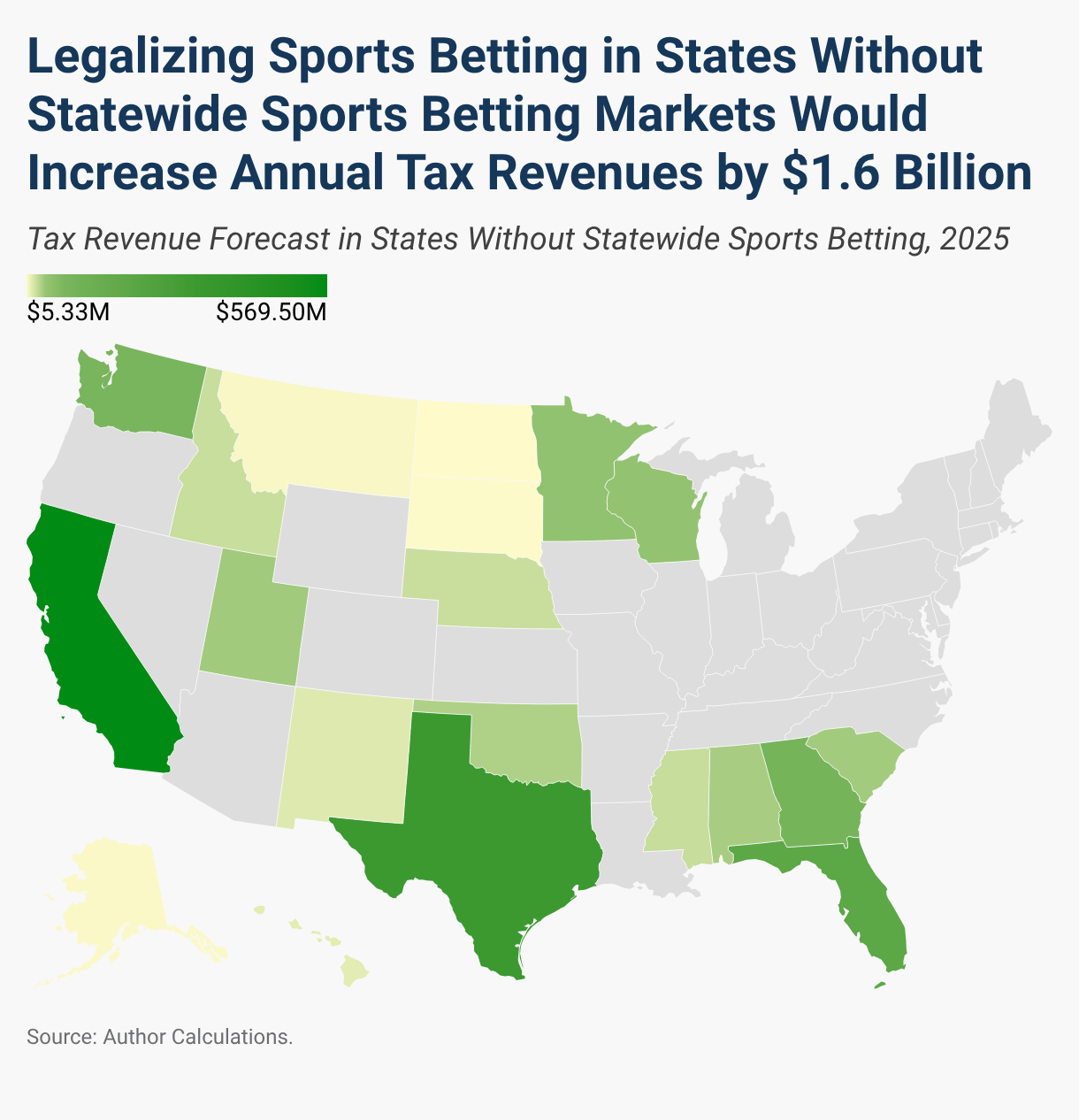
Explore Analysis by State
Alabama Sports Betting Tax Revenue Forecast
| Projected Gross Gaming Revenue | Projected Tax Revenue | Population, Ages 18-44 | Median Household Income | Sports Attendance | Rural Population Percentage |
|---|---|---|---|---|---|
| $283,225,216 | $28,322,522 | 1,797,586 | $ 66,659 | 199,087 | 42% |
Alabama has a moderate population of adults with a relatively large proportion of rural population. With a relatively low median income and a significant rural population, the Alabama sports betting market would likely be smaller than a wealthier or more urban state of similar size.
Alabama is also not home to any major professional sports teams. However, the state has very prominent college sports teams whose games garner significant average attendance. The popular college sports scene in Alabama is likely to generate additional interest in sports betting there.
All things considered, the state of Alabama would likely generate approximately $28 million in tax revenue from a mature, well-structured legal sports betting market with a tax rate of 10 percent of gross gaming revenue.
Alaska Sports Betting Tax Revenue Forecast
| Projected Gross Gaming Revenue | Projected Tax Revenue | Population, Ages 18-44 | Median Household Income | Sports Attendance | Rural Population Percentage |
|---|---|---|---|---|---|
| $61,652,888 | $6,165,289 | 289,133 | $ 95,665 | 0 | 35% |
Alaska is one of the least-populated states in the nation, with about a third of that population being rural. The median income in the state is higher than in most other states, though the discretionary income (available to be spent on gambling) may be offset by a higher cost of living there.
The state boasts no major professional or college sports teams, which may leave interest in sports betting lower there than in other states where sports are more prominent. Any fans of the major sports in Alaska would be primarily wagering on games held out of state.
Alaska is not likely to be a particularly large market for sports wagering, but a well-structured, mature legal market taxed at 10 percent of gross gaming revenue could be expected to generate approximately $6 million for the state.
California Sports Betting Tax Revenue Forecast
| Projected Gross Gaming Revenue | Projected Tax Revenue | Population, Ages 18-44 | Median Household Income | Sports Attendance | Rural Population Percentage |
|---|---|---|---|---|---|
| $5,695,028,494 | $569,502,849 | 14,956,103 | $ 100,149 | 692,434 | 6% |
California has the largest population of adults and one of the highest median incomes. It is also the least rural US state. These factors alone prime the state for a particularly large sports betting market.
Additionally, California holds 12 major professional sports teams and five prominent college sports teams. This would likely attract even more interest in sports wagering as the large population of fans root for their home team.
Legal sports wagering in California, well-structured and with a tax rate of 10 percent of gross gaming revenue, could be expected to generate approximately $570 million in revenue for the state. This is by far the largest potential in any state, but it is also subject to significant reduction should the market be overburdened by regulations or exorbitant taxes.
Florida Sports Betting Tax Revenue Forecast
| Projected Gross Gaming Revenue | Projected Tax Revenue | Population, Ages 18-44 | Median Household Income | Sports Attendance | Rural Population Percentage |
|---|---|---|---|---|---|
| $1,985,321,231 | $198,532,123 | 7,894,517 | $ 77,735 | 543,718 | 9% |
Florida currently has sports betting, but legal betting activity is limited to the Seminole Tribe of Florida and Hard Rock Bet. We estimate the effects of an open and competitive statewide legal market.
Florida has the third largest population of adults and an average median income. With the state being one of the nation’s least rural, Florida would be demographically primed to have a particularly large legal sports betting market.
Seven major professional sports teams and five prominent college sports teams call Florida home. With such a thriving sports scene, the state is likely to experience more interest in wagering on sports outcomes and performances than a typical state.
A well-structured, competitive legal sports betting market in Florida would be poised to become one of the nation’s largest, and a 10 percent tax on the gross gaming revenue from that market could be expected to generate approximately $199 million for the state.
Georgia Sports Betting Tax Revenue Forecast
| Projected Gross Gaming Revenue | Projected Tax Revenue | Population, Ages 18-44 | Median Household Income | Sports Attendance | Rural Population Percentage |
|---|---|---|---|---|---|
| $892,843,817 | $89,284,382 | 4,113,808 | $ 79,991 | 255,525 | 27% |
Georgia is home to a notably large population of adults and boasts a moderate median income. Only a moderate proportion of that population is rural, leaving the state with a slight demographic advantage for creating a large sports betting market.
The state is also home to both major professional and college sports teams of outsized popularity, which is likely to draw increased interest in sports betting should a legal market be established. Georgians seeking to wager on their home teams would have plenty to choose from.
Georgia could be expected to generate approximately $89 million in tax revenue from a 10 percent tax on gross gaming revenue from a mature, well-structured legal sports betting market.
Hawaii Sports Betting Tax Revenue Forecast
| Projected Gross Gaming Revenue | Projected Tax Revenue | Population, Ages 18-44 | Median Household Income | Sports Attendance | Rural Population Percentage |
|---|---|---|---|---|---|
| $113,558,082 | $11,355,808 | 498,466 | $ 100,745 | 12,963 | 14% |
Hawaii has a relatively small population of adults but a relatively small proportion of rural population. The state also has a notably high median income—somewhat offset, however, by the increased cost of living there—which positions the state well for a successful legal sports betting market.
The state of Hawaii boasts no major professional sports teams and only one prominent college sports team, which may leave most sports fans rooting for out-of-state teams. This may signal less interest in sports betting than in other states.
These factors, taken together, suggest Hawaii could generate approximately $11 million in tax revenue from a 10 percent gross gaming revenue tax on a well-structured sports betting market.
Idaho Sports Betting Tax Revenue Forecast
| Projected Gross Gaming Revenue | Projected Tax Revenue | Population, Ages 18-44 | Median Household Income | Sports Attendance | Rural Population Percentage |
|---|---|---|---|---|---|
| $132,544,532 | $13,254,453 | 722,447 | $ 81,166 | 37,235 | 31% |
Idaho has a relatively small population of adults but a slightly above average median income. A significant portion of the state’s population is rural, however, which may indicate reduced overall interest in sports betting.
The state is not home to any major professional sports teams, but it does have one prominent college sports team that garners significant attendance at its home games. This may lead to somewhat reduced interest in sports betting relative to states with more emphasis on sports.
A mature, well-structured legal sports betting market in Idaho could be expected to generate approximately $13 million in tax revenue for the state from a 10 percent tax on gross gaming revenue.
Minnesota Sports Betting Tax Revenue Forecast
| Projected Gross Gaming Revenue | Projected Tax Revenue | Population, Ages 18-44 | Median Household Income | Sports Attendance | Rural Population Percentage |
|---|---|---|---|---|---|
| $466,812,122 | $46,681,212 | 2,057,727 | $ 87,117 | 154,488 | 29% |
Minnesota boasts a slightly larger than average population of adults, with a significant proportion of that population being rural. The state also has a relatively high median income, which positions the state well demographically for a sports betting market.
The state is also home to three major professional sports teams and a prominent college sports team that collectively garner significant attendance at their respective home games. This may indicate an outsized interest in sports betting in Minnesota relative to states with fewer in-state sports teams to bet on.
A well-structured sports betting market could be expected to generate approximately $47 million in taxes from a 10 percent tax on gross gaming revenues in Minnesota.
Mississippi Sports Betting Tax Revenue Forecast
| Projected Gross Gaming Revenue | Projected Tax Revenue | Population, Ages 18-44 | Median Household Income | Sports Attendance | Rural Population Percentage |
|---|---|---|---|---|---|
| $139,032,591 | $13,903,259 | 1,026,653 | $ 59,127 | 116,091 | 54% |
Mississippi has a relatively small population of adults and is one of the most rural states in the nation. The median income in Mississippi is also the lowest in the nation. This leaves Mississippi much less well-positioned for a sports betting market than wealthier or more urban states.
Mississippi is also not home to any major professional sports teams. However, the state does have two very prominent college sports teams whose home games are popular. Allowing wagers on college sports would be crucial to the success of a sports betting market in Mississippi.
With a 10 percent tax on the gross gaming revenue from a well-structured sports betting market, Mississippi could be expected to generate approximately $14 million in tax revenue.
Montana Sports Betting Tax Revenue Forecast
| Projected Gross Gaming Revenue | Projected Tax Revenue | Population, Ages 18-44 | Median Household Income | Sports Attendance | Rural Population Percentage |
|---|---|---|---|---|---|
| $66,665,028 | $6,666,503 | 399,320 | $ 75,340 | 0 | 47% |
Montana has one of the smallest populations of adults across states and is one of the most rural. The state’s median income is slightly below average, which may indicate that a sports betting market would be relatively small in Montana.
There are also no major professional or college sports teams in the state, which would leave bettors looking to out-of-state teams to wager on.
Overall, a well-structured sports betting market could be expected to generate approximately $7 million for Montana from a 10 percent tax on gross gaming revenue.
Nebraska Sports Betting Tax Revenue Forecast
| Projected Gross Gaming Revenue | Projected Tax Revenue | Population, Ages 18-44 | Median Household Income | Sports Attendance | Rural Population Percentage |
|---|---|---|---|---|---|
| $126,850,951 | $12,685,095 | 722,412 | $ 76,376 | 86,900 | 28% |
Nebraska has a relatively small population of adults and a moderate proportion of rural population. The state’s median income is only slightly below average across states, which may indicate that Nebraska would experience a relatively small sports betting market.
However, Nebraska boasts a particularly popular college sports team whose home games garner much attendance. A relatively popular college sports scene may attract more interest in sports betting in the state, though there are no major professional sports teams to do the same.
Nebraska could be expected to generate approximately $13 million from a 10 percent tax on the gross gaming revenue of a well-structured, mature sports betting market.
New Mexico Sports Betting Tax Revenue Forecast
| Projected Gross Gaming Revenue | Projected Tax Revenue | Population, Ages 18-44 | Median Household Income | Sports Attendance | Rural Population Percentage |
|---|---|---|---|---|---|
| $116,338,402 | $11,633,840 | 762,237 | $ 67,816 | 14,350 | 25% |
New Mexico has a relatively small population of adults, but only a moderate proportion of rural population. This positions the state for a relatively small market in sports betting, especially with the state’s notably low median income.
While there are no major professional sports teams in the state, there is one moderately popular college sports team. This may attract some interest in sports betting, but likely not nearly as much as in states with more prominent sports teams.
New Mexico could be expected to generate approximately $12 million from a 10 percent gross gaming revenue tax on a well-structured legal market in sports betting.
North Dakota Sports Betting Tax Revenue Forecast
| Projected Gross Gaming Revenue | Projected Tax Revenue | Population, Ages 18-44 | Median Household Income | Sports Attendance | Rural Population Percentage |
|---|---|---|---|---|---|
| $53,281,834 | $5,328,183 | 307,604 | $ 77,871 | 0 | 39% |
North Dakota has one of the smallest populations of adults in the country and a significant proportion of rural population. The state has a moderate median income that provides no particular advantage or disadvantage for sports betting.
There are no major professional or college sports teams in the state of North Dakota, which would leave bettors with only out-of-state teams to wager on. This may indicate a less popular sports betting market than in other states with prominent sports teams.
North Dakota could expect to generate approximately $5 million in tax revenue from a 10 percent tax on gross gaming revenue on a well-structured sports betting market.
Oklahoma Sports Betting Tax Revenue Forecast
| Projected Gross Gaming Revenue | Projected Tax Revenue | Population, Ages 18-44 | Median Household Income | Sports Attendance | Rural Population Percentage |
|---|---|---|---|---|---|
| $236,732,698 | $23,673,270 | 1,503,230 | $ 66,148 | 153,166 | 36% |
Oklahoma has a slightly below average population of adults and a significant proportion of rural population. With a notably low median income, the state is demographically positioned for a small sports betting market.
While the population is small, Oklahoma boasts a major professional sports team and two prominent college sports teams that garner outsized attendance at their home games. The popularity of sports in Oklahoma is likely to attract more interest in sports betting than in states without an emphasis on sports.
A well-structured legal sports betting market, taxed at 10 percent of gross gaming revenue, could be expected to generate approximately $24 million for the state.
South Carolina Sports Betting Tax Revenue Forecast
| Projected Gross Gaming Revenue | Projected Tax Revenue | Population, Ages 18-44 | Median Household Income | Sports Attendance | Rural Population Percentage |
|---|---|---|---|---|---|
| $321,933,153 | $32,193,315 | 1,895,491 | $ 72,350 | 160,135 | 32% |
South Carolina has a slightly above average population of adults and a significant proportion of rural population. With a below average median income, South Carolina is not particularly well-suited for a large sports betting market.
The state does not host any major professional sports teams but does have two notably popular college teams. Allowing wagers on college sports would thus be crucial to capturing the full potential of South Carolina’s sports betting market.
Once built out, a well-structured sports betting market in South Carolina could be expected to generate approximately $32 million in tax revenue from a 10 percent tax on gross gaming revenue.
South Dakota Sports Betting Tax Revenue Forecast
| Projected Gross Gaming Revenue | Projected Tax Revenue | Population, Ages 18-44 | Median Household Income | Sports Attendance | Rural Population Percentage |
|---|---|---|---|---|---|
| $54,614,487 | $5,461,449 | 319,827 | $ 76,881 | 0 | 42% |
South Dakota has a notably small population of adults, with a significant proportion of that population being rural. The state has an average median income. Together, these factors likely indicate a relatively small market for sports betting.
There are no major professional or college sports teams in South Dakota, so sports betting may be less popular than in states with prominent home teams to wager on.
Taxing a mature, well-structured sports betting market at 10 percent of gross gaming revenue could be expected to generate approximately $5 million for the state.
Texas Sports Betting Tax Revenue Forecast
| Projected Gross Gaming Revenue | Projected Tax Revenue | Population, Ages 18-44 | Median Household Income | Sports Attendance | Rural Population Percentage |
|---|---|---|---|---|---|
| $3,261,462,823 | $326,146,282 | 12,072,918 | $ 79,721 | 706,779 | 17% |
Texas has one of the nation’s largest populations of adults and a relatively small proportion of rural population. With an average median income, the state is positioned to have a significant sports betting market.
This is especially true given the popularity of the state’s seven major professional sports teams and seven prominent college sports teams. With such a large emphasis on sports in the state, Texas is likely to garner a relatively higher interest in sports betting.
Once established, a well-structured sports betting market could be expected to generate approximately $326 million for the state from a 10 percent gross gaming revenue tax.
Utah Sports Betting Tax Revenue Forecast
| Projected Gross Gaming Revenue | Projected Tax Revenue | Population, Ages 18-44 | Median Household Income | Sports Attendance | Rural Population Percentage |
|---|---|---|---|---|---|
| $331,121,640 | $33,112,164 | 1,422,604 | $ 96,658 | 148,134 | 11% |
Utah has a slightly smaller than average population of adults, but only a small proportion of that population is rural. The state’s median income is notably high, which likely makes Utah well-positioned to have a relatively large sports betting market.
There is one major professional sports team in Utah, along with two prominent college sports teams. The popularity of home games in-state is likely to indicate a relatively greater interest in sports betting among the population of Utah.
If able to attract bettors, a well-structured sports betting market in Utah could be expected to generate approximately $33 million in revenue from a 10 percent tax on gross gaming revenue.
Washington Sports Betting Tax Revenue Forecast
| Projected Gross Gaming Revenue | Projected Tax Revenue | Population, Ages 18-44 | Median Household Income | Sports Attendance | Rural Population Percentage |
|---|---|---|---|---|---|
| $797,567,728 | $79,756,773 | 3,061,341 | $ 99,389 | 168,900 | 17% |
Washington has a notably large population of adults, and a relatively small proportion of that population is rural. Combined with a significantly higher than average median income, the state of Washington is demographically well-positioned for a relatively large sports betting market.
The state also boasts two major professional sports teams and a prominent college sports team whose home games garner significant average attendance. These in-state home teams likely indicate a relatively higher interest in sports betting among the population of Washington.
Washington could expect to generate approximately $80 million in tax revenue from a 10 percent gross gaming revenue tax on a mature, well-structured sports betting market.
Wisconsin Sports Betting Tax Revenue Forecast
| Projected Gross Gaming Revenue | Projected Tax Revenue | Population, Ages 18-44 | Median Household Income | Sports Attendance | Rural Population Percentage |
|---|---|---|---|---|---|
| $432,086,361 | $43,208,636 | 2,074,241 | $ 77,488 | 218,384 | 34% |
Wisconsin has a slightly larger than average population of adults, with a significant proportion of that population being rural. This positions the state well for a sports betting market in addition to its moderate median income.
Additionally, the state is home to three major professional sports teams and one prominent college sports team. The significant home game attendance across the state likely indicates a relatively higher interest in sports betting among fans wagering on their home teams.
Considering these factors, Wisconsin could expect to generate approximately $43 million in tax revenue from a 10 percent gross gaming revenue tax on a well-structured sports betting market.
Stay informed on the tax policies impacting you.
Subscribe to our free newsletter to get the latest tax data, news and analysis.
Subscribe