Real Property Taxes in Europe, 2026
High property taxes levied not only on land but also on buildings and structures can discourage investment in infrastructure, which businesses would have to pay additional tax on.
3 min read
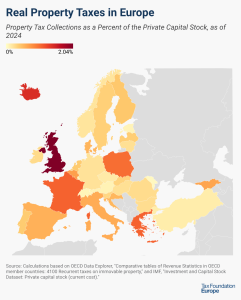
High property taxes levied not only on land but also on buildings and structures can discourage investment in infrastructure, which businesses would have to pay additional tax on.
3 min read
Congress has passed some major simplifying reforms in recent years, but the tax code has still grown more complex over the past few decades. New carveouts, savings vehicles, and targeted tax increases would complicate it further.
8 min read
Expensing for capital investment is not a special tax break. Expensing aligns the timing of tax deductions with the timing of actual capital expenditures so that the tax code does not discourage marginal investment projects.
7 min read
The US federal government faces several fiscal challenges in the coming decades, including the growing burden of federal healthcare programs and tax preferences.
14 min read
On September 15th, Canada announced that full expensing for machinery, equipment, and patent rights will be made permanent and broadened from around 15 percent to two thirds of business capital investment.
6 min read
While economic levers like sanctions and tariffs have long been recognized as geoeconomic tools, tax policies have rarely been considered a part of this toolkit.
36 min read
Tax Foundation’s new resource, Options for Reforming America’s Tax Code 3.0, demonstrates that not all revenue-raising options are created equal—some do more harm to the economy than others for the same amount of revenue.
7 min read
Federal government debt is over $32 trillion, around the size of the nation’s annual economic output (its gross domestic product, or GDP). Debt levels this high mean US borrowing costs are sensitive to interest rate changes that may otherwise seem small.
5 min read
While uncapping the payroll tax and raising individual income tax rates are often the go-to reform options for policymakers, base broadeners like ESI and other fringe benefits are much better alternatives. They can raise significant revenue, while improving the neutrality of the tax code and preventing the need for increases in statutory tax rates.
6 min read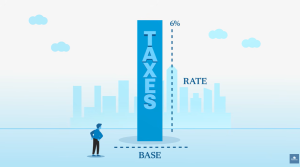
When thinking about taxes, we often consider the tax rate—or what percentage of something is taxed. But there is another factor in considering taxes: the tax base.

US policymakers have put forward two new tax proposals to address concerns about how artificial intelligence (AI) will impact land, energy, and the workforce.
7 min read
If Canada doesn’t make these provisions permanent, it will drop to 12th place in the capital cost recovery ranking once provisions expire in 2034.
5 min read
Some taxes have more powerful economic effects than others, and that’s a lesson policymakers should absorb as they work to craft a tax code that encourages growth and raises sustainable revenue.
8 min read
The OBBBA made substantial improvements to cost recovery, but more opportunities remain for policymakers looking to improve the investment climate in the US.
48 min read
The EU Tax Omnibus proposal would create an EU-wide minimum standard for full expensing, but it confines that standard to qualifying tangible assets used in research and development (R&D) rather than to broader asset classes.
16 min read
Rather than adopt temporary policies that phase out and expire, policymakers should focus their efforts on long-term reforms to support investment.
7 min read
Foreign R&D generally complements domestic innovation rather than substituting for it, so penalizing foreign R&D weakens US firms in cross-border mergers and acquisitions and in domestic production that depends on global scale.
7 min read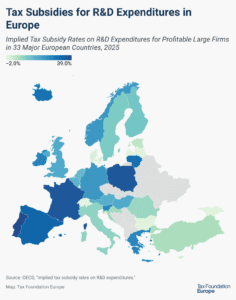
Many countries incentivize business investment in research and development (R&D), intending to foster innovation. A common approach is to provide direct government funding for R&D activity. However, a significant number of jurisdictions also offer R&D tax incentives.
5 min read
Debates over tax fairness and anti-avoidance rules have dominated European tax policy circles for over a decade. However, as geoeconomic pressures increase around the world, policymakers are looking for ways to boost European competitiveness and economic growth.
18 min read
Revenue-neutral proposals, like many things in politics, have become a relic of the past.