FAQ: The One Big Beautiful Bill, Explained
Our experts explain how this major tax legislation may affect you and how policymakers can better improve the tax code.
24 min read
Explore our latest tax policy research, analysis, and commentary of the One Big Beautiful Bill Act (OBBB).
Our experts explain how this major tax legislation may affect you and how policymakers can better improve the tax code.
24 min read
How will recent federal tax changes affect you?
4 min read
Notably, the OBBBA makes permanent the individual tax changes first put in place by the TCJA, which avoids a tax hike on an estimated 62 percent of tax filers in 2026.
4 min read
Our analysis of the major tax provisions included in the OBBBA finds it will increase long-run GDP by 0.7 percent. The major tax provisions will reduce federal tax revenue by nearly $5.2 trillion between 2025 and 2034, on a conventional basis.
12 min read
The One Big Beautiful Bill Act makes many of the individual tax cuts and reforms of the TCJA permanent. It improves upon the TCJA by making expensing for R&D and equipment permanent. However, for the most part, it does not include further structural reforms, and instead introduces many new, narrow tax breaks to the code, adding complexity and raising revenue costs.
7 min read
For Congress, work on the One Big Beautiful Bill Act is done. But in state capitols, the work has not yet begun. Many of the tax changes in the federal reconciliation act flow through to state tax codes—automatically in some states, and subject to an update in states’ Internal Revenue Code conformity date in others.
39 min read
The 2017 Tax Cuts and Jobs Act (TCJA) simultaneously increased tax progressivity and decreased redistribution in the tax code. Our estimates suggest the OBBBA similarly combines a more progressive tax system with a lower degree of tax redistribution.
4 min read
Expensing for manufacturing structures is a significant step forward for the tax treatment of structures, but it could be improved in several ways.
7 min read
We break down the House GOP’s One, Big, Beautiful Bill—a sweeping tax package designed to extend key parts of the 2017 Tax Cuts and Jobs Act before they expire in 2026.

Expensing for capital investment is not a special tax break. Expensing aligns the timing of tax deductions with the timing of actual capital expenditures so that the tax code does not discourage marginal investment projects.
7 min read
The “no tax on” deductions show the drawbacks of using narrowly tailored provisions to provide tax relief.
6 min read
While economic levers like sanctions and tariffs have long been recognized as geoeconomic tools, tax policies have rarely been considered a part of this toolkit.
36 min read
Most Americans don’t understand how the tax code works. According to a poll conducted by TaxEDU, a majority of respondents do not have a basic understanding of common tax concepts.
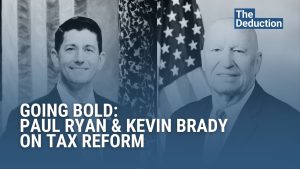
Ten years ago, then-Speaker Paul Ryan and Ways and Means Chairman Kevin Brady released the “Better Way” Tax Plan, the blueprint that would eventually become the Tax Cuts and Jobs Act of 2017—the largest overhaul of the US tax code in over 30 years.

How we support savings in the US is too complex, and Trump Accounts worsen the problem. If lawmakers truly want to increase savings for taxpayers from day one, they should look to the UK and Canada, which have done it successfully for many years.
Some taxes have more powerful economic effects than others, and that’s a lesson policymakers should absorb as they work to craft a tax code that encourages growth and raises sustainable revenue.
8 min read
The OBBBA made substantial improvements to cost recovery, but more opportunities remain for policymakers looking to improve the investment climate in the US.
48 min read
The 12-year history of Tax Foundation’s ITCI shows that tax policy is constantly in flux around the world and that tax policy design choices matter for economic growth.
5 min read
Foreign R&D generally complements domestic innovation rather than substituting for it, so penalizing foreign R&D weakens US firms in cross-border mergers and acquisitions and in domestic production that depends on global scale.
7 min read
Full expensing under the One Big Beautiful Bill Act does not neutralize the tariff burden on imported goods, as former White House Council of Economic Advisers chair Stephen Miran asserts.
8 min read
 Short Form
Just as many parts of American life have transformed over the past 250 years, so too has the federal tax system. While most taxes levied in the 18th century are still levied in some form today, the federal government’s reliance on them, the complexity of the tax code, and Americans’ overall tax burdens have shifted considerably.
5 min read
Publicly held debt is projected to rise to a new record high of 106 percent of GDP within the next four years and continue to rise to 120 percent by 2036 and 175 percent by 2056.
8 min read
Revenue-neutral proposals, like many things in politics, have become a relic of the past.
This study simulates several large tax increases and consistently finds that even tax increases large enough to close the primary deficit in the near term will lose ground over time and fail to put the debt on a sustainable course.
41 min read
For many, the OBBBA made tax filing easier and put more money back into their pockets. But it didn’t improve the grade for overall tax complexity for the US. It may actually make the situation worse.

The US, as the world’s largest services exporter, has a stronger interest in combating discriminatory services taxation than in pursuing tariffs.
44 min read
Smaller corporate tax bills after the OBBBA are not evidence of new giveaways or loopholes. They are evidence the tax code is finally treating investment the way it should.

The OBBBA significantly boosted economic prospects by improving the treatment of investment. By making key expensing provisions permanent, the OBBBA created better conditions for long-term growth. However, there’s still work to be done, and the OBBBA provided a blueprint for policymakers to follow.
4 min read
By 2036, more than one out of every four dollars raised in total government revenue will go to pay interest on the debt.