Illinois’ Alcohol Tax Is Almost As Old as America. It Needs Reform.
As the alcohol industry innovates with newer products like high alcohol content beer or ready-to-drink cocktails, the efficacy of a categorical system continues to break down.


As the alcohol industry innovates with newer products like high alcohol content beer or ready-to-drink cocktails, the efficacy of a categorical system continues to break down.

Alcohol taxes in Illinois have been broken for decades, and the state is now considering a “fix” that moves policy in the wrong direction.
6 min read
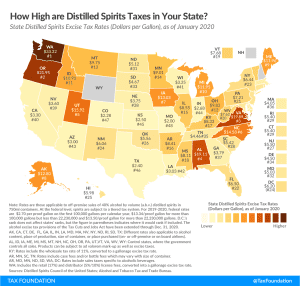
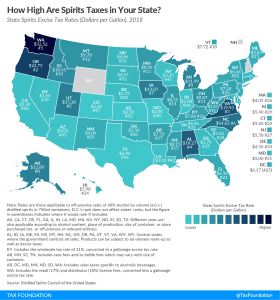
The significant disparity in tax rates across states underscores the complex tax and regulatory environment governing distilled spirits.
9 min read
The most effective way to tax alcoholic beverages is to tax according to alcohol content, rather than beverage type.
5 min read
While well-designed excise taxes can make society better off, some of the health taxes proposed by the WHO use a pretty façade to cover for policies that fail to deliver their promised benefits.
5 min read
The proposed ad quantum tax would be the system that most closely follows the global best practices for alcohol taxes we previously outlined.
4 min read
The Brazilian government is poised to make the biggest change to its alcohol tax policy in recent history.
6 min read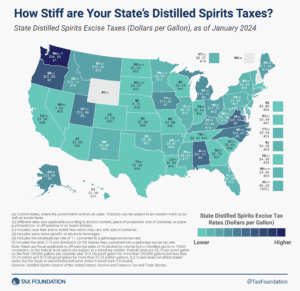
Newer products like spirits-based hard seltzers and ready-to-drink cocktails have fueled growth, while also blurring the lines of a categorical tax system. The result has been a spirited competition throughout the alcohol industry for market share, including calls to reform tax policy.
3 min read
A tax based on alcohol content would be the most neutral, straightforward means of raising revenue from alcohol. But since such a tax would constitute a redesign of the entire alcohol tax system at both the state and federal levels, the next best approach is to create more categories for new products.
4 min read
An alcohol by volume (ABV) tax could replace the existing alcohol tax system. An ABV tax would make alcohol taxes simpler, more transparent, and substantially more neutral than the current system.
18 min read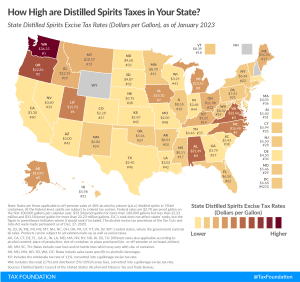
Of all alcoholic beverages subject to taxation, stiff drinks—and all distilled spirits—face the stiffest tax rates. Like many excise taxes, the treatment of distilled spirits varies widely across the states.
4 min read
When designed well, excise taxes discourage the consumption of products that create external harm and generate revenue for funding services that ameliorate social costs. The effectiveness of excise tax policy depends on the appropriate selection of the tax base and tax rate, as well as the efficient use of revenues.
83 min read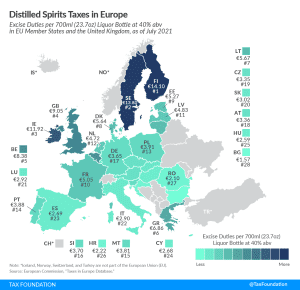
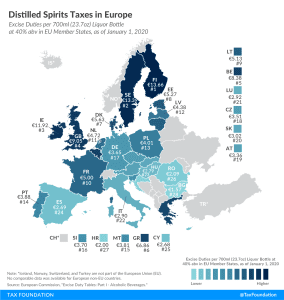
The highest excise duties are applied in Finland, Sweden, and Ireland, where the rates for a standard-size bottle of liquor are €14.10 ($16.08), €13.80 ($15.73), and €11.92 ($13.59), respectively.
3 min read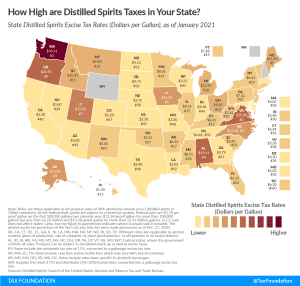
Of all alcoholic beverages subject to taxation, stiff drinks—and all distilled spirits—face the stiffest tax rates. Like many excise taxes, the treatment of distilled spirits varies widely across the states.
2 min read
The excise tax family is growing. Over the last decade, several products have become subject to excise taxes or are in the process of becoming so. Given this development, it is more crucial than ever that lawmakers, businesses, and consumers understand the possibilities and, more importantly, limitations of excise tax application.
77 min read