Is the European Commission’s Tax Omnibus Proposal a Step in the Right Direction?
The European Commission’s new Tax Omnibus proposal marks a notable step towards improving the simplicity and competitiveness of the EU Single Market.
8 min read
The European Commission’s new Tax Omnibus proposal marks a notable step towards improving the simplicity and competitiveness of the EU Single Market.
8 min read
A focus on sustained growth, meaningful metrics, and institutional capabilities that keep simplification a focus in future regulatory efforts should underpin the decluttering agenda.
8 min read
Due to the incentive for jurisdictions to implement a qualified domestic minimum top-up tax (QDMTT), Pillar Two leaves a geographic asymmetry. Additional tax revenues would predominantly accrue to low-tax jurisdictions, with high tax jurisdictions receiving little to no increase.
2 min read
New evidence shows the scale and distribution of compliance costs for EU firms affected by Pillar Two, i.e., the “Global Minimum Tax.”
6 min read
Massachusetts lawmakers should look for opportunities to reform the tax code, revamp the state’s competitiveness, and stem the tide of outmigration. This bill, by contrast, would double down on the economically uncompetitive features of the Commonwealth’s existing tax code. Aggressively expanding NCTI inclusion is not productive or competitive.
5 min read
The OBBBA moved the US international tax system in the right direction on several fronts. However, some of the changes, while encouraging certain domestic activity and exports, may harm physical activity abroad that supports US competitiveness and domestic activity.
8 min read
The One Big Beautiful Bill’s changes to the taxation of international income have surprising implications for state codes, yielding tax increases and a revised tax base that, through quirks of state incorporation, bears very little resemblance to the federal base and almost nothing of its purpose.
10 min read
The BEPS project’s 15 actions were decisive responses to real problems in cross-border taxation, offering real benefits but also real costs. A decade of implementation experience has revealed a critical side effect: sharply higher compliance costs for both tax administrations and the business community.
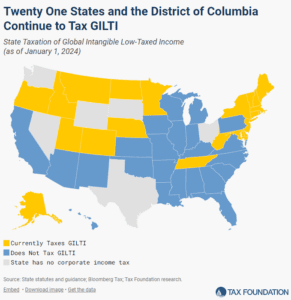
States that tax GILTI increase filing complexity, drive up the cost of tax compliance, and introduce unnecessary economic uncertainty and legal risk. 21 states and DC continue to tax GILTI despite these challenges.
6 min read


The global minimum tax agreement known as Pillar Two is intended to curb profit shifting. However, OECD countries already have a variety of mechanisms in place that seek to prevent base erosion and profit shifting by multinational corporations.
40 min read
A growing international tax agreement known as Pillar Two presents two new threats to the US tax base: potential lost revenue and limitations on Congress’s ability to set its own tax policy.
39 min read
Simplifying international tax rules will not solve all the challenges that stand in the way of healthy cross-border investment, but eliminating unnecessary provisions would be a positive pivot relative to the trajectory of recent years. It’s high time that policymakers stopped pursuing ever more complex rules and started the hard work of simplification.
6 min read
The JCT analysis raises some useful questions for the U.S. domestic debate over Pillar Two. The Treasury Department should examine its support for an agreement that will reduce its own revenue intake. But it is also worth noting that the principal mechanism for the revenue reduction—the foreign tax credit—is a policy already baked into U.S. law, including the Republican-enacted global minimum tax from 2017. The OECD deal merely takes advantage of this longstanding feature.
6 min read
Congress should prioritize evaluation of recent international tax trends and the model rules and adjust U.S. rules in a way that supports investment and innovation and moves towards simplicity.
25 min read
In general, the effective tax rates on the foreign profits of U.S. multinationals are not that low relative to the U.S. tax rate, contrary to popular rhetoric.
7 min read
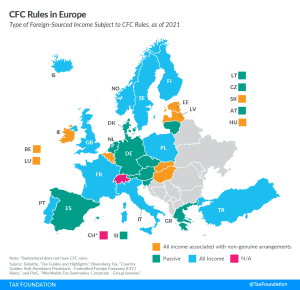
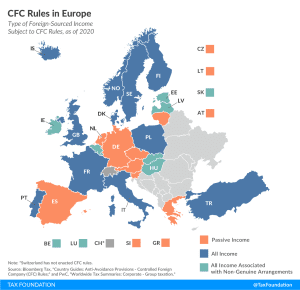
To prevent businesses from minimizing their tax liability by taking advantage of cross-country differences, countries have implemented various anti-tax avoidance measures, such as the so-called Controlled Foreign Corporation (CFC) rules.
5 min read
From a policy perspective it is appropriate to combat base erosion and profit shifting, but policymakers need to keep in mind the need for simplicity to avoid increasing the compliance burden on taxpayers and administrative burdens on tax authorities.
68 min read
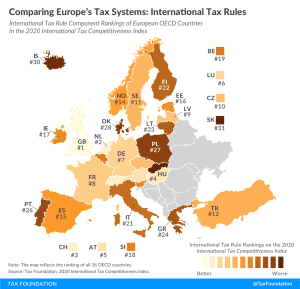
Lawmakers around the world are considering substantial changes to international tax rules to address tax avoidance. Many changes have already been made in recent years, with early economic evidence indicating that they may not only address tax avoidance but also impact business hiring and investment decisions.
International tax rules define how income earned abroad and by foreign entities are taxed domestically, making them an important element of a country’s tax code.
3 min read