Though Tax Hikes Will Be Avoided, the House Bill Misses the Bigger Picture
The tax bill prioritizes politics over economic growth, writes Daniel Bunn.

Our commentary is featured in top news outlets throughout the US and Europe, including The Wall Street Journal, Bloomberg, CNN, and Le Monde.
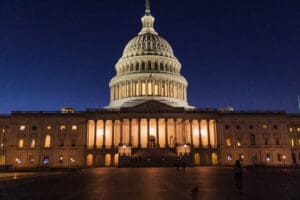
The tax bill prioritizes politics over economic growth, writes Daniel Bunn.

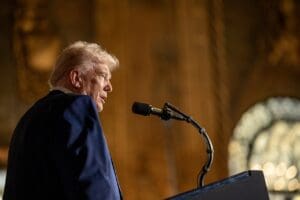
The Republican party, led by President Trump, has decided that growth is no longer a priority. This is evident in the president’s trade war, the minimal opposition among Republican members of Congress, and the seemingly endless supply of bad policy ideas that will do little to support growth.
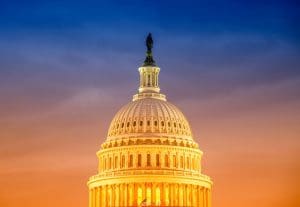
Lawmakers should push against efforts to lift the SALT cap, and they should keep an eye toward bringing additional transparency to the tax system.

Political popularity isn’t always a reliable gauge of sound policy—and that’s certainly true of President Donald Trump’s idea to eliminate taxes on tips, bonuses, and overtime pay.

Attempting to defend Trump’s tariffs, the White House points to studies that show they raise prices, cut manufacturing output, and lead to costly retaliation.
The U.S. Constitution grants authority to Congress to “lay and collect” duties and to “regulate commerce with foreign nations.” But Congress has delegated its powers to set tariffs and negotiate trade to the president. For decades, the executive branch has used those powers to reduce barriers to trade and, sometimes, to impose tariffs in limited fashion.

Compromising on the timing and availability of expensing—or offsetting the revenue losses by worsening other parts of the tax code—would squander an opportunity to craft a fiscally responsible, pro-growth tax reform.

According to a new poll from the Tax Foundation and Public Policy Polling, more than half of taxpayers lack basic tax literacy, regardless of educational attainment, income level, or political affiliation.

If voters are being asked to charge state legislators with raising the equivalent of a doubling of the current income and sales tax, shouldn’t they get to know what the plan is first?

By 2035, Social Security as we know it will largely be insolvent. If we want to fix the issue, it’s time for our parties’ leaders to reform the program so it can be around for the long run for all Americans.

Both candidates’ policies would ultimately stifle the kinds of broad economic expansion they claim to seek.
If voters are being asked to charge state legislators with raising the equivalent of a doubling of the current income and sales tax, shouldn’t they get to know what the plan is first?

As lawmakers look to renew or revise the 2017 tax cuts that expire next year, they should reconsider the need for a charitable tax deduction in the tax code.
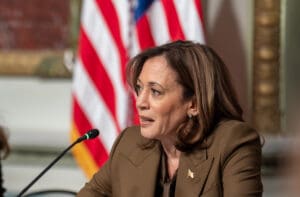
If Vice President Kamala Harris is elected the 47th U.S. president, she would inherit a trade war started by former President Donald Trump and continued by President Joe Biden. But she’d also have the chance to end it.

To be fiscally responsible, recently proposed Pennsylvania tax cuts must be paid for in some way, either out of projected revenue growth or by offsetting reductions.

Trump’s protectionist measures and the continuation of most of them under the Biden administration already form the matrix of American trade policy after the 2024 elections.

April means Tax Day, a yearly reminder that most people don’t like our tax code. As a recent Tax Foundation poll found, people don’t understand it either. With a looming tax battle on Capitol Hill, the need for tax policy education has never been higher.

Trapped in a stalemate between raising taxes or cutting spending, France instead should consider the revenue potential of principled tax policy design.

If student athletes are taxed on their earnings, it’s time the NCAA should be taxed on theirs.
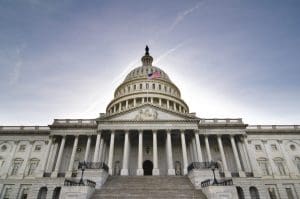
In a rare change of pace, tax legislation passed out of the Ways and Means Committee last week with overwhelming, bipartisan support. In a more common turn of events, it may not get much further thanks to a small group of passionate, but misled lawmakers known as the “SALT Caucus.”

The expiration date on the Tax Cuts and Jobs Act (TCJA) of 2017 is rapidly approaching. Come 2026, most taxpayers will be in for a tax hike. Which 2024 presidential candidate will support sound tax policy?

Bond markets are screaming for a return to deficit reduction politics. Unfortunately, most policymakers are failing to listen to what the markets are telling them.

What both parties ignore: The IRS does not need more money for enforcement; it needs fewer things to enforce.

Spreading deductions for research investments across five years instead of one is an innovation killer.

Lawmakers around the world are considering substantial changes to international tax rules to address tax avoidance. Many changes have already been made in recent years, with early economic evidence indicating that they may not only address tax avoidance but also impact business hiring and investment decisions.

While there are several parts of the policy that are subject to further discussion and agreement, GloBE is expected to be different from GILTI in several ways.