Launching Tax Foundation Europe
As the world of tax policy becomes more interconnected, the Tax Foundation is stepping up, recognizing the pressing need for informed and principled tax policy education in an ever-evolving landscape.


Sean Bray is Vice President of Global Tax Policy at Tax Foundation and Policy Director of Tax Foundation Europe, where he researches international tax issues with a focus on tax policy in Europe.
Prior to joining the Tax Foundation, Sean Bray worked in the United States Senate on tech, telecom, and trade policy. He also interned at the European Parliament during Brexit and has experience establishing European chapters of a transatlantic think tank network based out of Yale.
Sean has a master’s degree in European Political and Governance Studies from the College of Europe in Bruges, Belgium, a master’s degree in International Public Affairs from the La Follette School of Public Affairs, and a bachelor’s degree in Economics from the University of Wisconsin-Madison.
Sean is fluent in French and tries his best to speak German at a B2 level. He lives in Madison, Wisconsin, with his wife and child.
As the world of tax policy becomes more interconnected, the Tax Foundation is stepping up, recognizing the pressing need for informed and principled tax policy education in an ever-evolving landscape.
It is essential to understand that the taxation of capital gains places a double tax on corporate income.
In such a determinant semester for Europe, principled tax policy can be an important tool for a more competitive European Union.
5 min read
In the end, the best way for the EU to support Ukraine’s post-war recovery is to guarantee its tax sovereignty, not just its territorial sovereignty.
5 min read
What historical lessons of wartime finance can Ukrainian and EU policymakers learn to put Ukraine’s economy on a path to success during, and especially after, the war?
5 min read
A harmonized EU tax base is a project in the making. Policymakers have a chance to put the Union on a path for increased investment and economic growth by focusing on the details of capital cost recovery.
3 min read
The variety of approaches to taxation among European countries creates a need to evaluate these systems relative to each other. For that purpose, we have developed the European Tax Policy Scorecard—a relative comparison of European countries’ tax systems.
52 min read
If the EU is going to harmonize its tax base, it should do so in a way that increases the efficiency and competitiveness of tax policy for the EU as a whole, and not just seek out the lowest common denominator.
5 min read
On 12 September, the European Commission released a proposal called “Business in Europe: Framework for Income Taxation” (BEFIT) and two associated proposals on transfer pricing and a Head of Office tax system.
6 min read
Bermuda, long celebrated for its pristine beaches and offshore financial services, is embarking on a journey to recalibrate its tax mix. Spurred by the OECD’s Pillar Two initiative, the island will introduce its first-ever corporate income tax in 2025.
4 min read
The EU’s recent VAT reform is an example of a win for governments, consumers, and companies. Charting a new path toward a more successful tax system.
4 min read
Enhancing the European Union’s competitiveness is necessary, but the European Commission’s latest attempt is the wrong approach.
4 min read
As policymakers shift their focus away from tax rates and look to harmonize the EU’s corporate tax base, they should understand the benefits of full expensing.
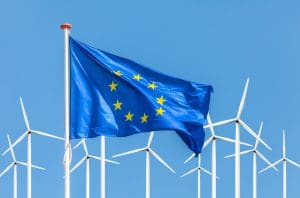
Permanent full expensing is an efficient and neutral tax policy that will allow markets to allocate private investment effectively while moving the economy towards the climate goals of the EU.
33 min read
When it comes to EU-level tax policy ideas, competitiveness seems to be less of a priority than raising revenue or pursuing social objectives.
4 min read
The Carbon Border Adjustment Mechanism (CBAM) is a key aspect of the EU’s broader Fit for 55 package which aims to cut 55 percent of net greenhouse gas (GHG) emissions in the EU by 2030. The growing number of competing climate policies between the EU and U.S., such as tax provisions in the Inflation Reduction Act, could present policymakers on both sides of the Atlantic an opportunity to work together.
5 min read
Younger and healthier Brits have created a $17.1 billion budget hole by smoking and drinking less. Yet, despite this resounding piece of positive news, some see any decline in tax revenues as a public finance crisis. Excise taxes target a tax base that is intended to shrink. Less consumption is a stated goal of the policy.
3 min read
Focusing on the “threat” to European industry caused by the Inflation Reduction Act rather than internal tax system flaws puts the EU at risk of slower economic growth and possibly losing some of its important industrial base. It is also contrary to the EU’s geopolitical goals.
4 min read
If the EU wants to strategically compete with economic powers like the United States or China, it needs principled, pro-growth tax policy that prioritizes efficient ways to raise revenue over geopolitical ambitions.
6 min read
When it comes to providing economic relief to those in need, wartime energy security, and principled tax policy, the EU can do all three. But a windfall profits tax is not the policy to achieve these goals.
8 min read