
Bruce Bartlett says the rich are paying less income taxA tax is a mandatory payment or charge collected by local, state, and national governments from individuals or businesses to cover the costs of general government services, goods, and activities. than they used to:
The larger question is how much the well-to-do should pay. According to the Internal, in 2008, those in the top 1 percent of the income distribution, with incomes over $380,000, had an effective tax rate of 23.3 percent. In 1986, a year when the real gross domestic product grew a healthy 3.5 percent, their effective tax rate was 33.1 percent. It has been much lower every year since.
Indeed it has. In 1987 the effective tax rate dropped to 26.4 percent and in no year since does it get above 28.9 percent. It seems 1986 was a fluke year in this data series, which begins with 1986.
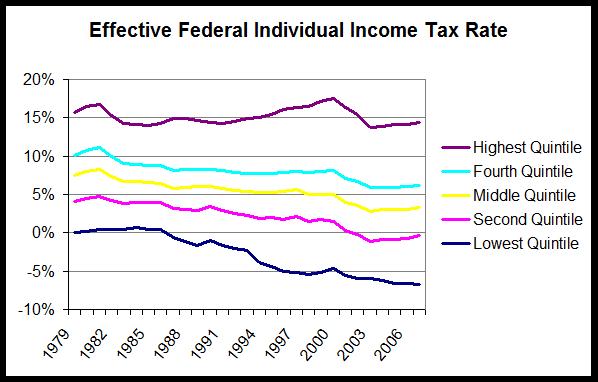
The Tax Policy Center, which Mr. Bartlett respects, uses CBO data to calculate effective tax rates by household income quintile, over the years 1979 to 2007. As the following graph shows, in 2007 those households in the highest income quintile (the top 20 percent) had an effective tax rate of a little less than 15 percent. This has changed very little since 1986 or anytime in the 1980s.
Contrast that with the lower income quintiles, which all pay dramatically less tax now than they did in the 1980s. The trend is most pronounced among those in lowest income quintile, which had an effective rate of about zero up until that magical year 1986, and thereafter a more and more negative rate. In 2007, those in the lowest income quintile not only paid no tax, they got paid at the rate of 6.8 percent of their income! Starting in 2002, the effective rate for the second lowest income quintile goes negative as well. This means that the bottom 40 percent of households are now getting paid through the income tax code.
This is why the OECD finds that the U.S. has the most progressive income tax system in the industrialized world. That means the rich in the U.S. pay a greater share of income taxes than in any other OECD country. The top 10 percent pay about 70 percent of income taxes. Mr. Bartlett’s argument that the rich should pay even more doesn’t hold water.
Share